
Recently, my wife and I attended a dinner gathering of ten academics of which half were retired. We had met all before, though only a few do we consider knowing well. There was pleasant conversation as folks arrived—much about the inconveniences of the recent snow and ice.
These folks were mostly scientists, with a good balance of humanities scholars and all are relentlessly curious and well versed in a range of subject areas. Dinner conversation bounced from tick-borne alpha-gal, to the absence of haggis being Robert Burns night (postponed because of the snowstorm a week previous), the difficulty of birding with high schoolers, to the impingement of AI on academic freedom and critical thinking which is, after all, the point of an education.
All of the guests had been asked to bring a poem of their choice to read (being in honor of Robert Burns as previously noted.) As could be expected, the group, ranging in age and backgrounds, presented a diverse selection of poems: a well-known Frost poem, Naomi Shihab Nye, to several of satire and humor, to one of original composition, to “The Charge of the Light Brigade.” It was all great fun.
Though there was a certain competitive edge to much of the evening’s conversations (who knows who, arcane factoids and the like) we were happy to observe and comment with our two cents worth (though sadly, the end of minting pennies renders this expression somewhat moot.)
Driving home through January dark, I wondered about the notion of curiosity. It is anything but unique to human beings as scores of animals display this trait. Behavioral studies of numerous creatures have long illustrated this. Curiosity is considered a positive trait: a strong desire to know or learn something. The word can also denote a strange object or a not widely known fact. It is an active process—you cannot have passive curiosity. Exploring, experimenting, experiencing something new are all dependent on the unknown. In a sense, reading a book (novel or non-fiction), traveling to new places, writing creatively, and other ‘calculating’ activities are putting curiosity to practice. Of course, the challenge of these endeavors may be frustrating and, perhaps, end in failure and abandonment. How many poems are left unfinished? How many theories die under scrutiny? How many dreams fizzle out under the weight of expectation?
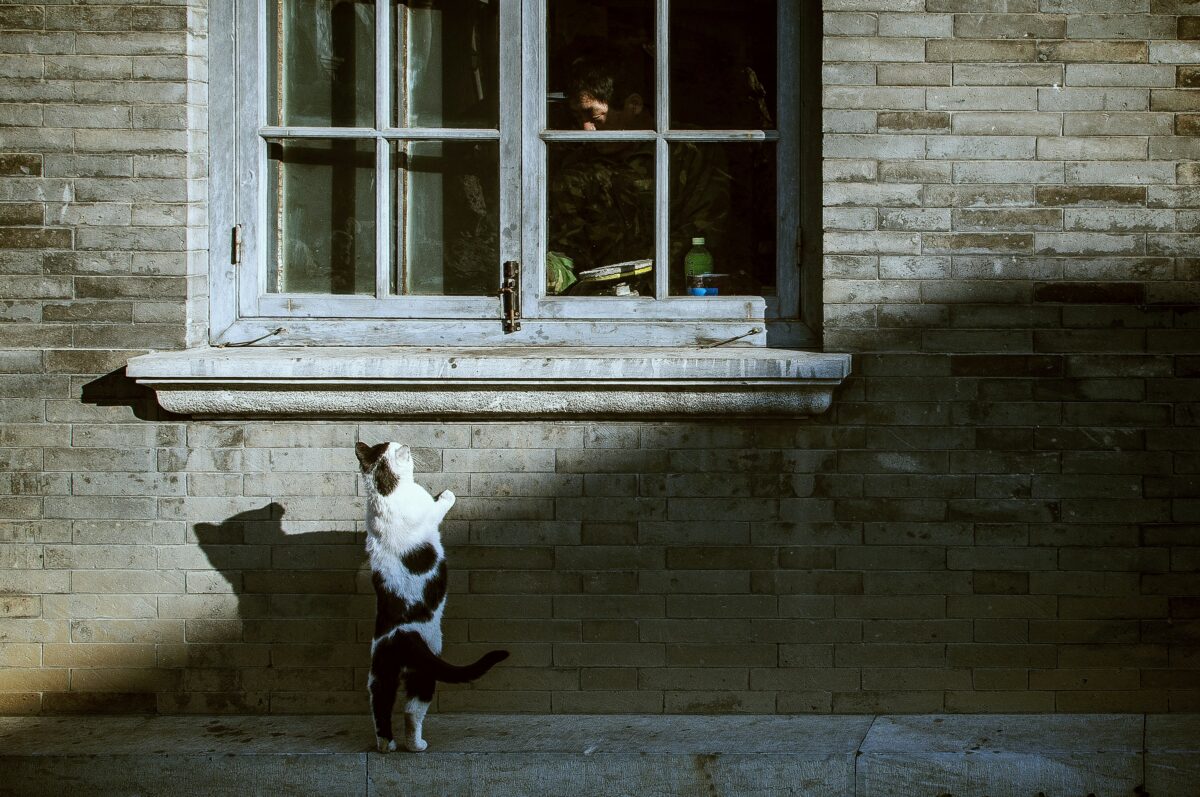
There is that old adage “Curiosity killed the cat.” If we have a positive attitude, feel that even in failure there is something to learn, then that “wisdom” doesn’t foretell our demise. Yes, a child may burn a finger on the stove or a teenager fiddling with electrical circuits may get shocked, or there may be other disastrous outcomes from foolish choices. This cautionary advice is a warning or a prohibition to the unwise.
Curiosity is how we grow and it begins immediately upon birth—we don’t remember being mesmerized as an infant by our hand(s) extended skyward. But we might remember being fascinated by throwing a stick in a stream, watching a flock of birds burst from a bush, seeing a kicked ball bounce off a wall, or asking a cute girl to the middle school dance. We discover how the world works.
To grow intellectually or spiritually, we must be curious about our being; not simply learning the bones of the body, the mechanics of muscles, and the purpose of organs—the “earthly sepulcher” as John Donne describes it in Bianthanatos—but also to trudge our mental landscape. Introspection may be a better word for this self-curiosity and meditation may be even more germane though maybe more philosophically provocative. There have always been self-help or instructions books to assist in this endeavor. Both ideas are a means of satisfying the need for answers. This active process keeps the mind young and reduces the chances of sinking into mental atrophy or dementia.
In this life there should be no end to curiosity. Yet the longer we live with this good addiction the more we realize the limits of our knowledge and understanding. Curiously, sorting all the loose ends of life takes time. We wonder about too much it seems. Questions seem to have too many answers, yet we never condemn curiosity as a curse. The adage should be: Don’t ever let our curiosity die.


Follow us!



Share this post with your friends.

