
I first saw “The Man In the Golden Helmet” in 1976 on a street corner in Monterey California.
At that time he was labeled as “The Conquistador.”
He was painted on black velvet and framed with enough faux gold woodwork and styling to
make a rococo chapel blush. He stood out among the every day black velvet visual chorus of
tigers, matadors and breezily attired gypsy women artfully arranged about the centrally placed
interpretations of The Three Kings—Martin, Elvis, and Jesus.
Much as the original was painted by an artist within the “circle of Rembrandt,” the black velvet
artist had joined that circle and painted a bold reinterpretation of the original by placing the old
man within the cultural home of Spanish Colonialism.
One could see in the downturned eyes the cost of his quest for Glory. He, who once stood young
and bold on the edge of all his tomorrows, sword in hand, burning ships behind him, dreaming of
El Dorado’s fabled gold.
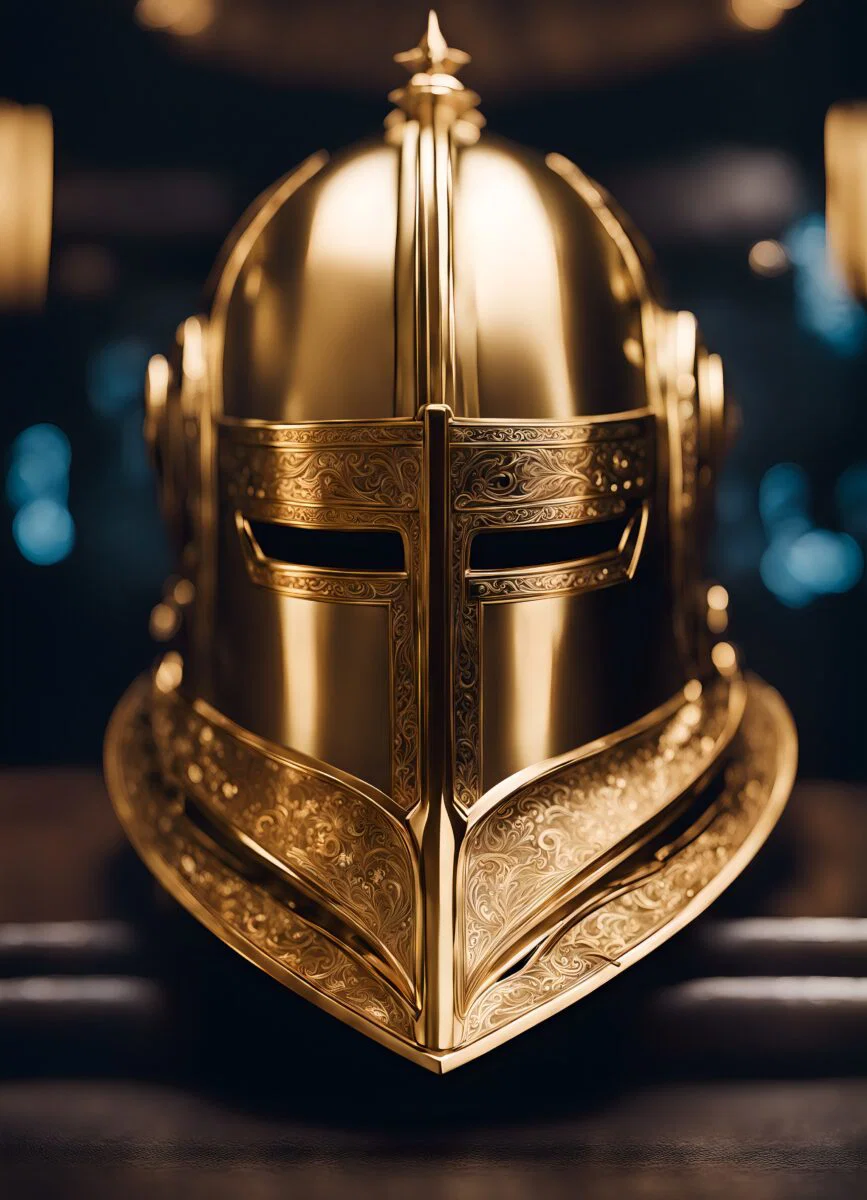
Now, here at the end, his once fierce brow sagged beneath the helmet chased with endless waves
of golden swirls in intimation of his youthful obsession. The helmet seemed to push down upon
him, forcing his eyes downward towards memories once banished, but that returned to wait for
him in the dark velvet shadows gathered beneath him.
I wondered what truth humbled itself within the heart of the original painter and his sitter that
demanded such a display before all who would come and see.
That day, my last vision of the old Conquistador was of him paired with a red caped matador as a
buy one get one free—five dollars to the lucky collector of unique, black velvet art.
The next time I was to see the old man and his golden helmet was in the surrounded city of West
Berlin.
I was walking through the Picture Gallery on a hot summer day in June of 1981. In a City
surrounded by a Soviet Army frozen in place since the end of the Second World War, while
outside on the streets riots broke out with the unpredictability and ferocity of summer
thunderstorms.
That summer of ’81, West Berlin was full of angry young people demonstrating against the
unrestrained speculation in the housing market, and they had begun to occupy empty buildings.
These occupations resulting in pitched battles with the West Berlin Police that roiled across the
city filling the air with tear gas and violence.
I had chosen the Portrait Gallery as my refuge that day from the heat and the hate and was
quietly wandering the halls lined with men, women, and dreams frozen in frames, when I came
upon my old friend from Monterey.
There he was. Though this time he was alone. No competition with tigers and or scantily clad
gypsy women. Here he had his own place of honor among the monied men and women boldly
looking out as I and others walked by looking in.
The Old Man though did not look out into the room seeking contact.
In front of him was a low bench upon which I sat and looked up at this version of him. As I
looked up something hit me hard. Both paintings had gathered up within themselves a feeling of
sorrow, but here, seeing the original work, I felt as if I was watching the making of the painting
itself. I felt a sudden sense of Now that I had not felt with the earlier copy.
In my mind’s eye I could see the painter’s assistant as he guided the old man who had been
requested to sit for the painting. It could have been the painter saw his face in the crowd one
morning and thought that it was perfect for his next work or it could have been as the subject he
would work cheap and so was uplifted from the streets and into the artist’s workspace as a matter
of pure economics.
I watched as the old man sat down, made himself comfortable, raised his head to look forward,
open faced before the painter, when out of a shadowed place in the room an assistant rushed up
and placed a plain gorget around his neck. That settled, as if an afterthought, he returned and
placed the golden helmet on the old man’s head.
The shock of the sudden familiar weight of it all took him without warning. He remembered; he
was a soldier once.
All the long years gathered up on his face, his head fell ever so slightly forward, drawing his
eyes and shoulders downward as he looked into a dark pool of the past and felt all those feelings
he hadn’t known for years.
Something grabbed ahold of his mind and his face reflected that awful mental landslide of pent
up thoughts. The painter, seeing what had happened, rushed to capture that single moment.
I wept at the portrayal of such fierce Truth, having found in it a warning.
I, myself, at that time, being a solider in the days of my youth, saw in the painting portents of my
latter days when such memories of my own might loose their bonds and come upon me
unawares.
The old man and I sat together for a while and let time tend to its own business.
It was some time later that I walked out of the Gallery onto the streets and headed back to the
barracks.
I walked down the steps to the U-Bahn in the light company of those, who having seen the end to
the evening’s combative festivities, had decided to avail themselves of the stray cafe here and
there, taking the opportunity to open and try to make something out of the ruins of the day.
Even the light scent of violence and tear gas in the air could not shake the old man and his
helmet out of my mind, thinking again to myself, would I one day look down to see such things
in my own pool of the Past?
Maybe. But those memories to come were far from that warm night in a surrounded city on the
edge of an Old War’s slumbers.
I took my anonymous place among the other riders on the U-Bahn, noted the number of stops
before mine, closed my eyes and felt the gentle pull of the train taking me home.




Share this post with your friends.

