
Sukey Gap Graveyard
The road here is pocked with holes,
graves strung mostly in mistflower
or phlox, apt to spread airy trails.
Not a place for plastic lilies
who squall into the quiet, but moss
with enough give to muffle
the whole of your existence,
let a mythology larger than
your own encompass the knee,
the folded hands, words dampening
what’s left of sunken or toppled
names. One stone says Perninia,
my third great grandmother,
who holds open the iron gate
then closes it behind me,
and flies softly into the trees.
She sings from the broken waves
of a nearby river, language
I am not meant to understand
just yet, under a cover of green.
There are ghosts in the gap. Everywhere you go in southeast Kentucky, cemeteries, towns, roads are named some kind of gap; Cumberland Gap, Pennington Gap, Boone Gap, Sukey Gap, Nathan’s Gap. All vestiges of pioneers making a difficult trek from one place to another in the resistant mountains of southwest Virginia and Kentucky. I recall the hours of nauseating hairpins my parents would drive with us kids in the backseat, traveling “back home” before the Daniel Boone Parkway was built. Even now, driving around here is no lark—make a turn and find yourself on a steep grade wishing you still drove a clutch.
Every place named “gap” is a story of land; accessing land and losing land, people getting kicked off land and separated from land. Early settlers of the late eighteenth century pushed through natural geographical gaps discovered by native tribes or animals. By 1838, Andrew Jackson had signed the Indian Removal Act, dismissing the Cherokee, Shawnee, Creek, and other nations as a “failed race” and forcing them west as land tracts were assigned to my ancestors and others. At that time, the settlers were lauded as brave but less than eighty years later they would find themselves victims of the Industrial Age land grab as timber and coal interests sought to separate them from their properties. It was during this economy that those in power created the unsympathetic caricature of the ignorant hillbilly that would rival the Indian savage.
Part of the overthrow of the agrarians was strictly to de-humanize them, thereby reducing any sympathies for the injustices of land thievery. The most vital part, however, was legislative; politicians and corporate bosses in hotel rooms drafting laws that would declare property owners only had rights to the surface of their land, not the minerals beneath it. This broad form deed, as it was called, allowed industrial access to private land. Locals with their subsistence economies didn’t receive a dime from the coal dragged out of their dirt, nor compensation for the environmental devastation the companies left behind.
In early memory, my father pulls the car off by the roadside and holds me up so I can look out over the hills into bottomless gorges and the shock of shaved crests. I think it was these moments that made me want to walk inside the mystery of my forebearers, the passages they sought through the histories of their lives. A poor land ages slowly and with that, comes a visible genealogy, ruins and stones where spirits linger. Many of the old family graveyards are still here on undeveloped land. I come looking for bones and if I can follow directions like “honey, drive up toward where the school used to be and turn left just before it,” I can find centuries of rock solid certainties of my ancestors presence on earth. If I knock on the door of that “white house down there,” I can get permission to walk along the creek until I see a stone set off beside an oak tree where my 6th great grandfather is buried.
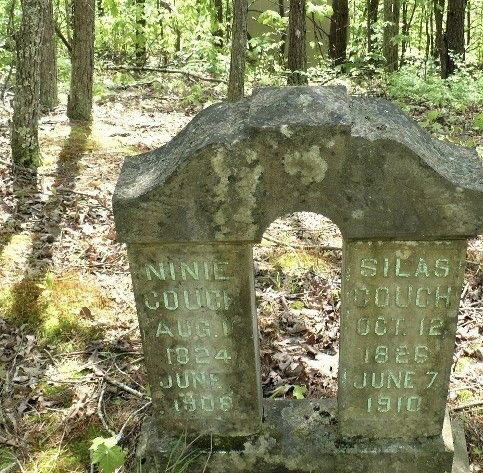
Sukey Gap cemetery is at the end of a road my parents and at least three generations before them walked to school. My third great-grandmother lies here and I suddenly want to tell her what a mess I made of it time and again, and hear the silence that affirms I found a portal through my own life to right here, right where I’m supposed to be. But here, where name always leads to family history or the particulars of the terrain, I realize I don’t know why this place is called Sukey. All I can dredge up is the English nursery rhyme:
…………… …….Polly, put the kettle on
…………… …….Polly, put the kettle on
…………… …….Polly, put the kettle on
…………… …….We’ll all have tea.
…………… …….Sukey, take it off again
…………… …….Sukey, take it off again
…………… …….Sukey, take it off again
…………… …….They’ve all gone away.





Share this post with your friends.


Such an eloquent evocation of the waves of possession and dispossession this land has seen, witnessed by the poet descendant in a
…language
I am not meant to understand
just yet, under a cover of green.