
Mark didn’t want to go to Jackie and Jonathan’s—he had too much studying to do before the end of the semester—but Marci insisted. “You can’t study all the time,” she said, but he was the only one of the four of them in graduate school, and was under pressures they weren’t.
“Can we at least leave right after we eat?” he asked. “No walks in the woods this time?”
Marci gave him a sideways glance. Getting back to Boston from the North Shore on a Sunday was never an easy drive, and the later you started the longer they were likely to sit in traffic. “Fine,” she said. Their last visit to the seashore town where Jackie and Jonathan lived in a pretty little house that none of their contemporaries could have afforded yet had ended in an argument after they were stuck on the bridge for an hour, traffic moving only haltingly when it did.
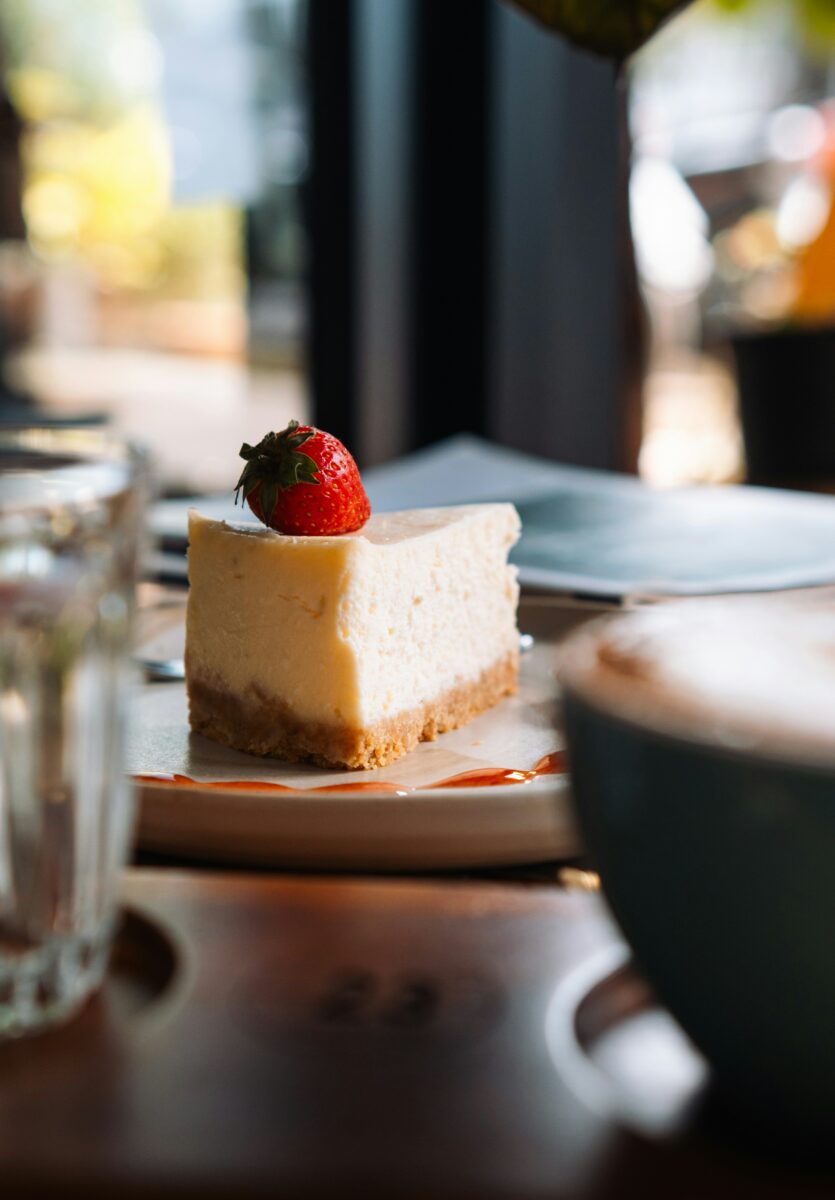
She had asked him to pick up a dessert on his way home from the library, and he stopped at the fancy grocery store at the end of their block to do so. The place was expensive, but there was no time to shop around. The drive north took an hour on a good day, and it didn’t make sense to get off the highway once you started. A whole cheesecake cost $40; he decided to buy six slices at $4 each. That should be enough; they had rent coming due next week.
Marci was bringing her soprano recorder, as Jackie had finished building a harpsichord and they planned to practice some duets. Other than her instrument, the peasant bag she took everywhere, the cheesecake box and their jackets, there was nothing to load in the car; Jonathan wasn’t the type of guy you threw a football around with on an autumn day.
The drive up was uneventful, but burdened by an air of détente. Neither one of them said much, as the comparative ease and charm of Jackie and Jonathan’s life had been a source of friction between them before, and they both knew to stay off the topic. Why, she would ask, can’t you go skiing with us, or why can’t we have a place like they do? She didn’t seem to understand—or perhaps she did and wanted to rub it in—that his circumstances differed from Jonathan’s. His family owned a high-end department store, with outlets downtown and in two pricey suburbs. He might work at a non-profit, but he didn’t have to live on his salary. Whatever Mark earned he would have to make himself, and for now he had to live on the money he’d saved up after college; there was no trust fund to fall back on.
They pulled into the gravel driveway and parked by the barn that served as Jackie and Jonathan’s garage. The place was humble-looking from the road, but the former farms in their town were no longer for agriculture; they were retreats from the city, or nature preserves owned now by charities. For all the fields, Mark had noted on one of their first visits, you didn’t see any tractors.
Jackie met them at the back door that opened on to her farmhouse kitchen. She had done some work since they had come last; there was now an overhead rack for pots and pans above the rough wooden table in the center of the room, and sea lavender hung down from the rafters to dry. “Jonathan’s upstairs,” she said as she finished washing green beans in a colander.
“Those look so fresh!” Marci exclaimed. “Did you grow them?”
“Yep,” Jackie said. “I’m making haricots verts almandine.”
“Yum,” Marci said. “You’re such a good cook.” Mark just smiled; he knew the two friends from girlhood would gush at each other for a while before they settled down to a more natural level of conversation. He figured it was nervous energy being burned off, or perhaps a necessary sizing-up now that they saw each other less frequently.
They went upstairs where Jonathan was at a roll-top desk, bent over a checkbook. The “great room” functioned as a living room and his study, since his furnishings possessed enough charm to fit into his wife’s decorating scheme. He stood up a bit belatedly, as if burdened by business he couldn’t easily tear himself away from.
“Hello there,” he said as he took his glasses off, and gave Marci a hug and a kiss. She had gone to college with him and Jackie, and they thus had a bond among them that preceded Mark. “Hey sport,” he said to Mark. “How’s it going?”
“Good,” Mark said, wondering at the anachronistic “sport.” Some of the folkways of the crowd Marci grew up with might come to seem less strange over time, he thought, but the self-conscious fuddy-duddy slang wasn’t one of them.
There was a fire going, a bit hotter than was comfortable, but Mark knew from past visits that the room got cold as night came on. It was poorly insulated, but Jackie—having grown up in an old house in Connecticut–liked it that way, because it gave them an excuse to use the fireplace, and Jonathan indulged her.
“Can I get you something to drink?” Jonathan asked. The women wanted chardonnay and before Mark could order, Jonathan said “You’ll have a beer, right?”
“Yeah, that’s fine, whatever you’ve got,” he replied, and tried not to bristle at the implication that he wasn’t a wine drinker.
Jonathan left and Marci and Jackie went through a door to the bedroom, where there was a new four-poster Shaker bed for Marci to see. Mark stood before Jonathan’s desk, taking in the fire, then looked down at what turned out to be brokerage statements. He wondered whether Jonathan was just careless, or whether he had intentionally left them out where they could be seen.
He moved closer to the fire to avoid the appearance of snooping, and when Jonathan returned they started to chat.
“How’s school going?” Jonathan asked, and his joshing tone made it sound as if Mark was being forced to make up a grade.
“Okay. It’s different from college.”
“How so?”
“At least where I went, you had some variety. You’d write a paper or two for one course, have an exam for another. Every one of my courses this semester comes down to a final exam.”
“So glad that’s all behind me.”
The women joined them and they sat before the fire. Jackie, as it turned out, had begun to grow orchids. It was another accomplishment that she pulled off with ease. She wouldn’t have brought it up; Mark noticed one of the flowers sitting in front of a window and mentioned it.
“We’ll see if they last through the winter,” she said. “They need a lot of light. We get a lot of sun in this room.”
“Not like the back side of Beacon Hill,” Marci said, and Mark inhaled a bit as he started to say something, then refrained. She had picked out their apartment, and insisted on her choice, but now complained that it made her depressed. There were windows on two sides; on the west they faced the apartment next door, and on the north side one saw only a narrow slot of light between the buildings across the alley. It was something, he told her, she should have thought about beforehand if it mattered that much, but when he said this it only made her mood worse.
They went downstairs to the kitchen, where Jonathan checked on Cornish game hens in the oven while Jackie prepared the green beans; she chopped the shallots, then roasted the almonds and blanched the beans. “How much longer do you have?” she asked him.
“I’m hoping I have like seventy more years.”
“Ha ha. I don’t want to sauté the beans until you’re almost ready.”
“The birds should be done in ten minutes.”
Mark and Marci set the dining room table and filled water glasses while their hosts brought the food to completion. Marci looked on admiringly at the way they worked together; she envied the life they lived, and longed for the day when hers would resemble Jackie’s—with Mark or someone else.
“I think we’re ready,” Jackie called from the kitchen, then set to work with Jonathan putting the dishes they’d each prepared—plus squash that had been in warming drawer–on the plates.
“This is all so lovely,” Marci said. “It could be a photo shoot for a cooking magazine.”
“Bon appetit!” Jackie said as she and Jonathon lifted their wine in the air, then clinked glasses with their guests.
The talk flowed easily among the three former schoolmates. No one had heard from the woman they all thought would be the class novelist; the loud guy who’d started a business delivering pizzas to dorm rooms by second semester freshman year was already a millionaire several times over; the English professor who was known to force himself on female students had finally been reported and fired.
“It seems like so long ago,” Jackie said when they had exhausted their store of gossip.
“I hope you have room for dessert, we brought cheesecake,” Marci said.
“I’ll make coffee,” Jackie said. They all rose and cleared the dishes, which Jonathan rinsed after urging the guests to relax.
The farm table in the center of the kitchen was eventually cleared as things were put away. Jackie brought out her better cups and saucers, saying “We got these for our wedding but hardly ever use them. That’s why it’s nice to have you guys here.”
“Not often I’m an excuse for an upgrade in the home furnishings department,” Mark said.
“We’ll use these dessert plates,” Jackie said as she reached up into the cupboard over the sink.
“Where did you put the cheesecake?” Marci asked Mark.
“It’s over there—on the butcher block,” Mark said. Marci turned around, picked up the box, and hefted it for a moment as if something was amiss. She set it down on the table, ran her finger under the seal, then opened the box. A look of embarrassed disbelief came over her face when she looked inside.
“You didn’t buy a whole cheesecake?”
Jackie’s back had been turned while she made the coffee. “What?”
“He bought slices.”
The two old girlfriends burst out laughing, causing Jonathan to turn around. “Come, come, old man,” he said in a mock-aristocratic tone when he looked in the box. “Spring for the whole thing next time, why don’t you.”
Mark did his best to join in the jest, smiling at his hosts but glaring at Marci when they turned back to their chores. An air of mirth buoyed the four back into the dining room. Mark kept quiet and listened as the conversation swirled around the table. After a while he looked at his watch under the edge of the table, a furtive move that Jonathan caught out of the corner of his eye.
“You got a date later on?” he asked facetiously.
“No, but we do need to hit the road soon,” he said as he shot a look at Marci.
“The traffic shouldn’t be too bad,” Jackie said. “It’s still pretty early.”
“It usually moves fine until you get close to the bridge,” Mark said. “Then you can be stuck for a long time.”
Murmurs of assent were heard from the other three. Everyone rose and carried things to the kitchen.
“You’d better go check on the upstairs fireplace,” Jackie said to Jonathan.
“Okay. I’ll say my goodbyes here,” he said. He reached out and hugged Marci, kissing her on the cheek. Jackie moved across the room and embraced Mark lightly, saying “Thanks for coming.”
“Thanks for having us,” he said.
“See you soon,” Jonathan said, extending his hand to Mark.
“Drop in whenever you guys are in town.”
They started to leave when Jackie stopped them suddenly. “You forgot your recorder,” she said to Marci.
“Oh my God, you’re right.”
“We never did get to play.”
“Come upstairs, I want to give you some music too.”
“I’ll just be a minute,” Marci said to Mark.
“Okay, I’ll be out in the car.”
He walked out to the car in the dark, feeling his way along the gravel until his eyes grew accustomed to the night. There was an amber-colored moon over the salt marsh on the other side of the road. Must be nice to live up here, he thought.
He backed the car out and drove closer to the house so Marci wouldn’t have to walk so far in the dark. She emerged from the back door, said her last goodbye to Jackie and stepped lightly over the wet grass. When she opened up the back door to throw her belongings in she saw the cheesecake box.
“What are you doing?”
“I’m taking the rest home.”
“Oh my God. Could you make things any worse?”
“Everyone thought it was such a big joke. I thought I’d spare them the problem of getting rid of it.”
She got in and closed the door. “You know, you just don’t do that.”
“Do what?”
“Take something home that you bring as a gift.”
“I guess I’m ignorant of a lot of rules.”
“It’s so rude.”
“Speaking of rude–you know, you didn’t have to laugh so hard.”
“And you didn’t have to be so cheap.”
“It wasn’t cheap. A whole cheesecake cost forty dollars. We can use the money I didn’t spend.”
“Still, you leave what you brought.”
“I don’t think they’ll miss it.”






Share this post with your friends.

