
Wendy Kennar is the 1st place winner of Streetlight‘s 2026 Essay/Memoir Contest
Within my first few years of teaching, the district’s grading system changed. Instead of the familiar A, B, C, D, F letter grades for academic achievement, students would now be graded on a 4, 3, 2, 1 scale.
Many teachers at our school, including new teachers like myself and veterans with over a dozen years’ of experience, didn’t like this new system, mainly because it was so vastly different from the traditional grading system everyone knew and understood so well. I believed the change from letters to numbers, and with one less possible grade, would be confusing to explain to our students and their parents.
But I tried. At Back to School Night, I attempted to explain these new numeric grades in simple terms. Students aimed for a 3. A 3 meant you were proficient, performing at grade level, which meant whether you scored a 98 or a 73 on a test, you passed. You earned a 3, and a 3 was great! Most students, most of the time, would only ever get 3s.
However, most parents didn’t see it that way. A very high grade, a 98 for example, must definitely be worth a 4, they said. Except it wasn’t. That high grade, the hypothetical 98, was earned on a test measuring a student’s understanding of grade level content. To earn a 4, a student would have to be working beyond grade level, earning high marks on fifth grade level spelling words, for instance, while being in the fourth grade.
Over time, I came up with an analogy that seemed to work when I tried to explain the grading system to my class at the start of each school year and their parents at Back to School Night. Think of it in terms of passing your driving test, I said. Earning a 3 in class was the same thing as passing your driving test. 82, you passed. 95, you passed. 71, you passed. Whether you completed your driving test with a low 70 or a high 90, you earned your driver’s license. You passed, and nowhere on your driver’s license was your score recorded, because it didn’t matter. The end result, a driver’s license, was the same. I hoped my comparison would help families see that a 4 wasn’t overly important. We didn’t need to concern ourselves with a score most students were not expected to earn. For some parents, my analogy helped. For others, nothing I said made a difference; in their minds, a 4 was the ideal.
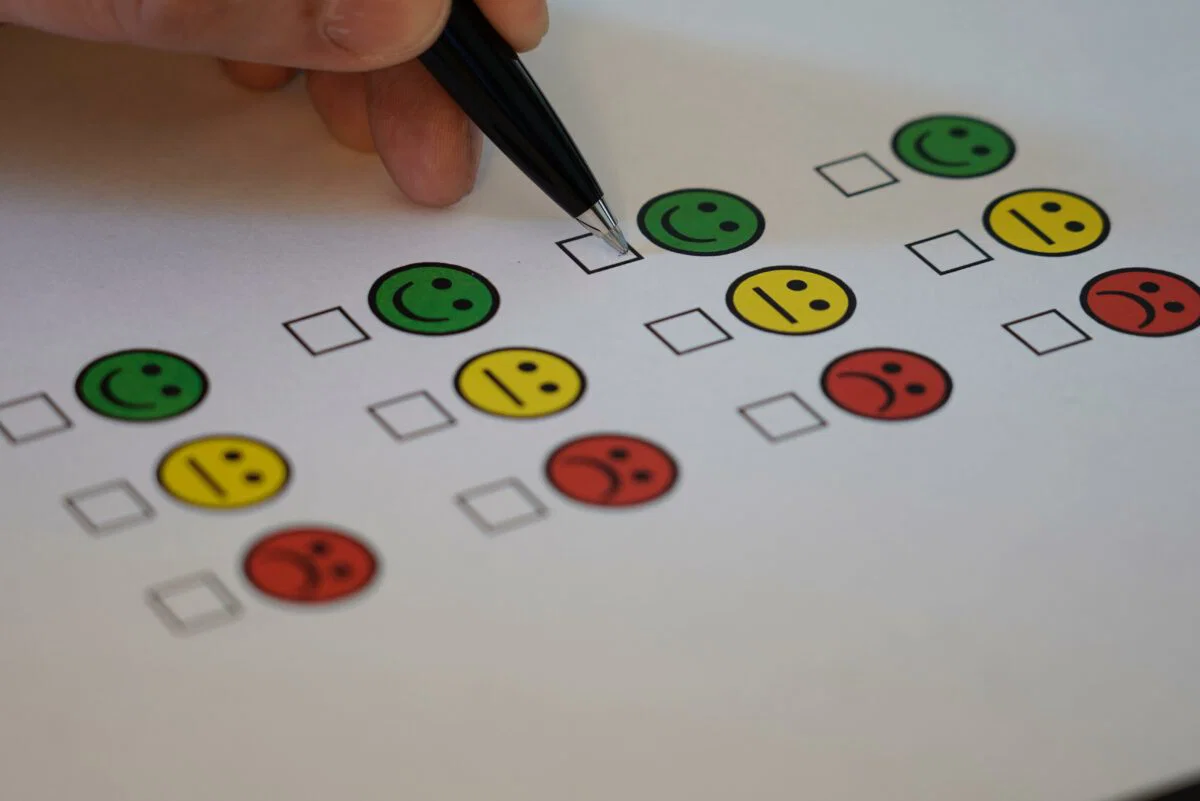
I thought back to some of those confusing conversations one day while sitting in an exam room, waiting to meet a new neurologist. The nurse had already completed the intake part of the appointment, and I found myself sitting atop an exam table, staring at a laminated graphic of the traditional pain scale. Hanging on the wall, staring back at me, was the chart with the faces and their varying mouths (small frown, deep frown, straight line, smile) and a compatible 1-10 ranking.
I do not like that pain scale. I like it even less than I liked the 4, 3, 2, 1 grading scale.
I think most people living with chronic pain feel the same way I do and regard that chart as an incomplete and inaccurate way to describe pain. That scale does not take into account the pain tolerance many chronic illness patients naturally develop over time. I have lived with regular pain for over a decade. I’m certain that to an extent I have grown numb to some minor pains, and I have grown more tolerant of other pains. I have to, if I’m going to get out of bed and do anything during the day.
Plus, my pain is somewhat inconsistent. I can be walking along, feeling like my left leg is dragging behind me a bit, not quite able to keep up as quickly with my right leg, but I’m walking. I’m getting to where I need to go—until suddenly, a pain grips my knee and I bend over, rubbing my knee (not that my rubbing will help anything, but it seems to be a natural tendency), and needing to find a place to sit. Immediately. If you had asked me my pain level before that intense knee pain, my number would have been much lower than the number I would give you during the most intense part of that knee pain.
The nurse had called my name and led me from the waiting area to an exam room. It was the same routine. Blood pressure. Temperature. Height. Weight. Review of medication.
“What’s your pain level?” she asked as she typed on the computer.
I thought I had misheard her. “Excuse me?”
“Your pain,” she said. She motioned with her pen, pointing in the general direction of the pain scale hanging on the wall.
“I don’t know. Who can tell anymore?” I thought that would be enough. I thought she might sympathize.
“That’s not acceptable. I need a number,” she insisted.
Okay, I thought to myself. She’s definitely not going to make this easy for me.
Do I tell her that currently I’m at a 6, or maybe it’s a 7, but that’s because I experienced a muscle cramp right before I left the house for this appointment, and before that cramp I had been doing okay, with pain under a 5?
Do I say I’m about right in the middle, which is an improvement from last night’s pain which had me waking up, often, because I just couldn’t find a comfortable position for my swollen calf?
After my second muscle biopsy, nine years after my first muscle biopsy, my neurologist wanted me to see a colleague of hers. She wanted an additional perspective on the inconclusive biopsy findings. When he finally arrived, the neurologist asked questions regarding my medical history. He asked to see my leg as I pushed up my wide-leg pants and sat on the exam table. He asked me to stand. To squat. To stand on tip toe. To walk around the room. To bend and have one knee on the ground, as if proposing marriage, and then stand up. (Of all the things he asked me to do, that was the hardest. I couldn’t do it without holding on to something.) When I sat back down on the exam table, the doctor had another question for me. How often is the pain so bad you can’t get out of bed?
“Never,” I said. “I have a son. I need to take him to school, pick him up, cook meals, and everything else.” At the time of this appointment, Ryan was a middle schooler.
“Oh, well, then it can’t be too bad if you’re doing all that,” the doctor replied.
I thought at first I had misheard him. I tried giving him the benefit of the doubt.
“Excuse me,” I said.
He repeated himself. I hadn’t misheard. He gave a cursory glance at the pain scale on the wall, and told me I obviously wasn’t experiencing the highest levels of pain shown on the chart since I did so much each day, since I drove myself, and because I was often the primary caregiver at home when my husband was at work. The doctor patted my shoulder on his way out. Dismissing me and my pain.
Over the years, I have learned that just because I can do something doesn’t mean it’s easy for me or that I “should” be doing it. Just because I don’t spend all day on the couch, doesn’t mean I am pain-free. I am used to being in control, independent, and self-sufficient. It is not easy for me to ask for help, and it certainly is not in my nature to just lie around. I get up and get out of bed, because I don’t see any alternatives. I don’t want my life to change any more than it already has. (My health issues necessitated an early retirement from my teaching career.) I don’t want to give up any more than I already have. I don’t want to stop doing the things I loved to do,
the things that made me me.
And that’s why this 1-10 smiley-face pain scale just doesn’t work for me. The nuances, between a 7 or an 8 for example, are lost when you live with some degree of pain each day. Plus, something no doctor has ever spoken about is the subjectivity of pain. The truth is no one can ever truly know the pain I experience in my left leg. Just as I can never truly know someone else’s pain. It just isn’t possible.
Plus, doctors seem very concerned about patients’ developing tolerance to their medications. Which means patients need to increase their dose and/or frequency, and after some time, doctors warn, you find yourself addicted to a pain medication. (Opioid addiction is a very real, very serious problem in this country. However, that topic is much too broad and deep to be tackled here. This personal essay is not in any way meant to be dismissive or disrespectful to those struggling with opioid addiction.)
Why is it no doctor ever talks about the flip side of that? And that’s pain-tolerance. When you live with pain on a daily basis, you learn to live with it. You create hacks and shortcuts. You figure out your new baseline and you learn to function and participate in the world while in pain. Someone who lives with chronic pain will have a different relationship with pain, and identify with a different number on the pain scale, than a healthy person who just broke their leg while on a hiking trip.
And, it needs to be pointed out that doctors and healthcare providers generally fail to give patients credit for the effort it takes just to get to that appointment. Dressing for the appointment. Arranging transportation to and from. Preparing questions. Taking notes. Understanding the financial responsibility.
Therefore, rather than try to make our pain experience fit into this 1-10 system, I think we need to borrow the classroom 4, 3, 2, 1 scale.
A “1” means you are really struggling in class. You are unable to demonstrate mastery of the subject matter. In fact, you have very limited or no mastery at all. (Think back to an F.) So on a day when my pain is a 1, it means I’m really struggling. Everything is hard to do. It’s hard to walk into the restroom. It’s hard to bend my knees to sit down on the toilet, and it’s hard to stand back up. But I do it, slowly and while crying.
A “2” means a student is almost there. These are the kids that may be so close, you want to just do everything in your power to help them earn that 3. They have demonstrated partial understanding, partial mastery of standards. They’re getting closer. A pain 2, means it’s a hard day. I’m feeling it. Emptying the dishwasher—hard to do. Turning on the garden hose and watering my plants—hard to do. Standing at the stove while I boil water for pasta—hard to do. But I’m doing it and some things, like using the restroom for instance, aren’t as hard today. And I’m not crying nearly as much today.
A “3” means you’ve done it. You have achieved expectations. You have demonstrated mastery, a complete understanding of a skill or topic. Pain isn’t predominant. Only certain activities trigger pain, some sort of extreme event or something beyond your ordinary, like a day at the beach, because walking on sand is so exceptionally hard, or an extended amount of time spent outdoors gardening. Or walking to the playground and shooting hoops with your son.
And a “4” means advanced. You’re doing above and beyond grade level work. On our pain scale, a 4 means an absence of pain. You are loving life, doing or not doing as you see fit, because you feel good! I didn’t often write 4’s on report cards, and when you live with chronic pain, you don’t often have 4 days.
The 4, 3, 2, 1 scale is a measure of what you can do. Likewise, when I was teaching, I never wanted my students to see a mark at the top of their page with the number of mistakes circled in bright ink. (No -7 on my students’ papers.) Instead, their score was written as a fraction (number correct over total number of questions). That number then was translated into a 4, 3, 2, 1.
I don’t expect health care professionals to adopt my scale. After all, their 1-10 emoji-like pain scale is just as familiar to them as the A, B, C, D, F scale was to me. But, a good teacher knows that each student is more than a score earned on a test. Likewise, health care professionals need to acknowledge the difficulty chronic pain patients have in identifying where they are on that pain scale. Because when you live with pain every day, when you wake up with pain and find it difficult to swing your legs out of bed and put your feet into your fuzzy pink slippers, the number doesn’t matter. A patient living with chronic pain is so much more than any arbitrary
ranking on any pain scale.





Share this post with your friends.

