
The slap came before I could take a breath.
I had just said the word “Jiao” the way Teacher Zhang had taught me, firm in my seven-year-old confidence. My mother, arising from her chair and putting down her knitting, hovered behind me in her wool jacket and sharp eyes, and didn’t agree.
“It’s pronounced Xiao,” she corrected, her voice clipped, sharp.
“But Teacher Zhang said Jiao,” I muttered and continued reading aloud, repeating it the way I had learned.
Her hand sliced the air. “I’m a teacher too!” she snapped just before it landed across my cheek with such force that the room tilted for a second. I froze. The character I had just copied onto the page stared back at me, crooked now, blurred by tears.
My father sat in the corner of the room, reading. I looked toward him, hoping he might intervene. His eyes lifted, met mine for only a moment, then dropped back to his book.
The heat on my face grew. It pulsed in sync with my heartbeat. I wanted to be brave, to swallow the tears, to continue with the lesson. But I couldn’t. The sob clawed its way up from my chest before I could stop it.
My mother stood still for a moment, then turned away to the corner of the room. She went back to her knitting, as if nothing had happened. I remained at the table, hunched over my workbook, cheeks wet, letters swimming.
We lived above the school where my mother taught Chinese. Our room was one of six in a narrow, two-story building assigned to faculty. Each family had one room. We shared the hallway for cooking and conversation. The wooden staircase creaked so loudly under footsteps that I always knew when my mother was coming home.
She wasn’t my Chinese teacher, but she sometimes substituted in my class. I remember feeling strange on those days—how she would stand at the front of the room, writing on the whiteboard, commanding attention. She was both my mother and my teacher, and I didn’t know how to separate the two.
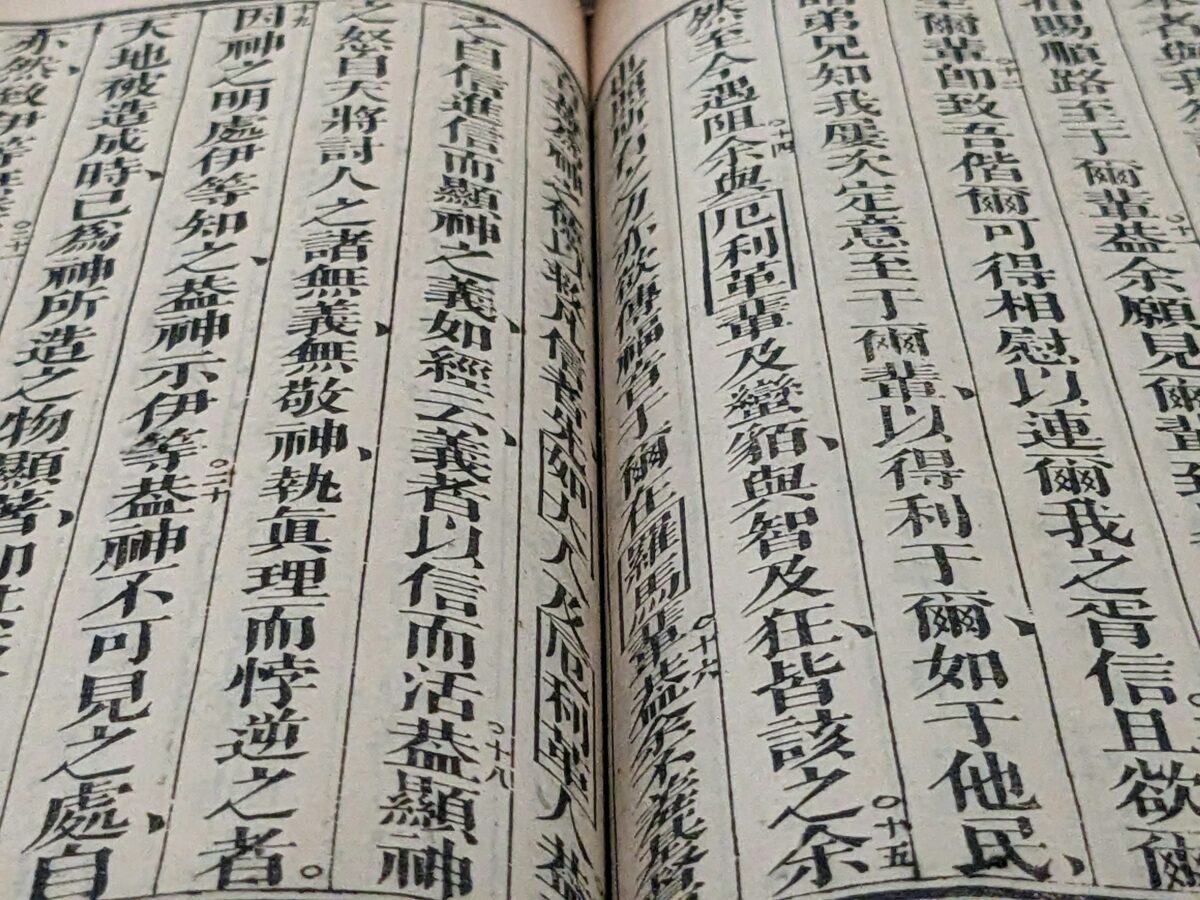
She had grown up under stricter rules than I could imagine. Her father beat her regularly, she often said. She had been the eldest of four girls and no boys. That shame followed her like a shadow. She had studied in secret, gotten herself into a girls’ teaching school, escaped the house through learning. That was where she met my aunt. That was how she met my father.
Now she was both my mother and my teacher. In class, she wrote beautiful calligraphy on the whiteboard. At home, she corrected me with red pens and heavy sighs. When I succeeded, she nodded once, never smiled. When I failed, she grew sharp.
The evening after the slap, I lay on our wooden bed and listened to the outside sounds—the chatter from the street below, a car horn beeping just outside, footsteps on the staircase. My cheek still burned. I kept touching it, wondering if a mark had formed.
I didn’t understand why being wrong about a word could hurt so much.
Later, as my mother bent over to tuck the blanket around my younger brother, she paused near me. She looked at me for a second—almost as if she would say something—but then pulled the blanket up to my brother’s chin and turned away.
I closed my eyes. I didn’t want to be like her. I didn’t want to be feared. But part of me also wanted to be that strong. To be the one who left home. The one who became something. The one who never cried.
And yet, I cried. That night, I cried into the blanket until the wet cotton clung to my skin and I couldn’t tell where the pain ended and the shame began.





Share this post with your friends.

