
Mahmoud Elmardi, a Sudanese visual artist and novelist currently based in Cairo, explores how physical and spiritual landscapes overlap, his aim to document the subtle nuances of cultural heritage and displacement.
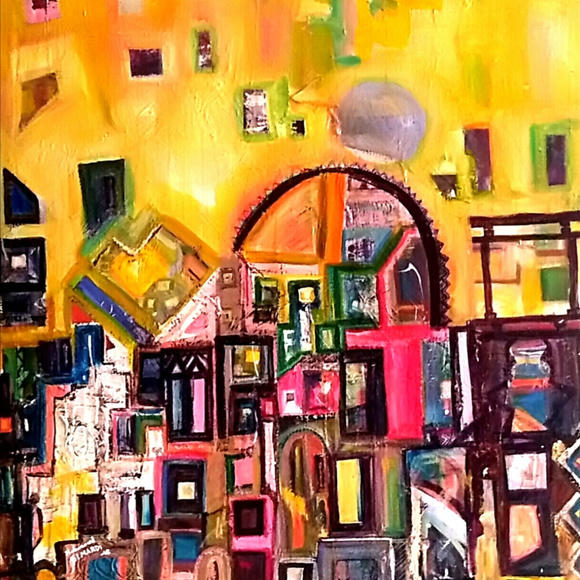
“My artistic roots run deep into the 1990s, specifically in Bahri, a historic district of Khartoum, Sudan,” Elmardi remembers. “As a child, I didn’t just paint what I saw; I channeled mythical figures from my imagination, heavily influenced by the classic animation of that era—shows like The Adventures of Sinbad and Teenage Mutant Ninja Turtles. This early obsession unexpectedly led to my winning a children’s drawing competition organized by a local confectionery company.
“The winning piece featured a vibrant yellow background, with surreal, winged pieces of candy soaring through the foreground. The prize—a Play Station console—was exciting, but the real epiphany came when I saw my artwork blown up and plastered as decals on the company’s distribution trucks rolling through the old streets of Bahri. Seeing my art physically moving through the public sphere, intersecting with the daily lives of strangers, was the exact spark that defined my path.
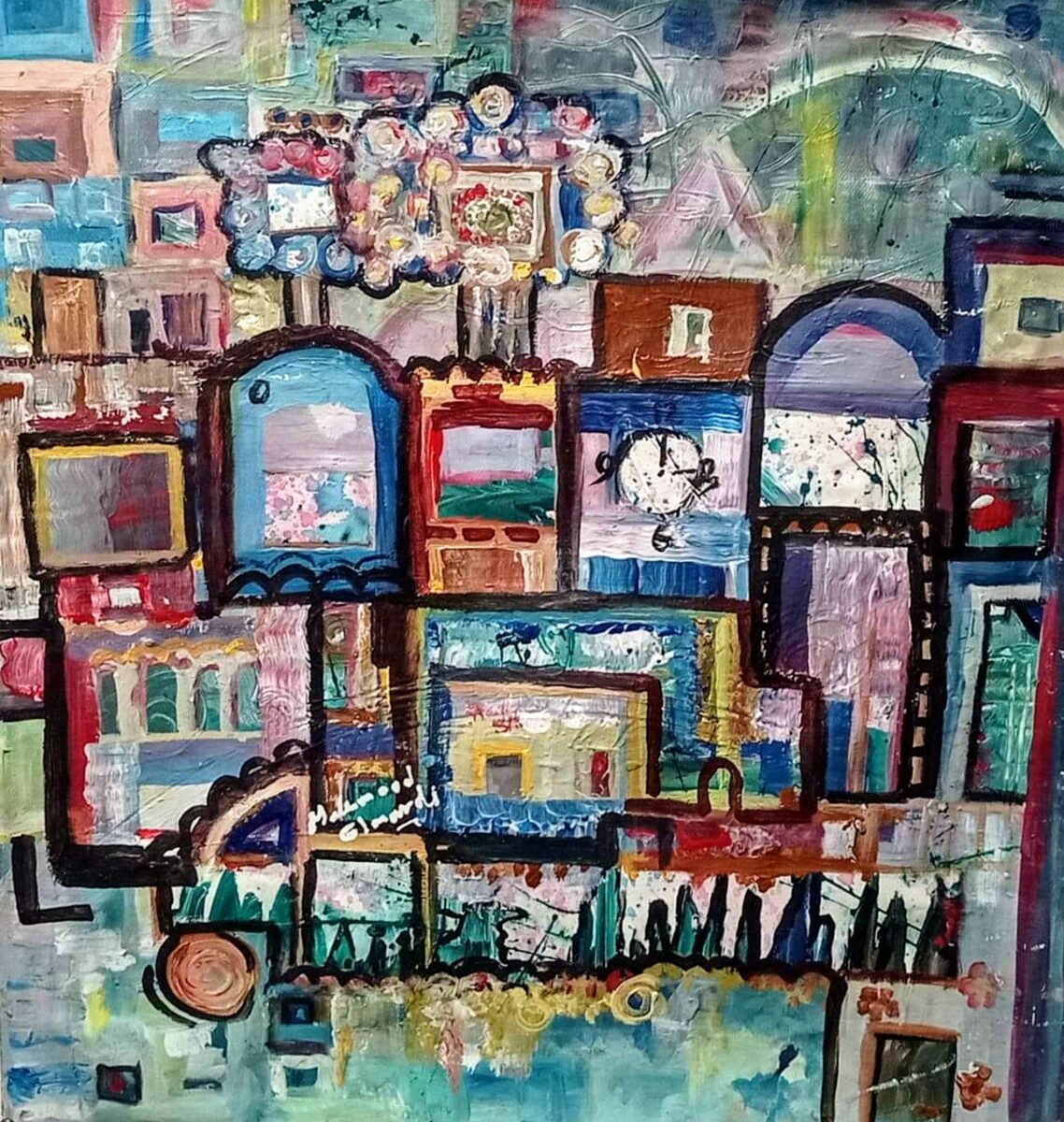
“Today, despite the profound upheavals my country is facing, that vast visual archive remains alive and vibrant within me. It serves as the primary reservoir from which I draw themes of identity and collective memory in my contemporary work.”
Before entering the College of Fine and Applied Arts at Sudan University of Science and Technology, Elmardi spent seven years working in the screen-printing industry. HIs hands-on, workshop phase gave him an understanding of color chemistry and taught him how to manipulate diverse mediums—from canvas and paper to leather, metal and plastic.
At the University, Elmardi immersed himself in artistic anthropology as well as sculpture, ceramics, and Arabic calligraphy, before specializing in painting. He earned his Bachelor’s degree in 2018.
“My graduation coincided with rapid, volatile political and economic shifts in Sudan,” says Elmardi. “These security complexities made hosting a traditional graduation exhibition impossible, a reality that only intensified with the outbreak of the ongoing 2023 war.
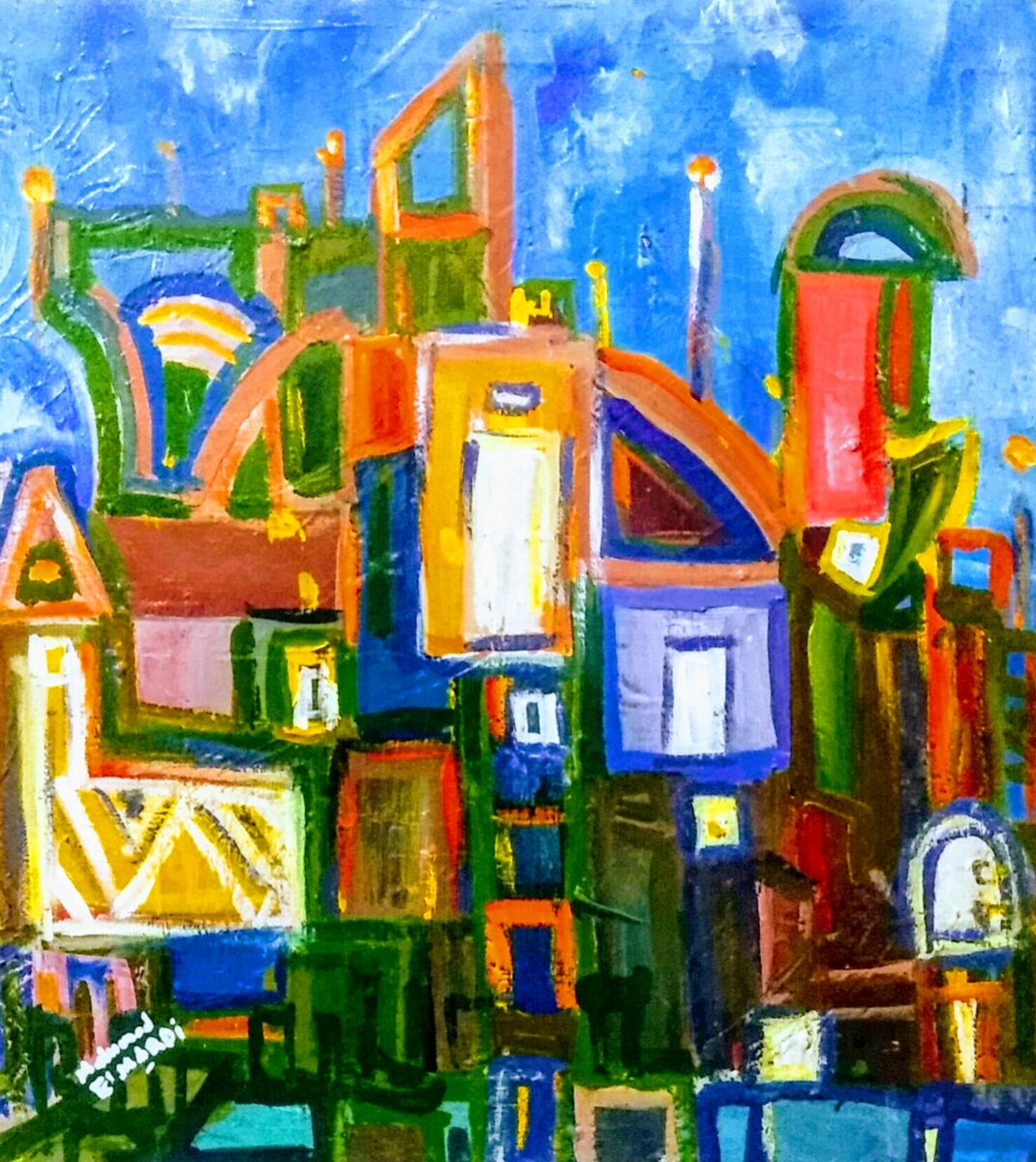
“I am deeply drawn to any work of art that possesses the power to deconstruct the human condition and tells a profound story, whether that takes the form of a musical note, a poem, a novel, or a layer of pigment on canvas,” he says.
In the visual arts, Elmardi says he’s driven by the violent, emotional brush strokes of Vincent van Gogh, the spiritual abstraction of Wassily Kandinsky, and the deconstructive power of Pablo Picasso’s Cubism. The pioneering global Sudanese artist Ibrahim El-Salahi is also a strong inspiration, particularly in how he synthesizes modernism with ancestral roots.
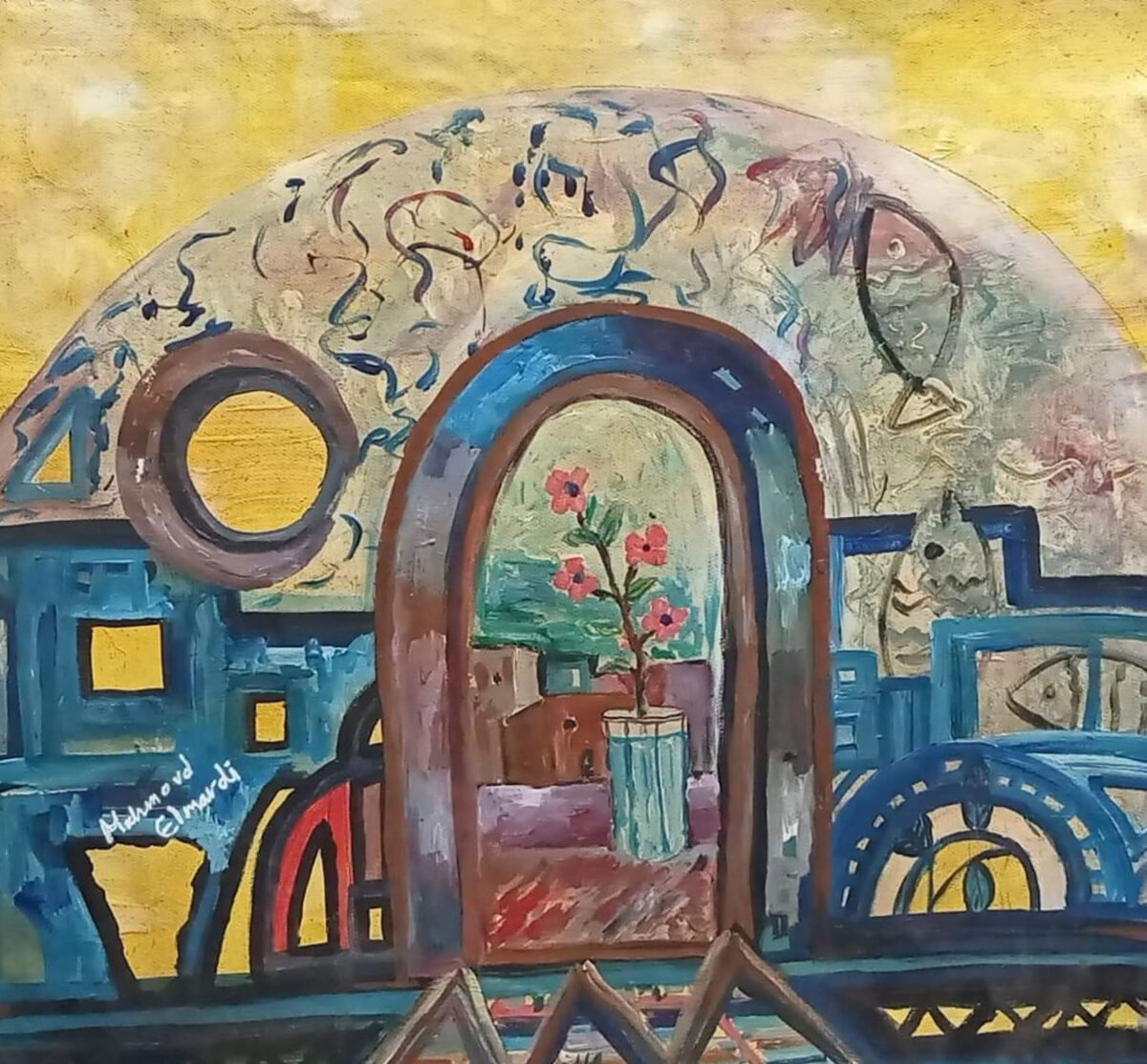
Music is also an indispensable influence in Elmardi’s studio. “A cosmopolitan, cross-continental playlist, blends the soaring vocals of Sudanese Mohammed Wardi with the rhythms of Shakira, the revolutionary reggae of Bob Marley, and the soulful Ethiopian melodies of Teddy Afro. This rhythmic diversity directly translates into the kinetic energy of my paintings,” he notes.
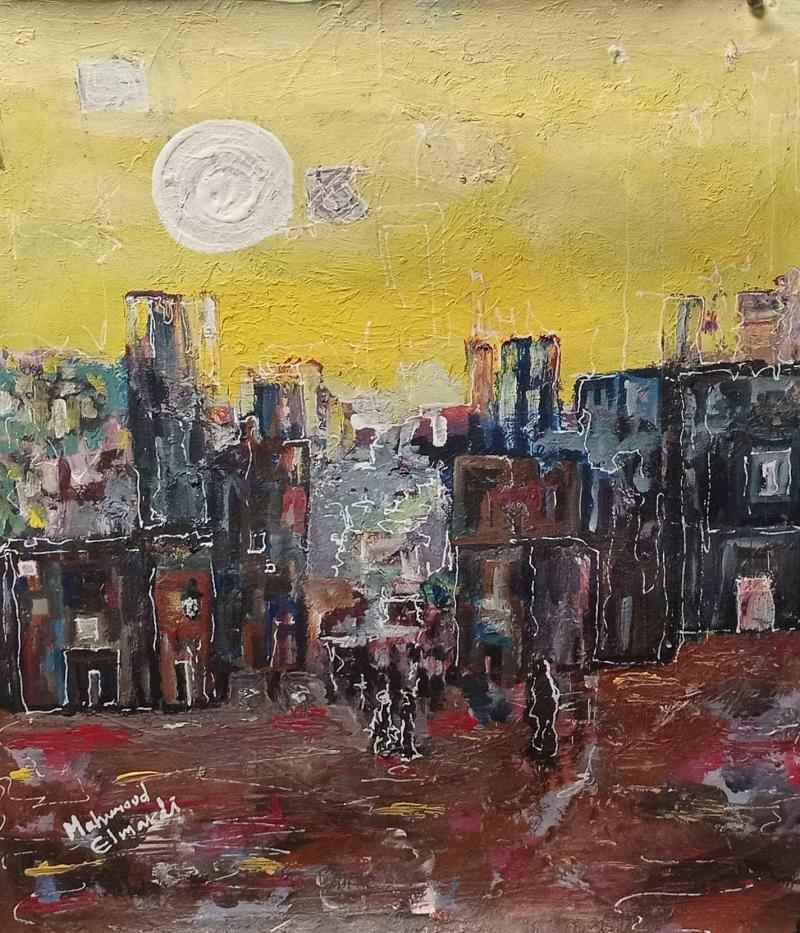
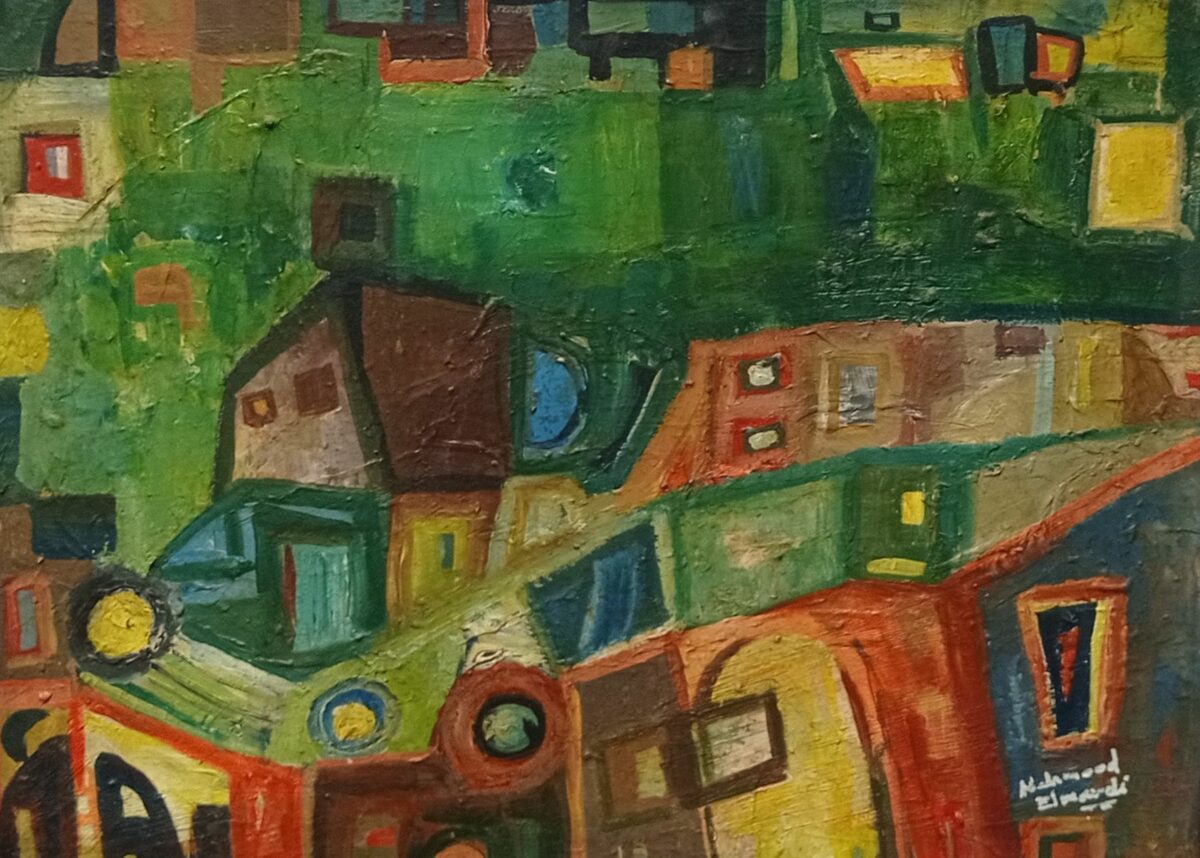
Elmardi’s work evolved when the University organized field trips to explore Sudan’s sprawling regions. “The staggering climatic, cultural, and linguistic contrast between coastal towns, dense southern forests, bustling urban centers, stark desert landscapes, and the banks of the Nile completely reshaped my visual identity,” he says. “It infused my art with new dimensions, as seen in paintings like Cities of Boredom, Blue in Travel, and Old Tree.”
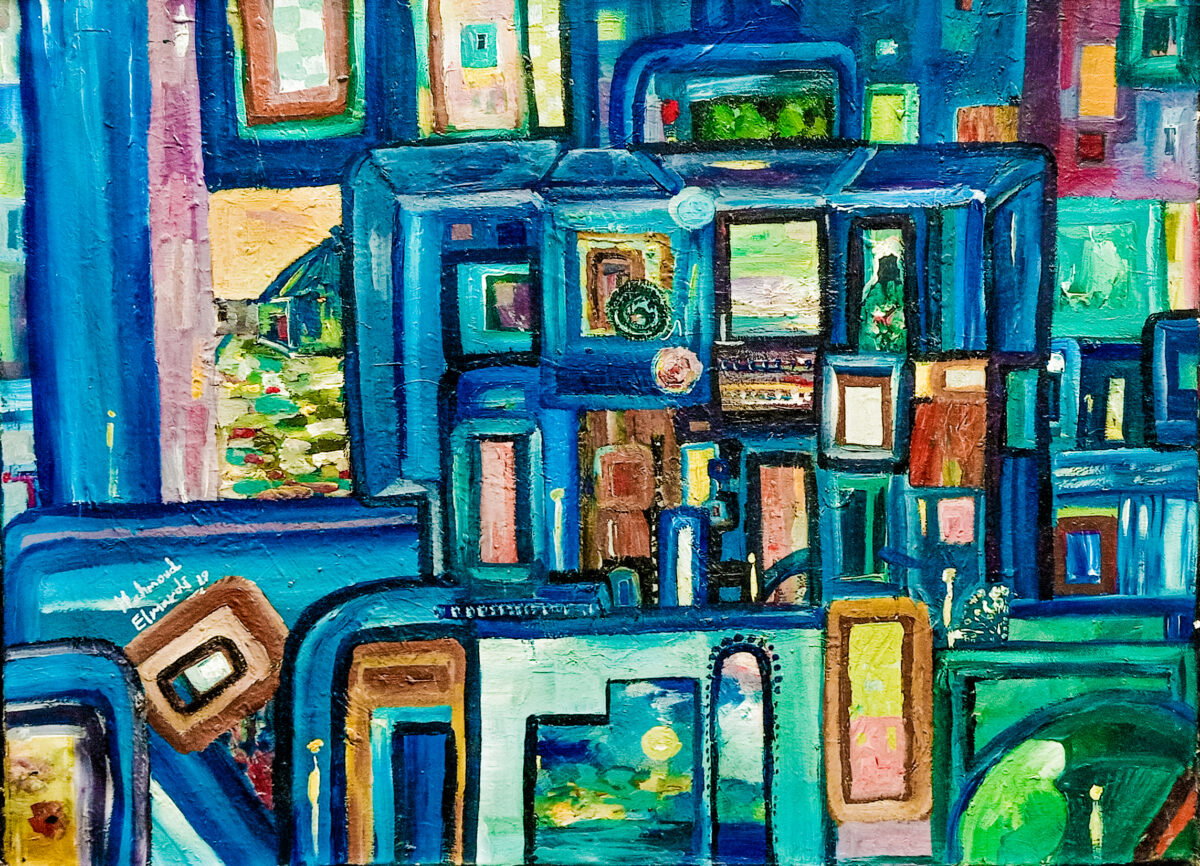
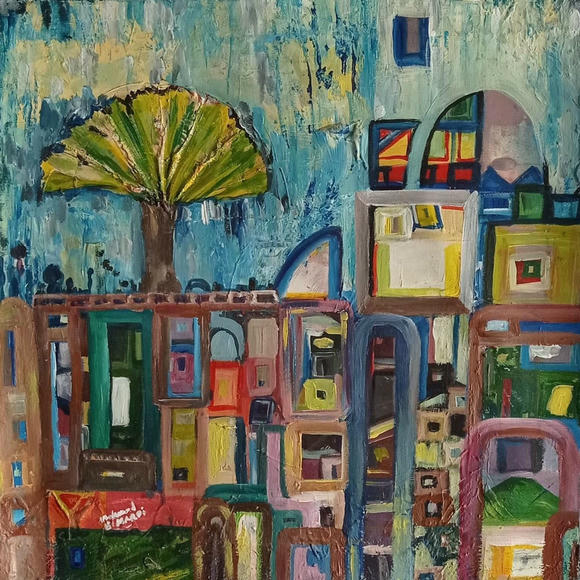
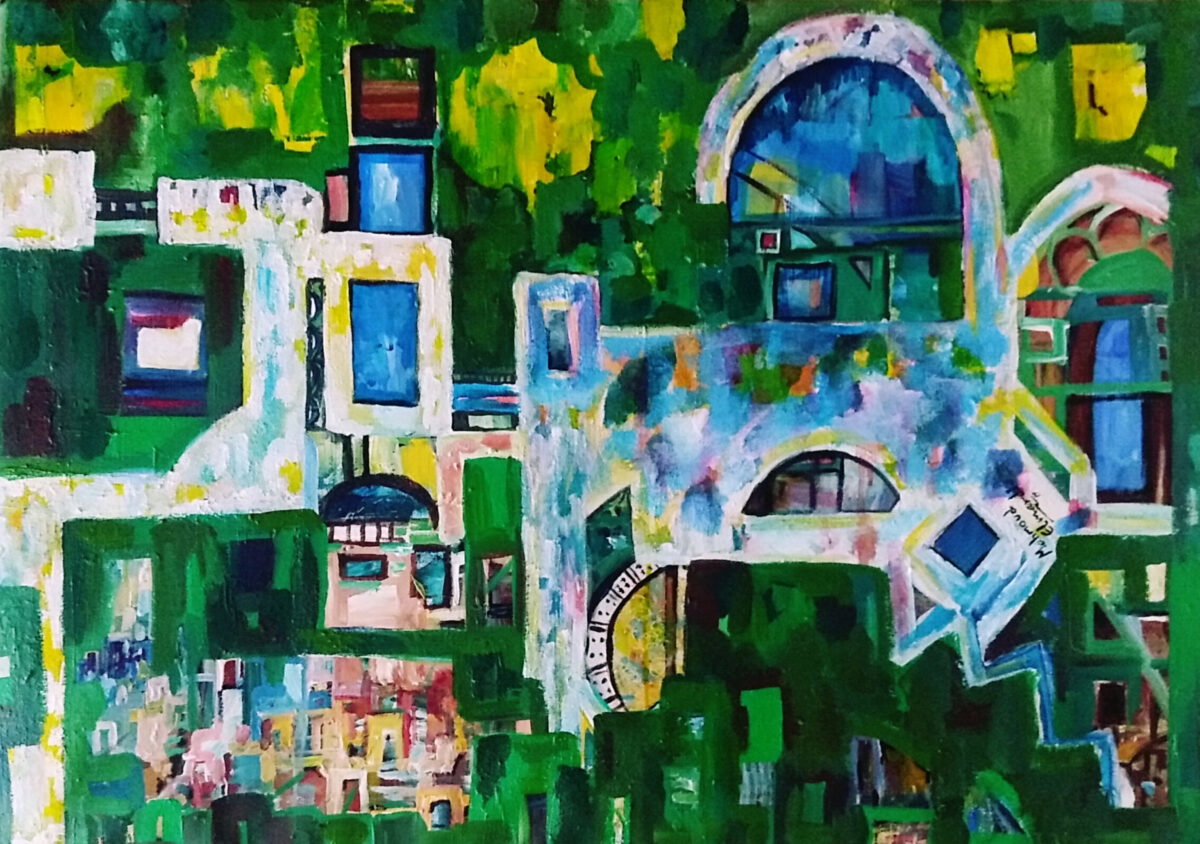
Recently, his evolution has expanded with contemporary ecological discourse and sustainability as seen in his latest painting, Urban Overgrowth: The Green Symbiosis. ”Here, he says, “I deconstruct the tension between concrete architectural structures and organic natural growth, reimagining them as a singular, resilient living system.”
Elmardi’s creative process begins in his subconscious. He then draws his initial sketches. This is followed by more contemplation, aiming for “the delicate balance between abstraction and figurative symbolism. Once the piece feels mature, I move to the canvas, building successive, layered glazes before the actual painting process using acrylics and mixed media—a cumulative technique that gives the final artwork its tactile, physical depth,” he explains.
“My goal is to construct a unified intellectual and creative project that dissolves the traditional boundaries separating the visual arts from literary narrative. I seek to offer a philosophical commentary that interrogates geography, memory, and the future, speaking to the contemporary viewer through an evocative dialogue between the aesthetics of the image and the depth of the text.”
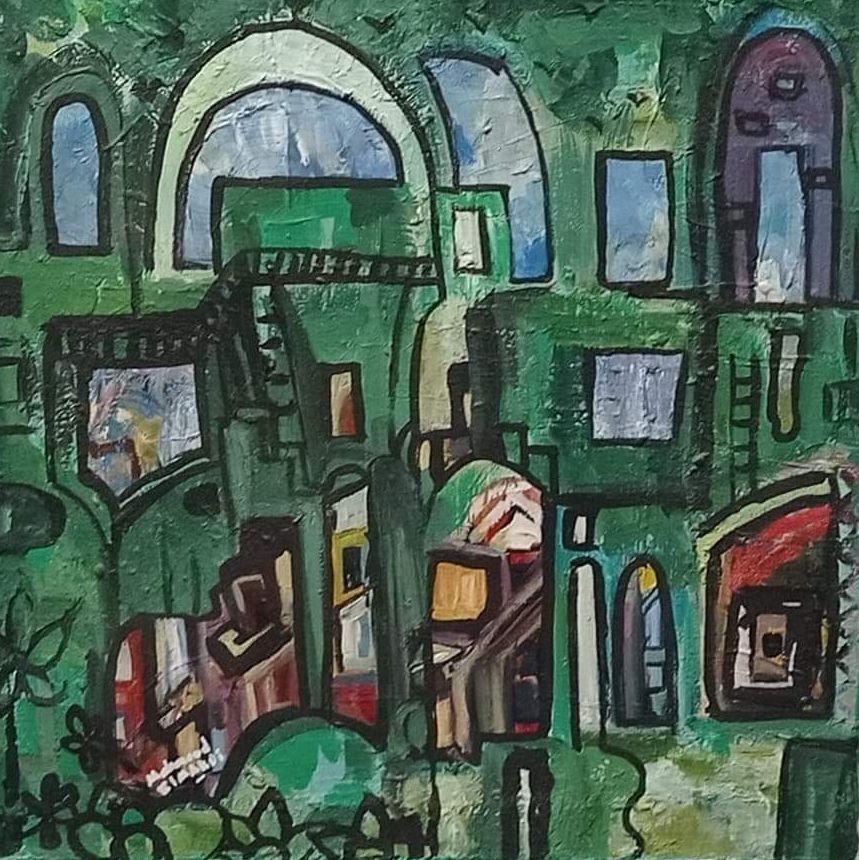
In terms of themes and subjects, however, every canvas is an independent experiment, he says. “A painting exploring the psychological gravity of displacement will have a completely different structural, tonal, and philosophical identity than a piece investigating ecological harmony and urban coexistence.”
Elmardi is currently focusing on his Guernica project, a multidisciplinary body of work in which his upcoming novel intersects with a series of oil paintings, “All work together,” he says,“ to dissect the trauma of war and the transformation of the human psyche under the weight of conflict.
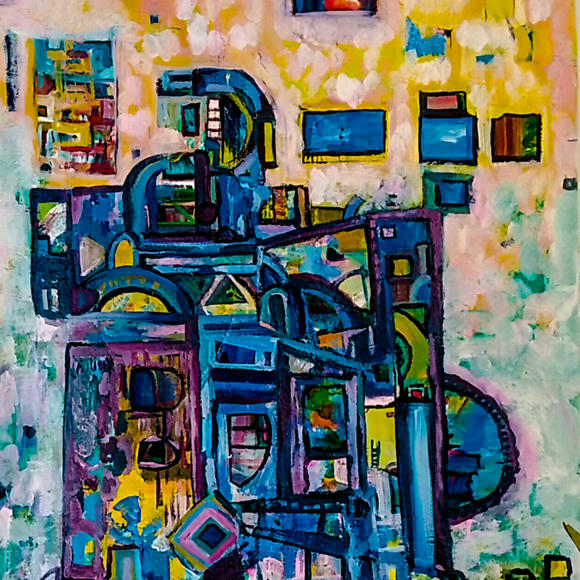
“Due to recent events in Sudan.” he says, ”my creative workspace is being reshaped outside geographical borders. Working from this new geo-cultural vantage point has unexpectedly enriched my practice, offering me a broader perspective to dissect concepts of home, fluidity, and moving memory.”
Elmardi looks ahead to completing and launching his Guernica project. Then, given his fascination with magical realism, he is considering a move to Colombia. ”I want to immerse myself in its rich Latin American cultural landscape,” he says,” seeking to fuse its vibrant heritage with the depth of my Sudanese visual and narrative practice on a global stage.”
— by Elizabeth Meade Howard




Share this post with your friends.

