
Twenty five hundred years ago, the Buddha propounded (among other ideas) that nothing in existence is permanent. Bob Dylan’s “The Times They Are A-Changin” narrows this aspect of reality to a sociopolitical context. In the first instance, realization and acceptance is advised, while the second is an admonishment and a call for changes in attitude and for action as did Henry David Thoreau and others before him.
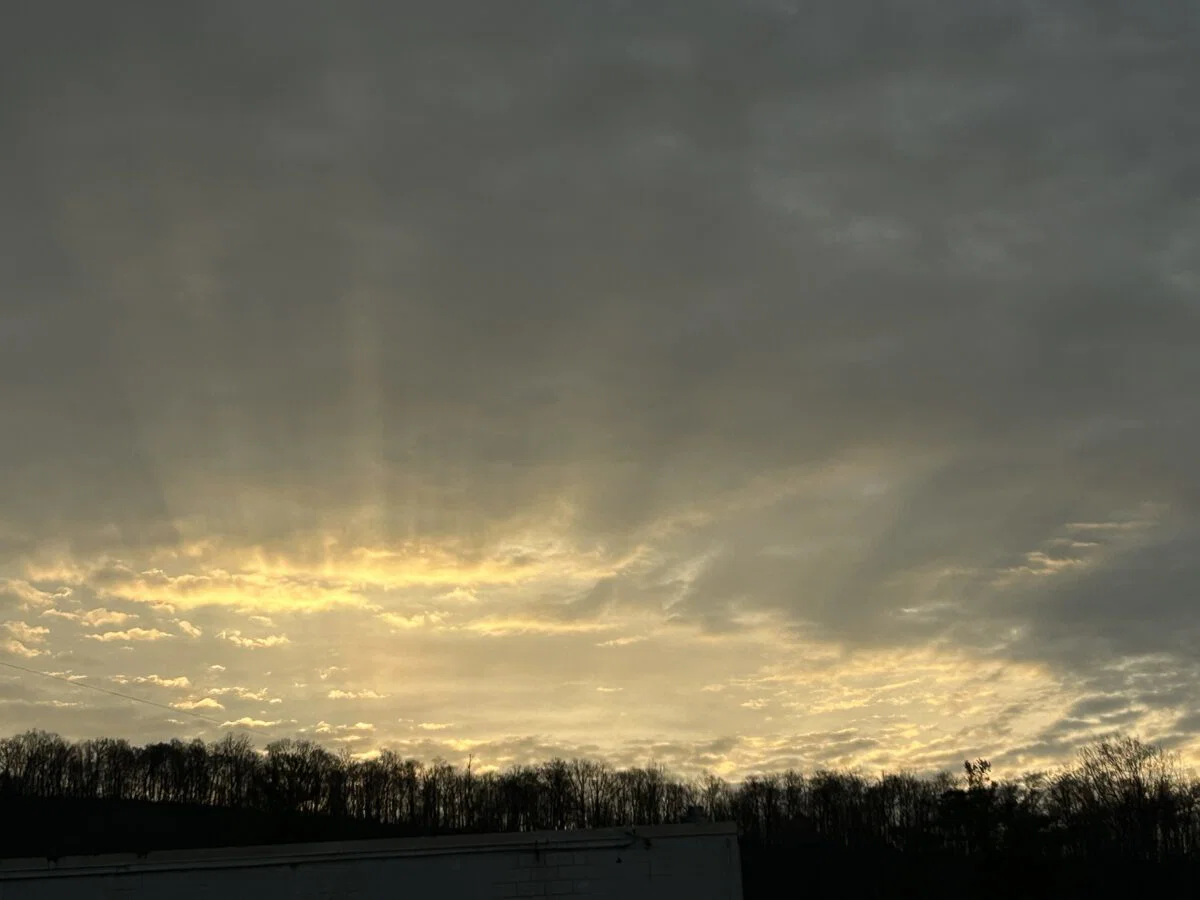
A little more than a month ago when the country changed its clocks to Daylight Savings Time (DST) (on March 8, 2026), I began contemplating how we record or measure time. This manipulation throws us back into waking in darkness, delaying Aurora’s arrival. How can this be? There is something unsettling about this convention especially for natural world devotees. The sun shines when it wants regardless of mankind’s schedule.
A brief, on-line search brings to light some interesting information. In 1784, Benjamin Franklin suggested that getting out of bed earlier to make use of the morning light would save candles and the consequent expense. But this mischievous jest was not presented or taken seriously. It took a hundred years for time zones to be officially established (in 1883) to accommodate railroad transportation schedules.
Not until World War I was the idea of DST enacted (by Germany, 1916) to save fuel for military purposes. America followed in 1918, but shortly after the conclusion of the war DST was abandoned. This time manipulation was again used for similar objectives during the years of World War II. After 1945, a patchwork of local and state times was so confusing for the transportation and communication sectors of the economy that The Uniform Time Act was passed by Congress in 1966.
Most folks know that the way DST works is to change time (clocks) by an hour twice a year against the backdrop of Standard Time: in Spring, clocks are set forward (thus ‘losing’ an hour) and in Autumn clocks are set back an hour, regaining the lost hour. Today this period of DST encompasses thirty-four weeks or 65% of the year.
There are exceptions to this mechanism: Arizona (except the Navajo Nation), Hawaii, American Samoa, Guam, Northern Mariana Islands, Puerto Rico and the U.S. Virgin Islands remain on Standard time. The American military uses DST on bases, but also Zulu Time (GMT) for operations and important communications.
Without delving into a more detailed history of DST, suffice it to say that there have been and remain, changing attitudes, legislational tweaks, and controversies. And the studies of this practice in terms of the effect on human health continue. The mismatch of human circadian rhythm to the artificial schedule imposed by DST for some people is a deeply disturbing influence.
The American Medical Association, The Sleep Research Society, and others point out that increased traffic accidents and cardiovascular events and for some people a general malaise occur after losing an hour in the Spring change. These occurrences are less acute when gaining an hour in the fall! A Stanford University study in 2025 found that staying on Standard Time reduced obesity by 2.6 million cases and 300,000 strokes a year when compared to switching to DST.
It is not surprising that in a 2023 survey 62% of participants desired to keep on one or the other schedules throughout the year. 50% of those preferred DST while only 31% preferred Standard Time in spite of the fact that Standard Time has been shown to be better for human health.
I wondered if DST was currently saving energy (often cited as the purpose of it) and my Google search stated that there is not a ‘significant’ savings as air conditioning and heating at the fringes of season off-set any cut back in lighting. Immediately coming to mind is the current hunger for data centers which do not keep office hours, humming away 24/7. Though there may be some lighting supported by alternative energy sources, (all those solar powered walkway lights) these sources do not off-set electrical use. The night is lit up so that “two-thirds of the U.S. population can’t see the Milky Way” because of light pollution” [Omar Mouallem “Dark Science” in Hazlett Magazine, 2016]
In all this, I realize that the world’s population has increased substantially during my lifetime. When I was born it was 2.32 billion. Today the world population is 8.3 billion, between three and four times as many. As a boy, the summer camp I attended operated on (Eastern) Standard Time. If you were assigned bird walk, a counselor woke you in the dark at 5:30 a.m. to be ready at the crack of dawn, just early enough to stumble down the country road to catch the calls of Phoebe, Wood thrush, Olive-sided flycatcher, and Eastern Wood Peewee. I loved, and still do, the fact that camp had no-hot-water showers, kerosene lanterns were used in the bunkhouses, a swimming pool was fed by a cold mountain stream, that everyone was assigned manual chores (setting tables, cleaning the wash house, and burying garbage among them), and that we kept class notes which we dutifully wrote out in notebooks.
Though by this mention of my camp experience, it may seem that I am terribly nostalgic and out of touch, I am a Thoreauvian, believing that simplicity is the better path to take. Much of modern/contemporary complexity is complexity for complexity’s sake, i.e. complication beyond any practical usefulness. As we become older and presumably wiser, simplification is the natural consequence: “been there, done that.” Older folks can wake up when they like, go to sleep in front of the TV, create their own schedule, and live their lives on Standard Time.
Time Change
Lift the living room sofa to move it over the rug:
on knees unplug the timer for the side table lamp,
push and pull the half-hour pegs to re-set your days.
As the whole world has gone crazy,
what was promising dawn is now
that falling back into darkness:
Daylight Savings Time (DST) is a false choice.
This is a minor joke the sun and earth
giggle about though some people take it to heart:
Seasonal Affective Disorder (SAD)
seems like an unfortunate misfortune
we should measure in sympathies.
Will such tinkering set all troubles to rights?
Eastern Standard Time (EST)
is only an estimate after all
depending on where you live,
an ETA, so to speak, a tricky abbreviation
as political sanity may never arrive.
Another adjustment is the only reprieve,
though never to capture time lost,
when long summer’s fireflies disappear,
bats go to bed in autumn’s falling dark,
when the equinox is the hinge pin to another hope.





Share this post with your friends.

