
Along with her missing teeth, Ms. Goway’s head and puff of white hair were all I saw on the screen. She rattled her handcuffs and said she would try the case herself.
It was the spring of 2024. I was a judge in California, handling arraignments, the stage in a case when criminal defendants made their first appearances, entered guilty or not guilty pleas, or—too often—asked for a delay.
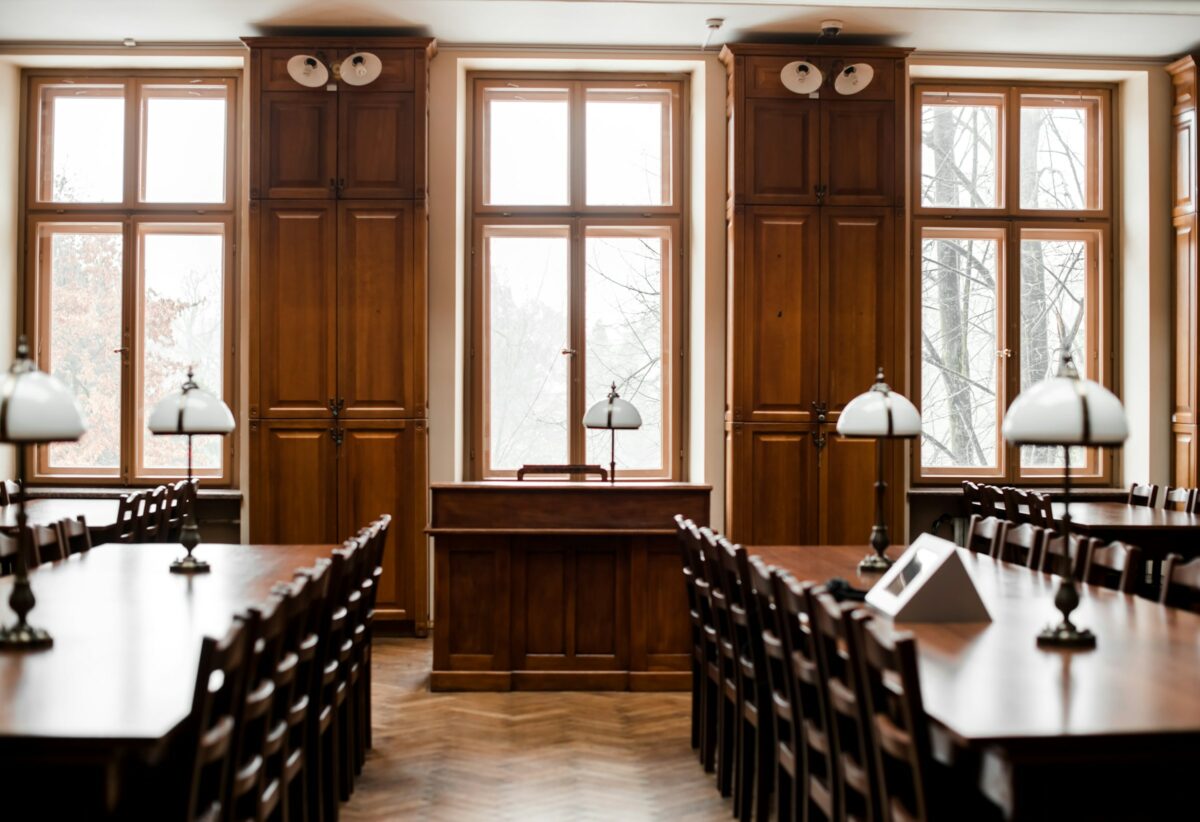
COVID had receded (sort of), but not its legacy of virtual hearings. While judges had to show up in court, even for brief matters like a plea, everyone else could appear remotely, and almost everyone did. As a result, I sat in an empty courtroom. At least my staff joined me in person. A bailiff stood by the rail, a court reporter was positioned near me, immortalizing my every word, and my clerk occupied a desk to the side and below my bench. She’d worked in this place longer than I. At times, in gentle whispers, she corrected me. As in, “don’t you want . .
. . . “an affidavit?”
. . . “to reinstate the bail?”
. . . “to exonerate the bond?”
Facing me on the bench were two screens. The first contained sixteen squares, each with either the head of a defendant (like Ms. Goway’s), their attorney, somebody from the probation department, a prosecutor, and, if needed, an interpreter. The second screen listed the docket for the day, usually about sixty cases, with defendants in alphabetical order. After I finished a matter, the first computer shuffled the group, evoking the board in the TV game show “Tic-Tac-Dough.” Every scramble forced me to hunt for the next defendant and lawyer I needed to click on. As I moved through the morning, faces disappeared; others lit up. Would I ever get used to this new way of managing a courtroom? I missed having lawyers and clients in person in front of me, and I wondered how long I’d last if the remainder of my judicial career consisted of staring at screens.
For my first twenty-five years on the bench, I delighted in the presence of human beings before me. Full-bodied humans, not just their heads. The exquisite tension in a courtroom was bracing, part of the reason I tolerated rush hour traffic. Whether during trials or arraignments, lawyers gestured, paced, and, at times, shouted. As they fidgeted or sat still, their clients added to the charged atmosphere. Sometimes hearings became my own private soap opera. Then, thanks to COVID, my courtroom began to empty until all that was left was a judge fighting loneliness.
Now, I felt as though I was operating a conveyor belt, struggling with the controls. If I were twenty years old, even thirty, I’m sure it would have been easier to manage the computers. However, like so many baby boomers, I floundered with the software, often missed the right keystrokes, and worried about making mistakes. My index finger turned the wheel on the mouse, sometimes it seemed for much too long as I scrolled through the roll in search of the right individual. On occasion, the software picked middle names and nothing appeared. Sometimes, a surname on the screen was wrong.
I had to depend on the lawyers to tell me who was “ready,” meaning defense counsel had interviewed their clients, usually for the first time, and now knew the facts as well as the prosecutors. I was frustrated that our IT staff couldn’t program the software so that people would appear when I called their case.
Two decades earlier, at California’s New Judge Orientation, an instructor said, “It doesn’t go any faster than you want it to.” Zoom or no Zoom, that was seldom true in a high-volume court such as arraignments. If I spent thirty minutes taking a not-guilty plea and then setting bail (which any judge should be able to achieve in under five), I’d drag down the entire calendar. And on occasion, when the Wi-Fi was unstable or Zoom went dark, we judges had to hustle through the docket, or the staff had to work overtime.
As for Ms. Goway, the deputy sheriffs placed her in one of the jail’s five meeting rooms, small spaces where the inmates sat alone during their court appearances. Cinderblock walls surrounded her, with barely space for a chair and a narrow surface between her and the screen, where she rested her shackled hands. She rocked back and forth. The microphone picked up her hard breathing.
“I’m sixty,” she said. “All I want is a paycheck. My public defender isn’t representing me. Get me somebody else.”
Inwardly, I winced. Her words constituted a Marsden motion—the term used to describe a criminal defendant’s request to fire their public defender. I cleared the courtroom because Ms. Goway was about to tell me why she wanted someone new, which was privileged information. Out went the bailiff, the interpreter, and a spectator in the audience—everyone except my clerk and court reporter. I became the overseer of a black screen save for two heads—Ms. Goway and her lawyer.
“I want to plead no contest and get out of here,” Ms. Goway said. “I’m going to die here. I have kidney failure. I need bottled water. I can’t drink tap water here. This woman’s not helping me.”
I believed every word she said except her last statement. I knew this public defender. A thirty-year veteran, she was a no-nonsense lawyer who worked hard for her clients. To imagine her ignoring a client was absurd.
Ms. Goway’s lawyer leaned forward. “I advised her to plead not guilty. Ms. Goway had been in jail for something else, and when they let her out, they didn’t return her clothes. She said they turned her loose in her underwear. There she was, on the street, walking to I don’t know where, but before she got to I don’t know where, a policeman arrested her for indecent exposure.”
“You’re the boss,” I told Ms. Goway. “You don’t have to take your attorney’s advice. If you want to plead guilty, you can. But I’m telling you that if the facts are what she says they are, you should win at trial.”
Ms. Goway’s public defender adjusted her chair. She explained that with a not guilty plea, “my office can arrange housing, therapy, and services. We can locate better treatment for her kidney failure than she could find for herself if she pled guilty and went free with time served.”
I refused to fire Ms. Goway’s lawyer. “Your Marsden motion is denied.”
Ms. Goway didn’t hesitate; she knew her next move. “I want to go pro per,” she said.
A Faretta motion. Another silent cringe. “Go pro per” is legal patois that criminal defendants use when they want to represent themselves. Without a lawyer, she’d receive her own cell, a backup attorney, and access to the law library—assuming she was competent to handle a trial. She wasn’t. Her answers to my questions convinced me she had no idea what to do.
I denied the Faretta motion. Ms. Goway’s public defender would continue to represent her. For a moment, confident I was right, the ruling energized me. But that changed as Ms. Goway struggled to adjust her earphones. “I’m going to die in here,” she said. “I’m dehydrating. And when they arrested me, they took my bag of medications.”
She was still breathing hard. She started to cry. Her head dropped to the counter, which gave me a close-up of her tangled hair. Frustrated that I couldn’t do anything for her, I remained silent. This wasn’t the first meltdown I’d lived through, but I had yet to get used to it.
***
Before Zoom, sheriff’s deputies had an informal practice of referring to defendants in custody as “bodies.” As in, “Judge, we have thirty-two bodies today.” But now, they were no longer bodies; they were just heads.
The English writer and philosopher G.K. Chesterton wrote that judges “do not see the prisoner in the dock; all they see is the usual man in the usual place. They do not see the awful court of judgment; they only see their own workshop.” This view is particularly true when all a judge sees is a cranium.
Whether in person or virtual, I wanted to learn more about the people before me, but the system rationed no more than a minute or two with each. The public defenders had more time, but not by much, and rarely at the arraignment stage could anyone furnish me with details the way Ms. Goway’s lawyer had. I learned little beyond the charge, be it rape, theft, battery, drugs, pimping, drunk driving, or murder. Anything more came from the arrest report, not from the accused, who’d been advised to remain silent. I reminded myself that every defendant on my computer had a unique story. Those who used drugs did so for their own reasons—escaping reality or meeting the cravings of their addiction. Many batterers lost their tempers because of something trivial—a meal they didn’t like, the remote out of reach. The reason might be bizarre—I recall one woman who pressed a gun against her boyfriend’s temple and said, “I don’t want to break up with you.”
I didn’t want to break up with the bench. Despite the challenge to relate to people through a camera, to serve as a judge was rewarding; a privilege. Also, day by day, maneuvers through the technology became less daunting.
***
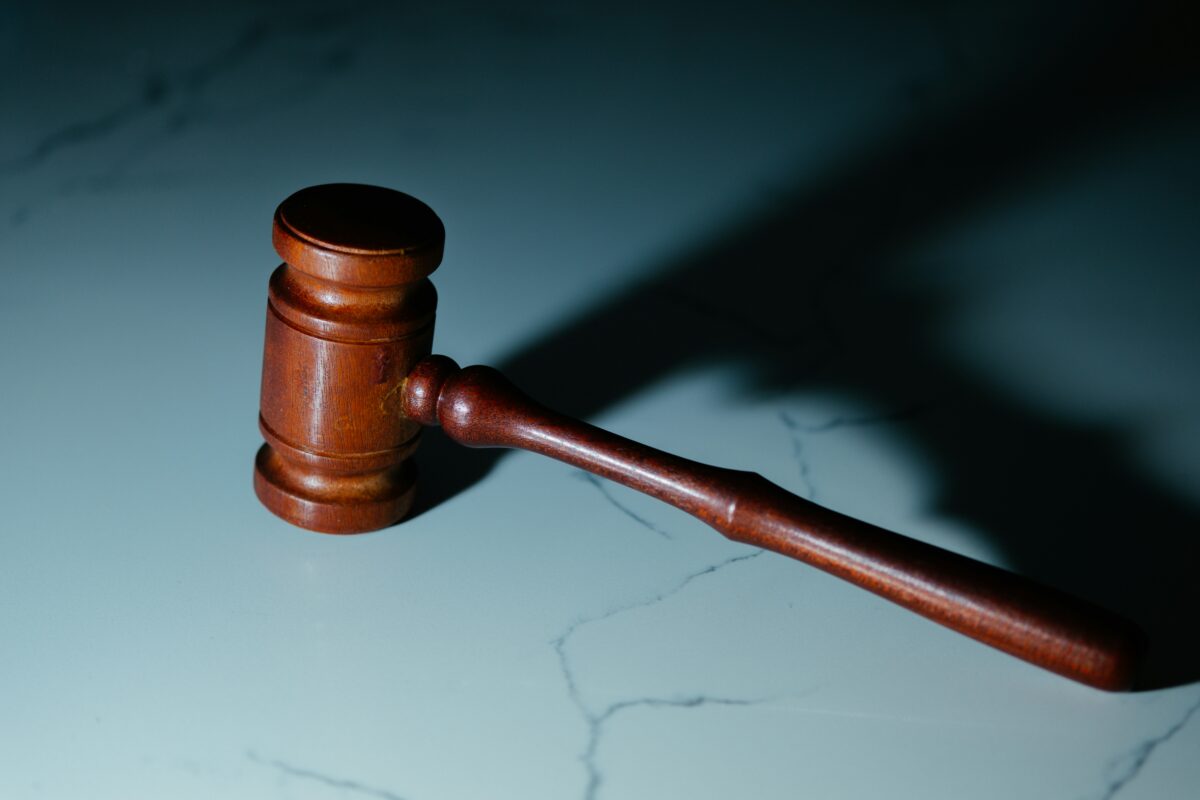
My relationship with power was complicated. A host of rules and statutes reined me in. Early in my career, I learned that my gavel was more effective if I didn’t wield it. In his seminal book Presidential Power, Richard Neustadt wrote, “Presidential power is the power to persuade.” Often, it was the same on the bench, and almost always in the arraignment courts. Should a defendant plead guilty, I could accept or reject the “deal”—a plea bargain that included the punishment prosecutors and defense counsel agreed on. All or nothing. I couldn’t add or subtract anything unless both sides were willing. But because they knew the facts better than I, my acceptance rate neared a hundred percent.
Then it dawned on me. I had the power to do something for Ms. Goway. I ordered the sheriff’s deputies to return her bag of medications and give her bottled water. That made me feel good.
With nothing left to do for her, I dropped Ms. Goway’s file into a chute to my left. Down it slid to the clerk’s desk, to go wherever files go. It was getting late. I turned my attention to the next head.




Share this post with your friends.


Dear Anthony, I enjoyed your short story. Not knowing that you were, in fact, an actual judge, I was delighted by the accuracy of several judicial observations. Sending you admiration and affection,
Lynda K.