
When photographer Scott Smith isn’t observing the world, he’s building one from scratch.
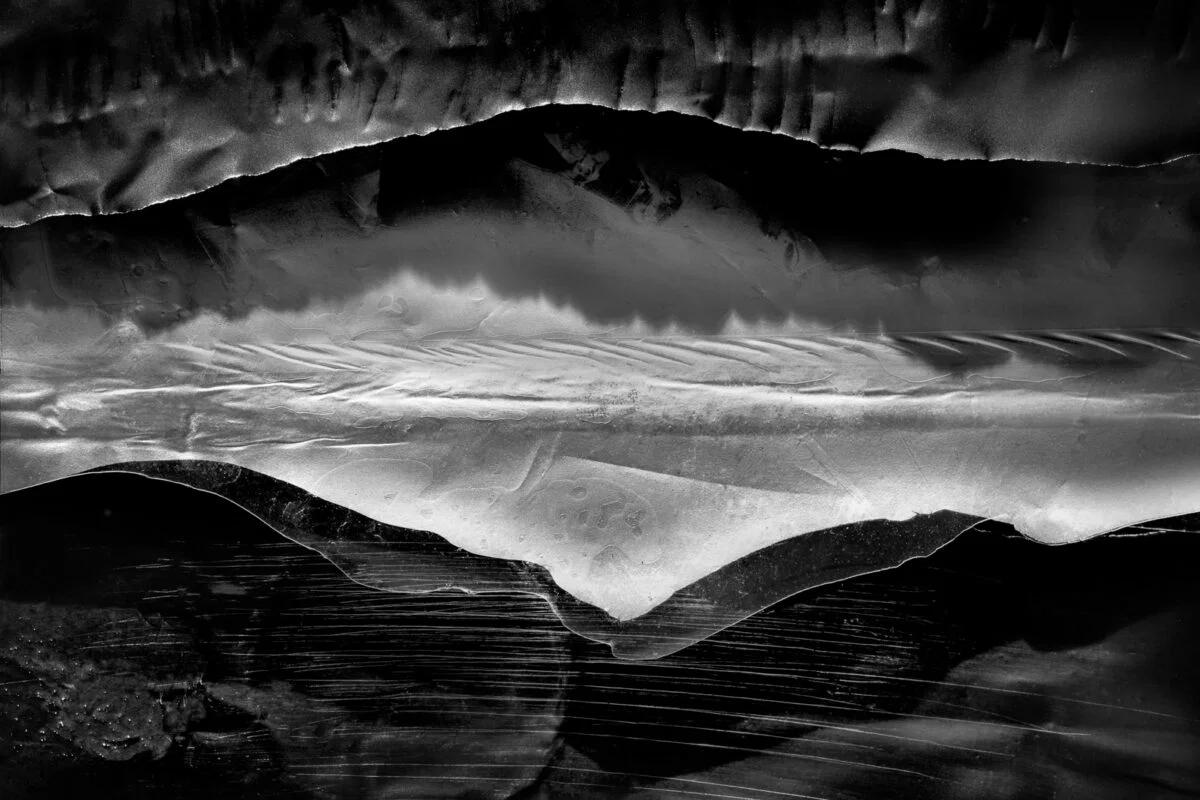
Standing in his well-ordered studio at Charlottesville’s McGuffey Art Center, Scott Smith muses over a framed print of one of his recent photographs. Created in the studio with small lights and unremarkable materials that include metal foil and the discarded label from a bottle of Gatorade, but rendered in dramatic black-and-white, the image is highly suggestive of a landscape, with a strong horizon line dividing an illusory mountain from its apparent reflection in water. Smith recently included the piece in a one-person show at Staunton’s Beverley Street Studio School Gallery, displaying it horizontally. Worried that the landscape reference is overpowering— “Is it too literal?” he asks himself— he turns the frame on its side so that the photograph’s bands of tone run vertically, erasing any reference to geography. “I’m so on the fence about this piece,” he says.
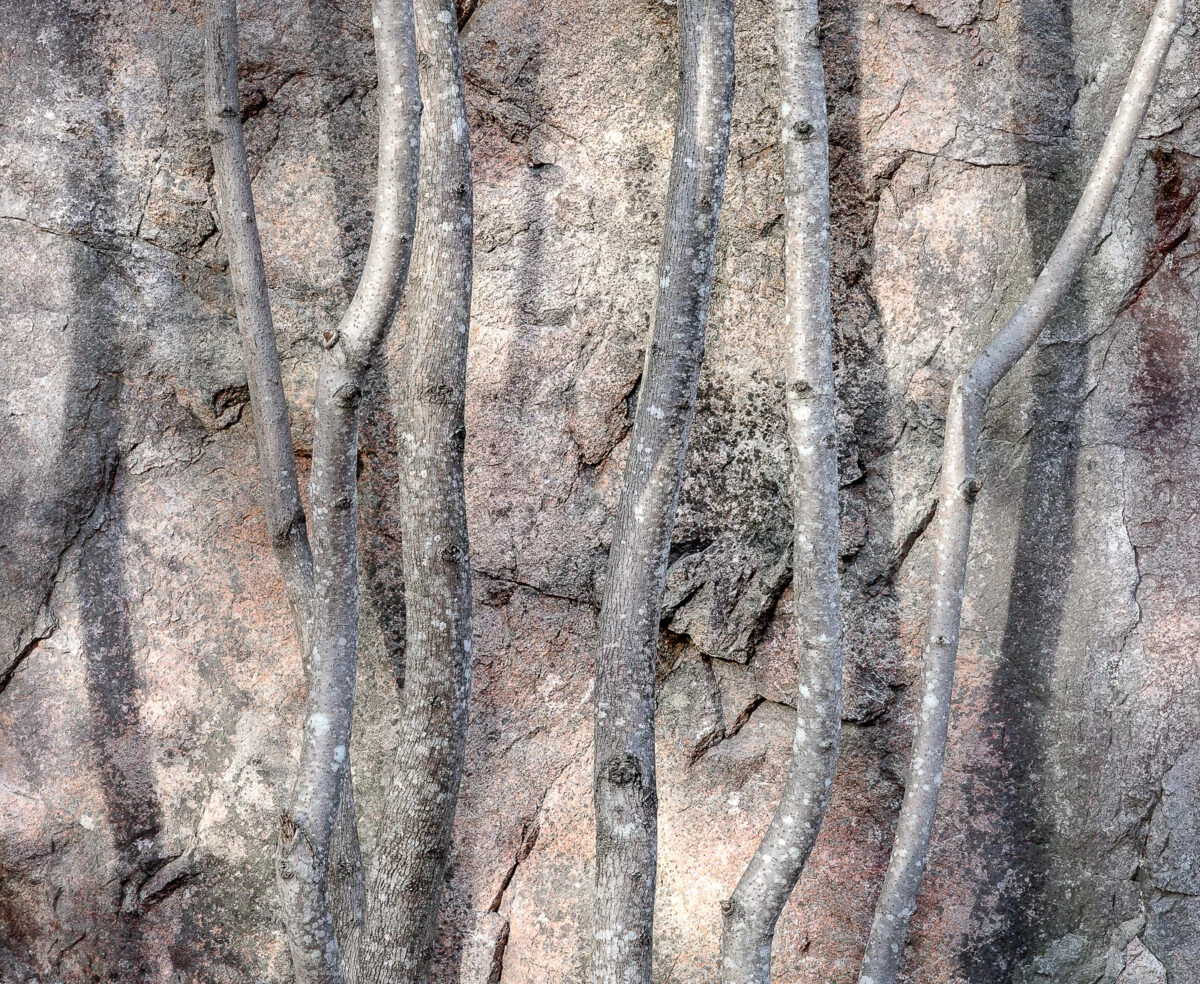
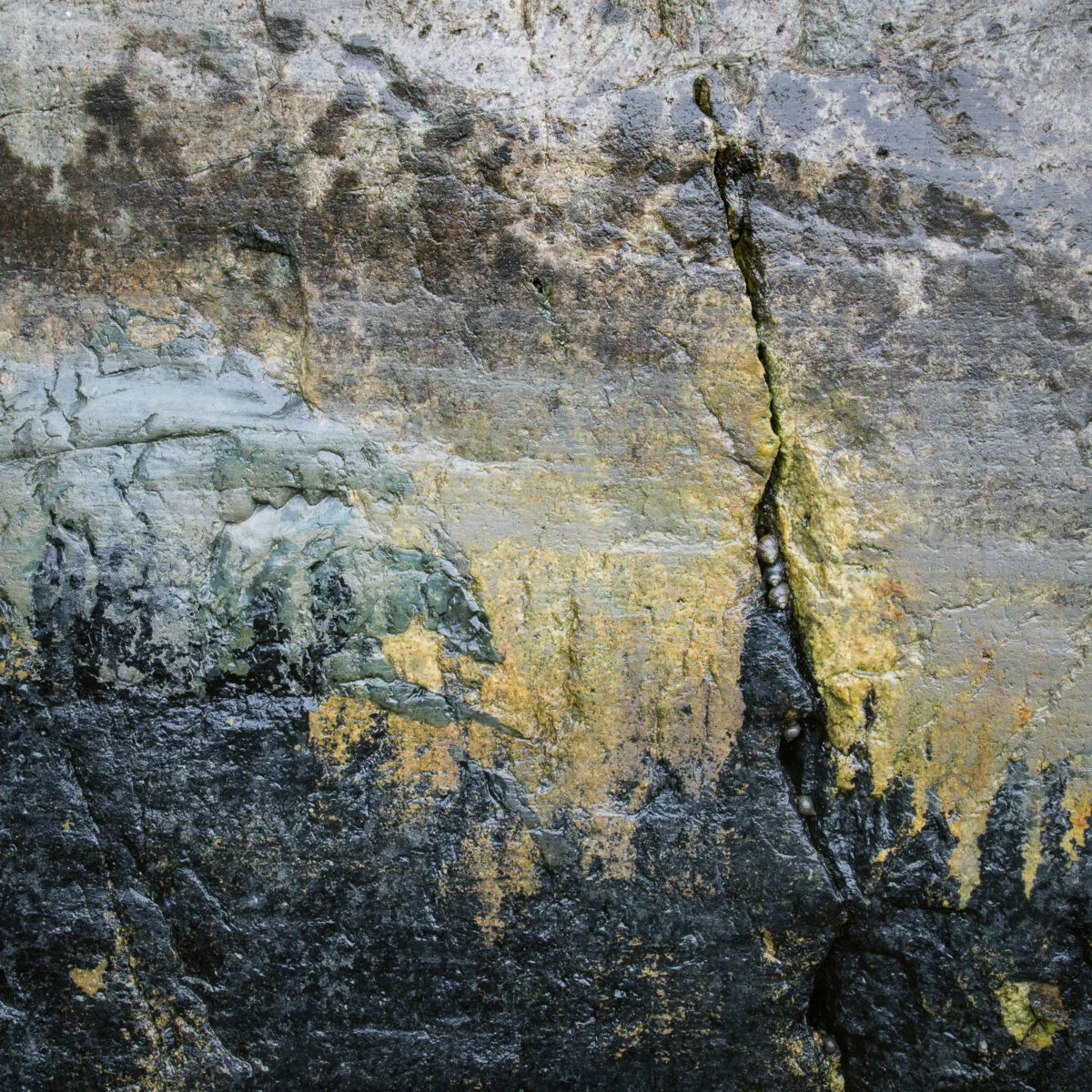
Smith likes to say that his photography has two lives. One life is observational, the medium’s default. The other is constructed, meaning images such as his unstated landscape that are built from scratch in his studio. It would be easy to refer to these two approaches by the art world’s standard terms, representational and abstract. Yet that would oversimplify the nature of Smith’s work, because his observational photographs—usually images of the natural world—are often highly abstract, while his constructed photographs, made mainly from found materials as simple as a piece of paper or a sheet of ice, are the direct result of close, single-minded observation. That ambiguity lends power to his work.
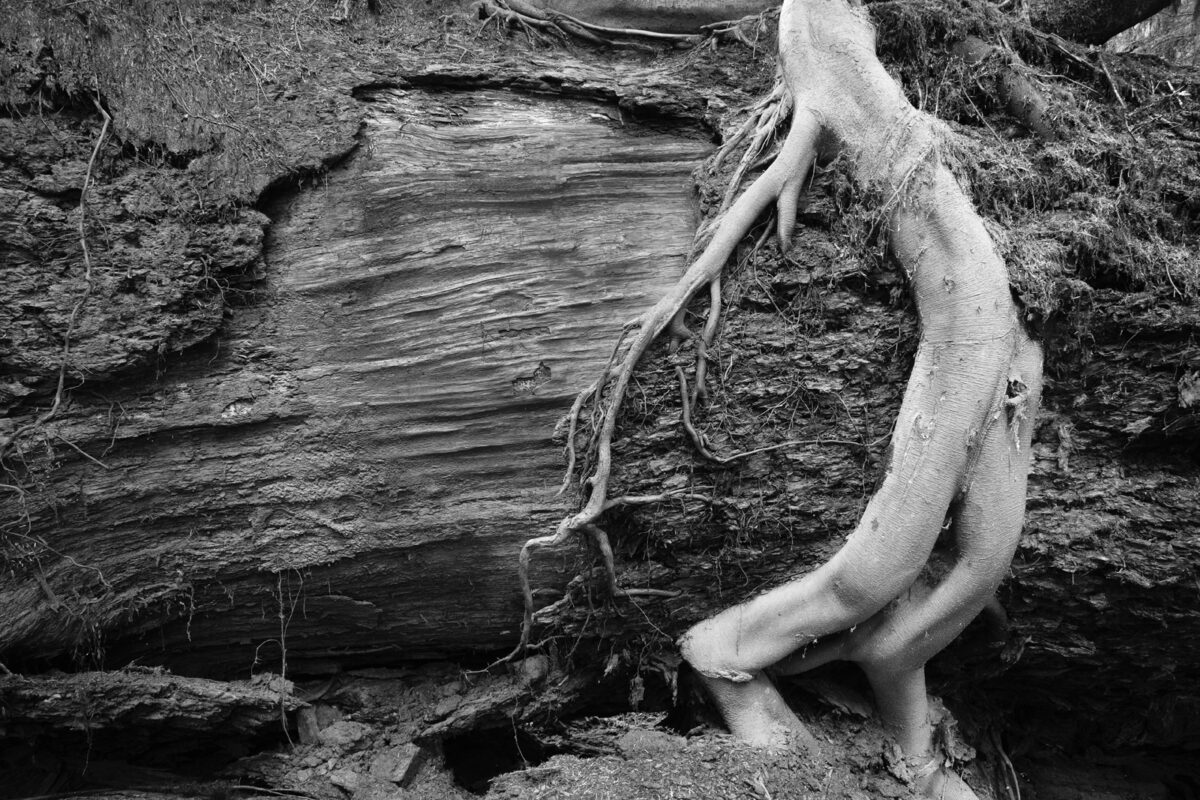
Smith’s observational photographs feature some of nature’s most basic elements—water, rocks, and trees, the latter the exclusive subject of a recent show at McGuffey called Tree Lines. In the past few years his favorite place to find these things has been Maine’s Acadia National Park, where he did a three-week artist’s residency in 2017. As with many of his subjects he has returned there repeatedly because, as he says, “It’s different every time.” These photographs, which are usually in color, sometimes read like abstract expressionism, a feeling augmented by the lack of a horizon line. Yet straight-on images of eroded rock faces can suggest landscapes, recalling Leonardo’s advice that artists should study old, weathered walls for the imaginative scenes they often evoke.
Aside from the meticulous craft they share, both bodies of work are driven by Smith’s overarching interest in light and the way it describes surfaces. Yet his studio images are unlikely to be suggestive of literal scenes, let alone landscapes, hewing to a sumptuous, nonobjective abstraction that’s more often than not in black and white. “One of the challenges of photography is that it’s so good at representation,” he says. “And this means we end up talking about what was in front of the camera rather than the print on the wall in front of us.” In fact there’s often little clue in Smith’s studio images about how they’re put together—about what was actually in front of his camera. Knowing this can come as a surprise.
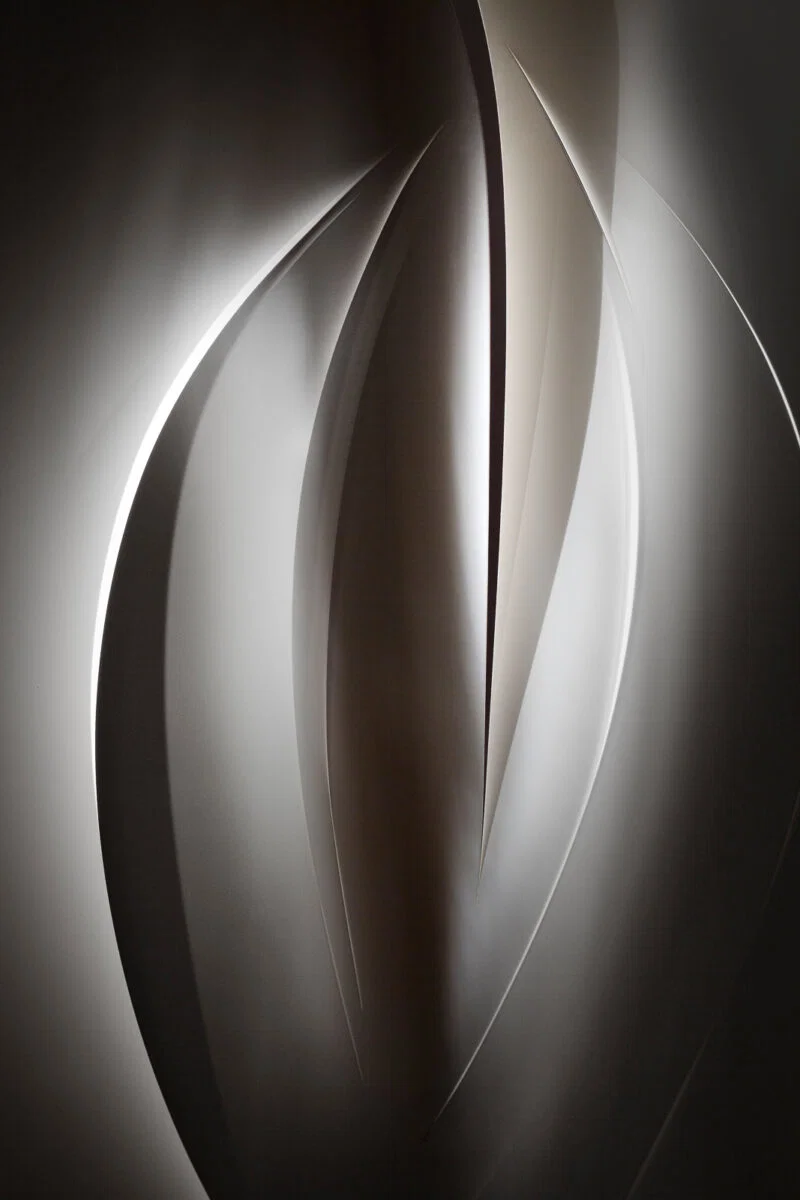
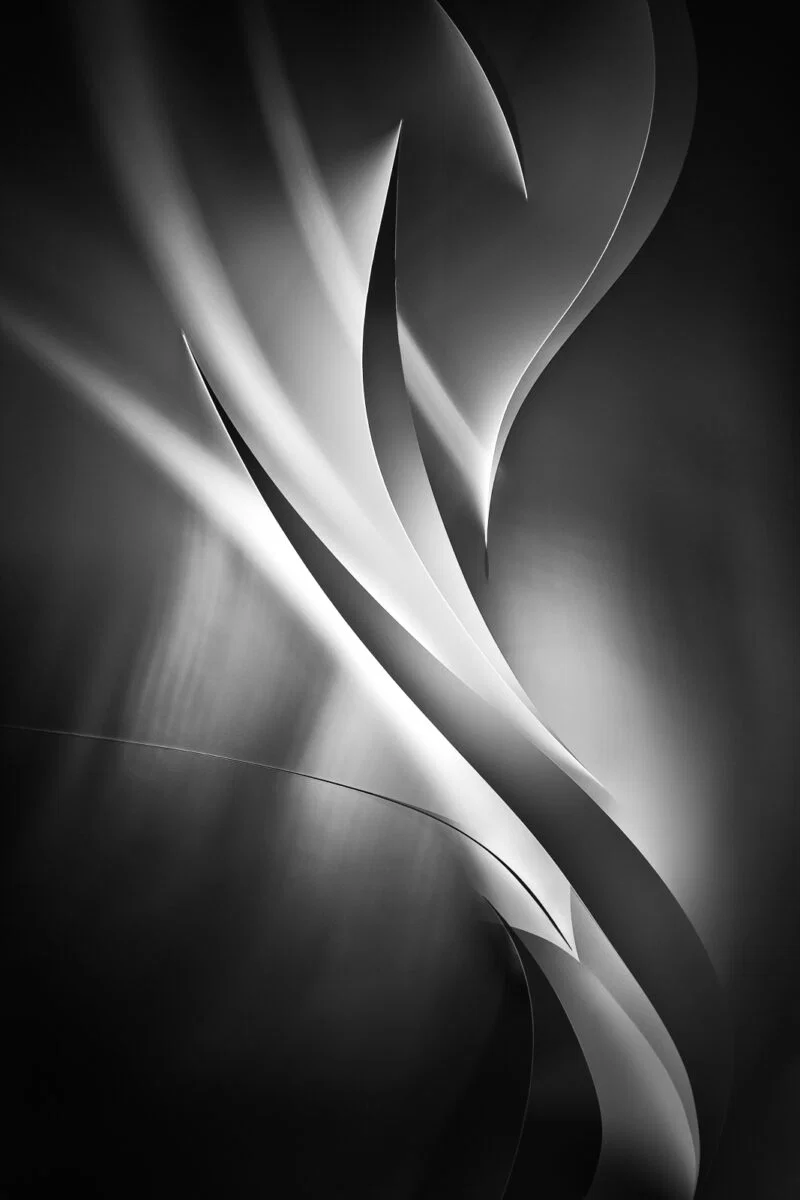
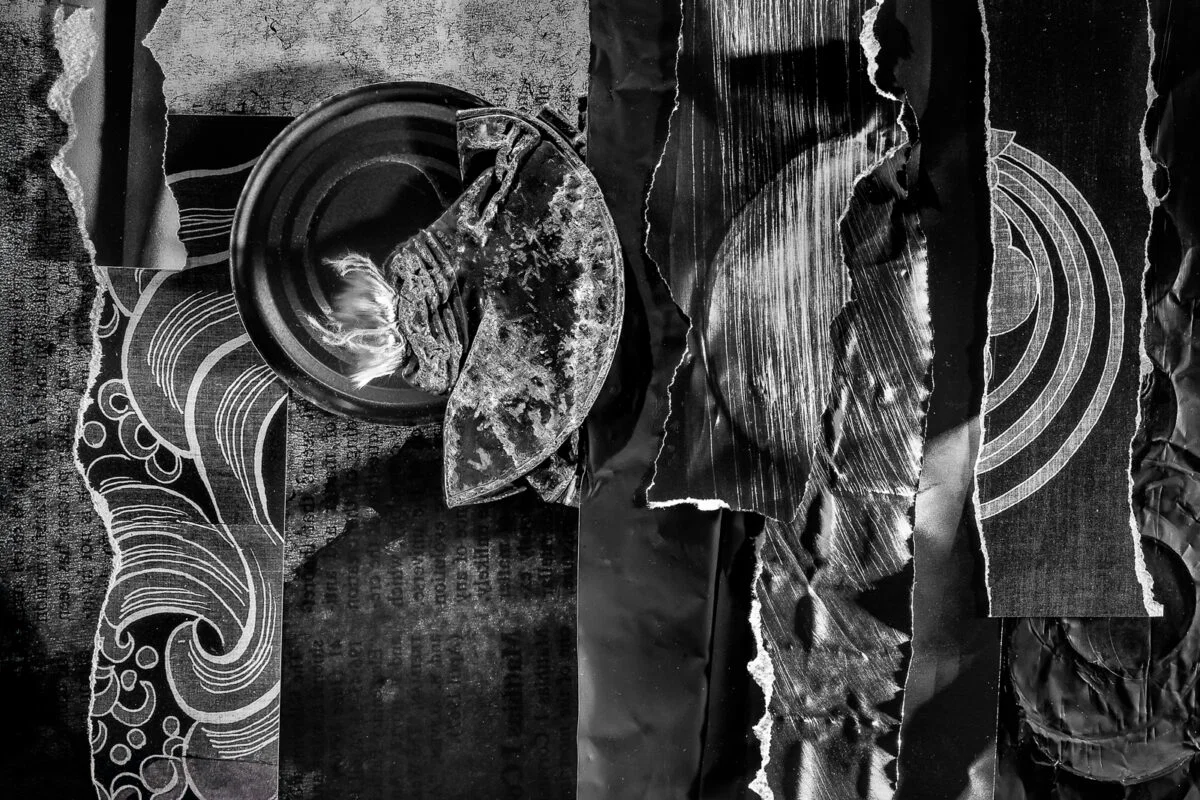
For some years ordinary white paper has been Smith’s go-to material for this body of work. He mounts a sheet on an adjustable easel he built for the purpose, then makes careful, considered cuts in it with a utility knife. To get the cuts to pop up out of the sheet he creates tension along its edges, securing them with tape or clamps. This is where light comes in: “I don’t use anything fancy,” he says. “A lot of the lighting is done with cheap penlights, sometimes with colored filters over them.” He typically places these at a low angle relative to the paper so that their beams rake across its surface, highlighting the contours created by his cuts. And he will often alter the quality of his light by placing home-made modifiers in front of its source, perhaps a sheet of foil with shapes cut out of it, or even ready-mades as simple as a colander or the crinkly cellophane from a pack of cigarettes. “Light has amazing power to transform ordinary things,” he says.
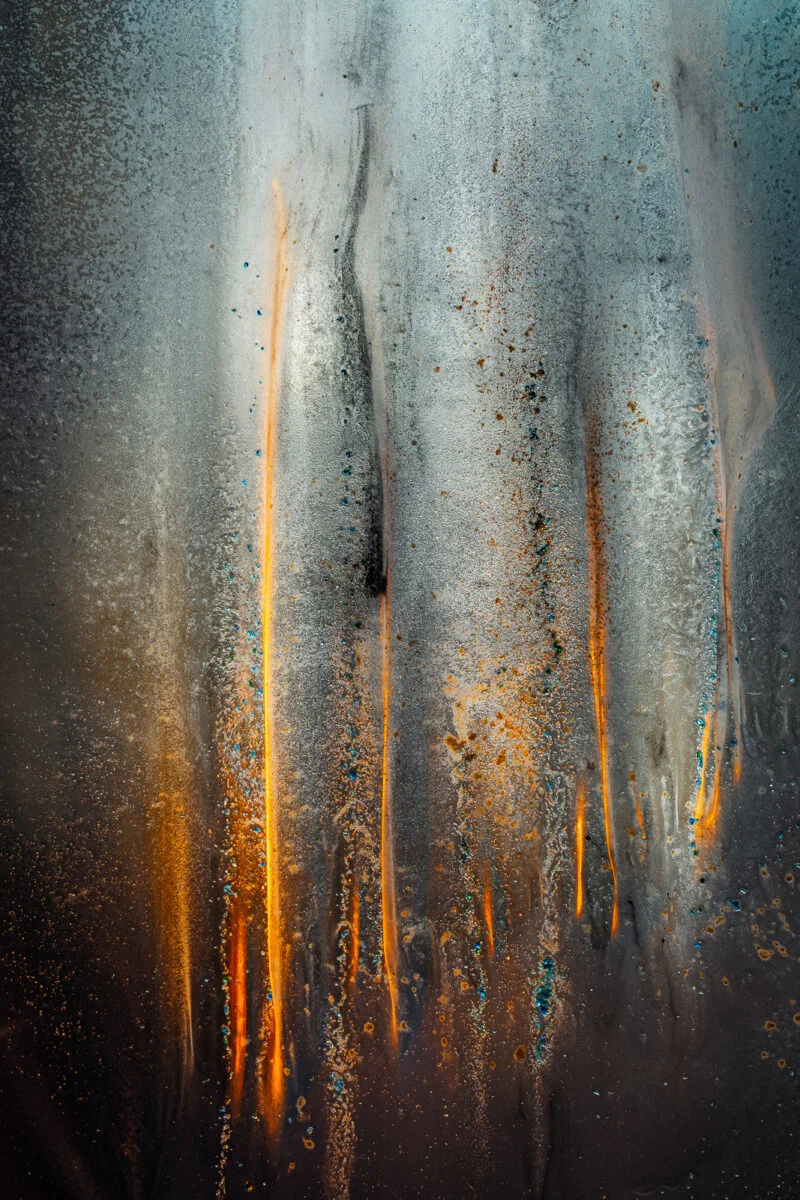
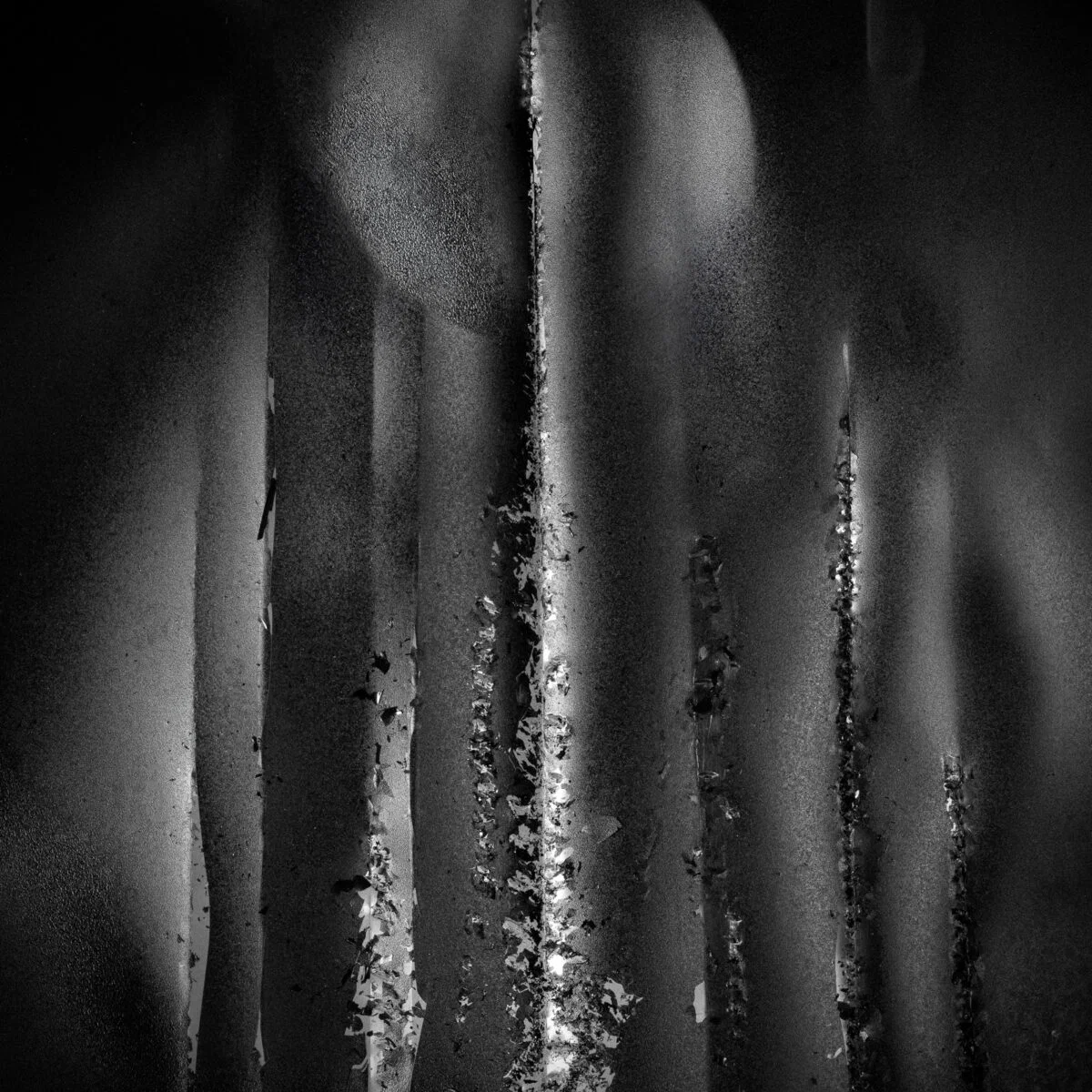
Another such ordinary yet transformable material is translucent plastic sheeting, in which Smith introduces melted distortions and wrinkles by applying a culinary torch, the kind used to put a crust on creme brulee. The resulting irregularities catch light in surprising ways. And in a case of the outside world kindling an idea in the studio, a recent favorite is sheer fabric— inspired not by The Birth of Venus but by the diaphanous window curtains he noticed at that painting’s home, Florence’s Uffizi Galleries. With fabric, folds and creases readily catch and diffuse the light. “I just tug and pull and twist until I see what I want,” says Smith.
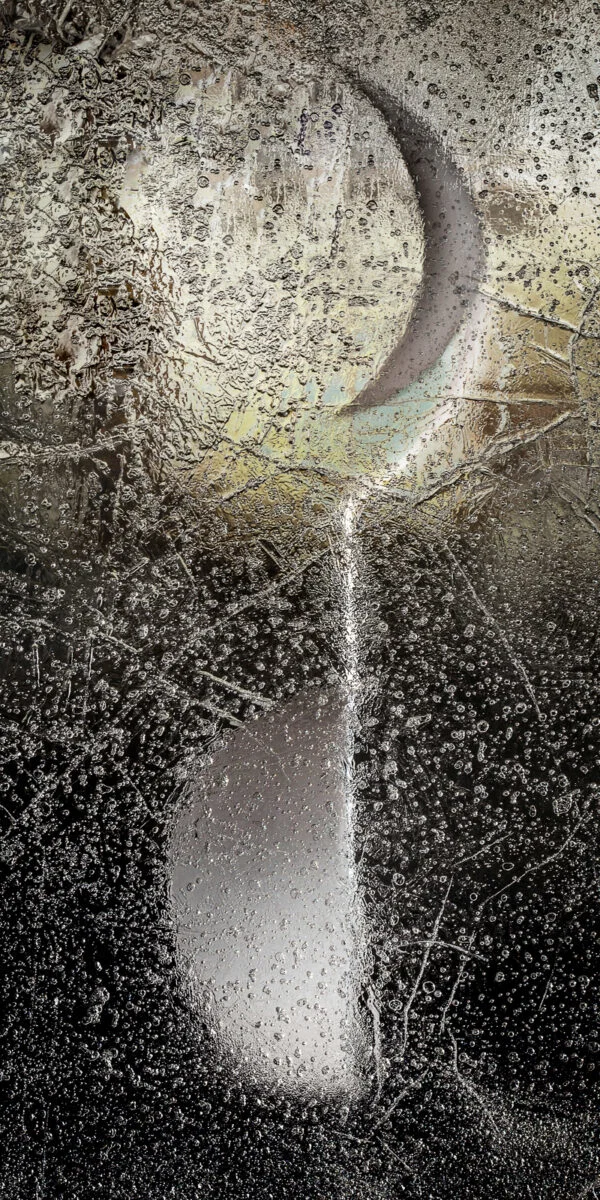
One of the most productive substances Smith has used for his constructed photographs is ice. Unlike paper, plastic, or fabric, it’s a material he has photographed regularly in its natural winter habitat—on frozen ponds, between glacial rocks, along the shoreline. This is a case in which his observed and constructed subjects intersect. “Who doesn’t go out in the winter when the first ice arrives and love the beautiful patterns it creates?” he asks. “I felt that way, but I wanted more control.”
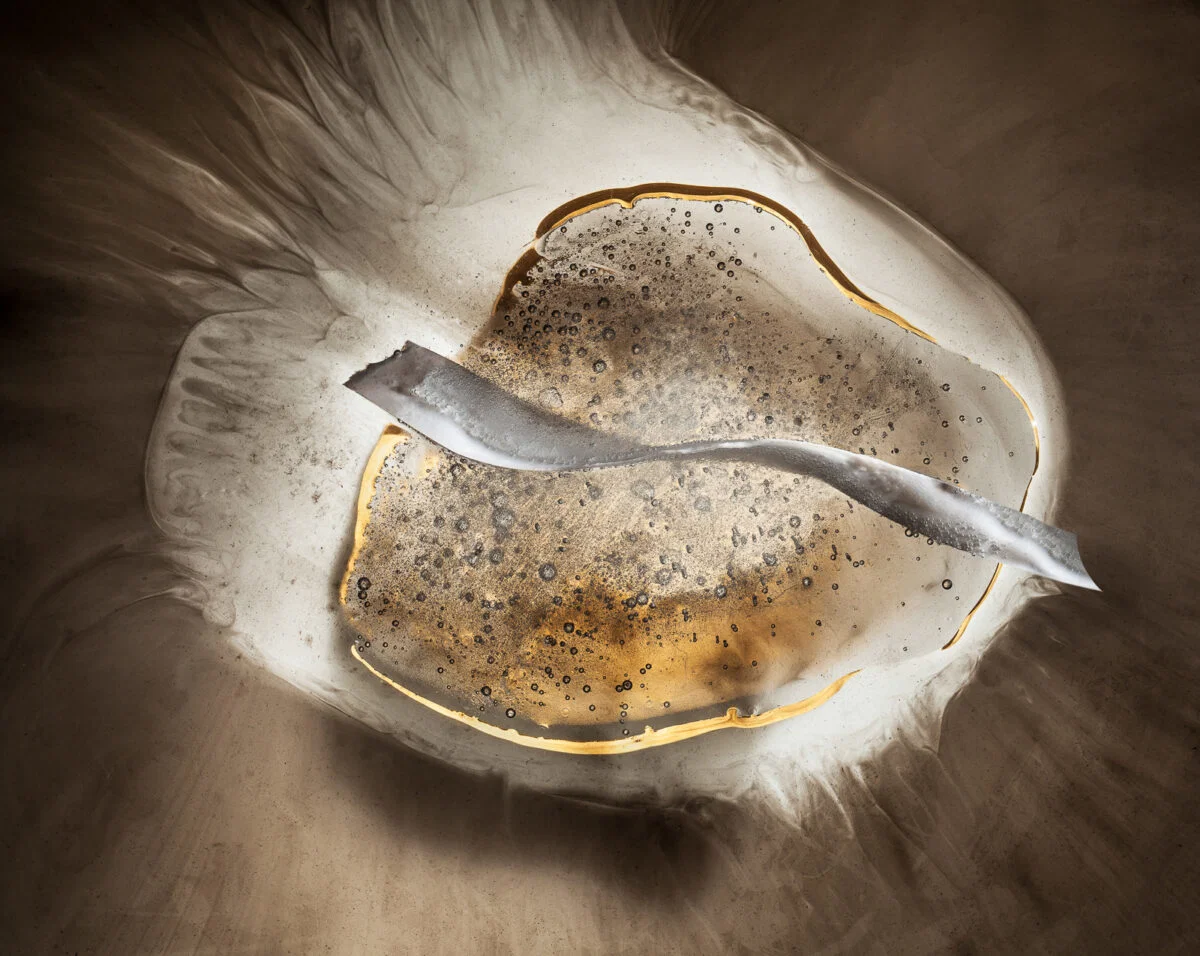
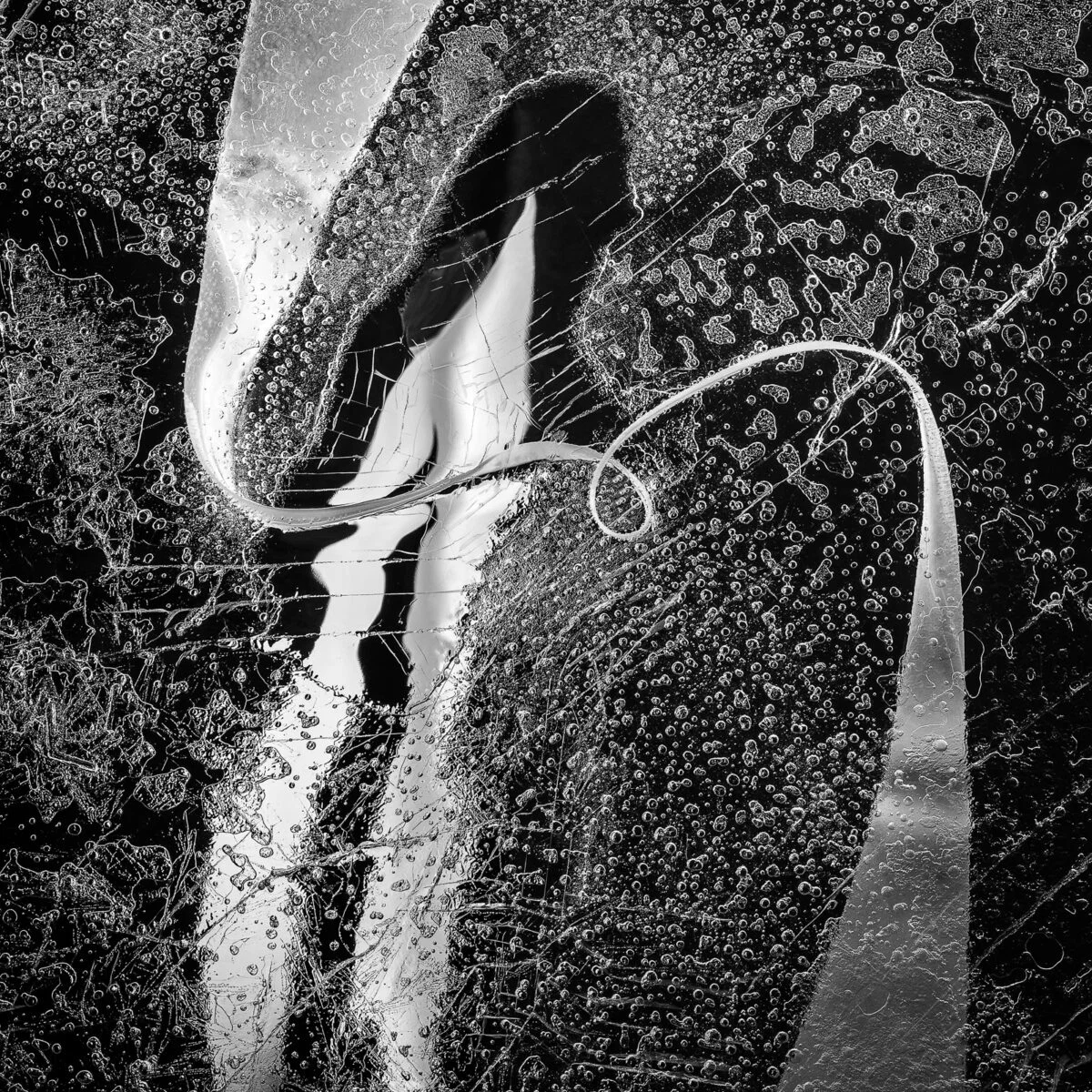
To achieve that control, Smith has installed a full-sized freezer in his McGuffey studio so that he can make his own ice as needed. He simply fills baking sheet pans with water and slides them into the freezer. When the ice is solid he’ll run a hair dryer along the bottom of the pan to loosen the sheet so he can lift it out. Then he’ll clamp it into place horizontally, aiming his camera down at it. Trapped air makes ice cloudy, forming patterns in it; Smith can clarify the ice by lightly melting it with his culinary torch. And he has to work fast lest everything end up in the drip pan. “It’s a little bit like photographing sports,” he says. “If you don’t shoot quickly you can miss the picture!”
If the patterns formed and tweaked in a sheet of ice aren’t to his liking, Smith will even start dropping ink onto its surface. The ink follows irregularities and seeps into cracks, forming a sort of art-for-art’s-sake Rorschach. He’ll also embed things in the ice; for example, putting a strip of paper into the water in a sheet pan before placing it in the freezer. “It really feels like drawing,” says Smith, who has done his fair share of life drawing.
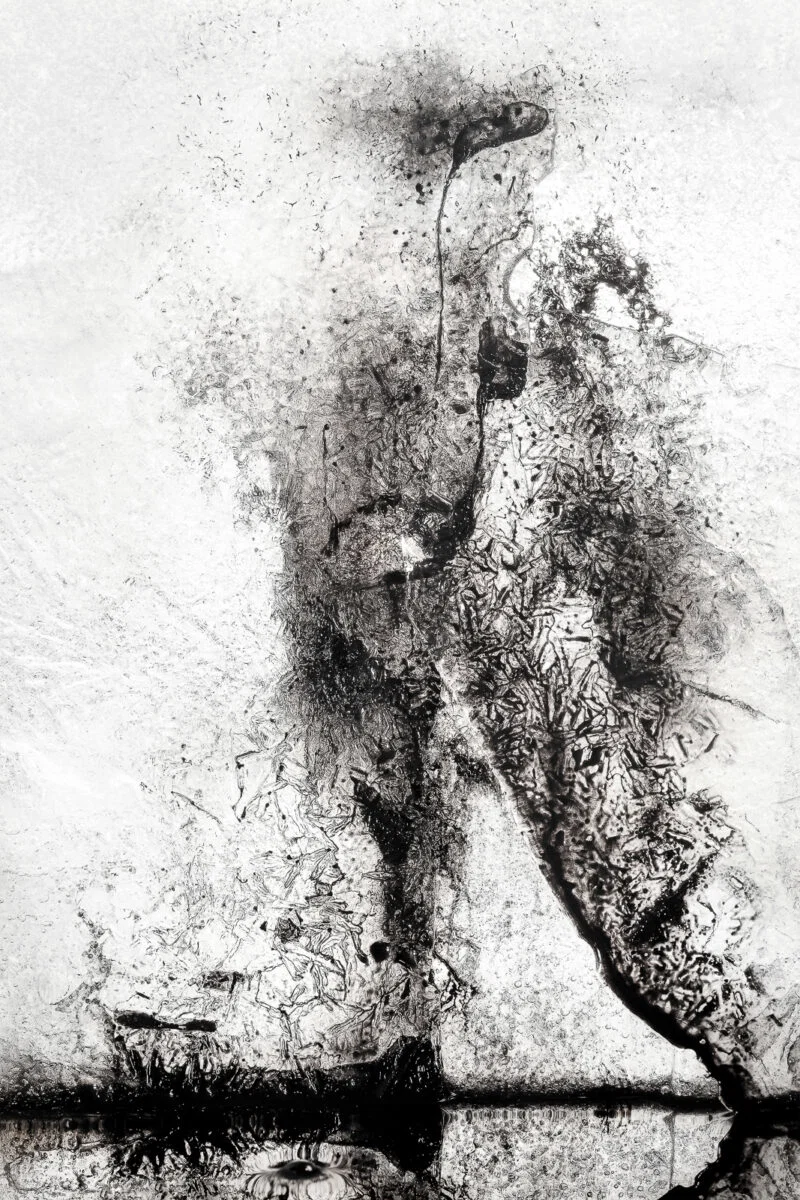
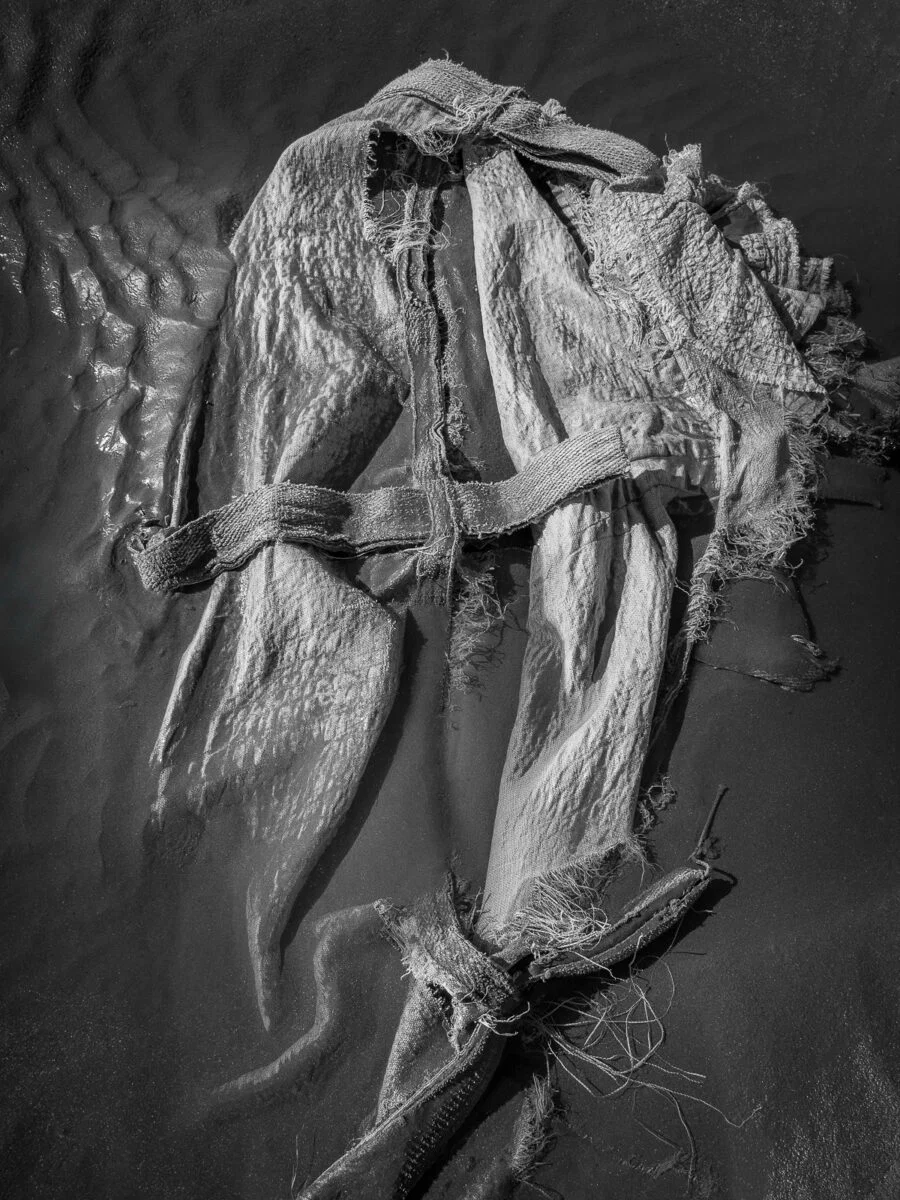
Much of the beauty and complexity of Smith’s studio creations comes from his use of layering, to which ice’s translucence is well suited. “I’m very interested in materials where there’s a surface but there’s something visible behind it that adds detail, light, or color,” he explains. To pursue this idea he has constructed an ingenious, table-like device that incorporates slots supporting multiple levels of sheets of glass or clear plastic; the relative heights of these platforms can be adjusted as needed to control distances between the materials they support. The device allows Smith to place other layers beneath his primary one, and in particular to throw layers out of focus so that they contrast with the main layer’s sharpness. “I think photographers are seduced by that sort of thing,” he says. “We’ve been thinking about depth of field all our lives.”
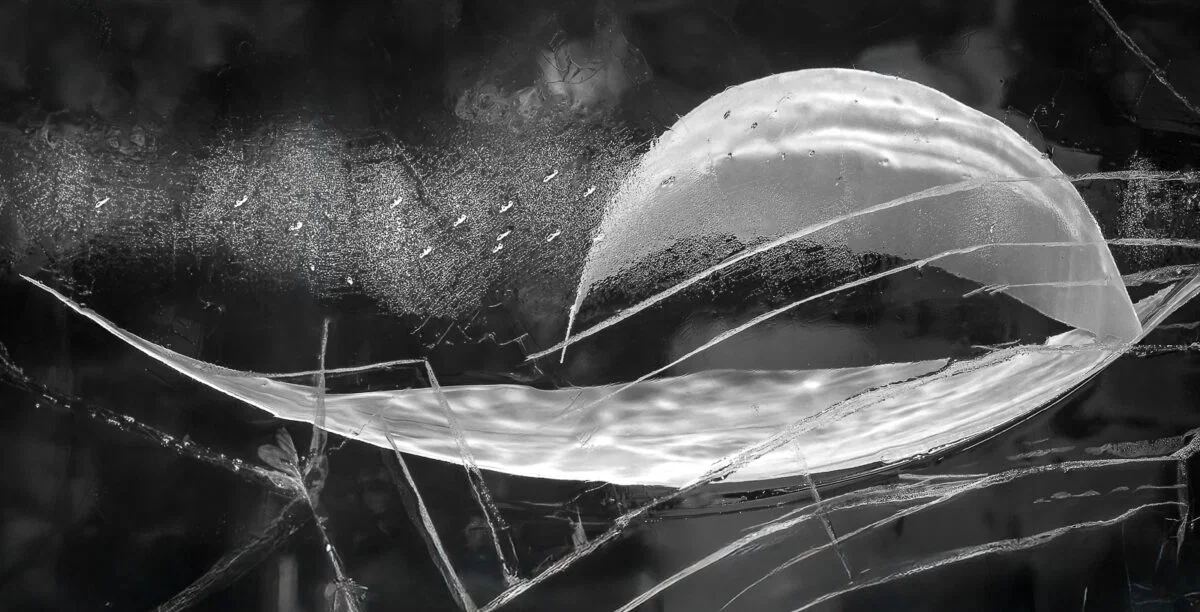
Smith says that part of the excitement of his process lies in not knowing exactly how an image will turn out. “I have a feeling about whether an idea will work going forward, but there’s no certainty to it,” he says. “So I always have the delight of surprise—of finding something beautiful that I didn’t see coming.” But the process, while one of discovery, is still painstaking. “You pull the paper or whatever you’re using this much, that much; you move a light this much, that much,” he says. “It might take fifty or a hundred slight variations, but then all of a sudden you go, wow, that’s cool. The exercise really strips photography down to its essentials, just material and light.”
Smith cites several photographers as important influences, some of whom have explored territory akin to his studio work. One was his beloved photography teacher at the Rochester Institute of Technology, Charles Arnold, others are Paul Caponigro and Frederick Sommer. The eminent Carl Chiarenza has a special place in his aesthetic. Yet, while Chiarenza’s imagery is almost unrelentingly dark in its overall tonality, Smith’s has an engaging, often ethereal lightness.
Art came first for Smith, but his background as an architect has also shaped his aesthetic. Before committing himself full-time to fine-art photography he worked at several of Charlottesville’s architectural firms, the last of them Bushman Dreyfus, where he also photographed many of the company’s buildings. He did extensive photography for prizewinning architect, and UVA architecture school professor, W.G. Clark, whose use of light in his buildings Smith greatly admires. “I think my architectural experience always informs my work, particularly in terms of composition,” says Smith. “Architectural photography is fundamentally about describing three-dimensional space in a two-dimensional plane, and that’s still what I’m doing every day. If there’s a straight line in my subject I’m likely to make it parallel with the edges of the frame!” Yet two other architects Smith admires, Frank Gehry and Antoni Gaudi, seem to have influenced his delight in the curvilinear.
Being part of McGuffey’s community of artists is important to Smith, who in addition to maintaining his studio is heavily involved with the storied co-op’s exhibitions program, including curating shows on its gallery committee. “It’s so easy to connect with other artists,” he enthuses. “There’s constant interaction and exchange of ideas.” Along with his own drawing, Smith is doing monoprinting with the help and counsel of McGuffey’s printmakers. And over the years he has taken improvisational dance classes across the hall from his studio, even participating in public performances. Dancing allowed him to come back to his own work refreshed, he says, and with less self-doubt. Art’s boundaries, he would tell you, are porous.





Share this post with your friends.

