
Nigerian artist Sefunmi Adeola puts his sharp eyes to work as a photographer, illustrator and textile designer focusing on his African people.
“I became interested in photography around 2014/2015,” says Adeola. “At the beginning, I was very interested in street photography and abstract street photography. I studied the works of artists I admired, looking at the tone, color, themes, and image-making.
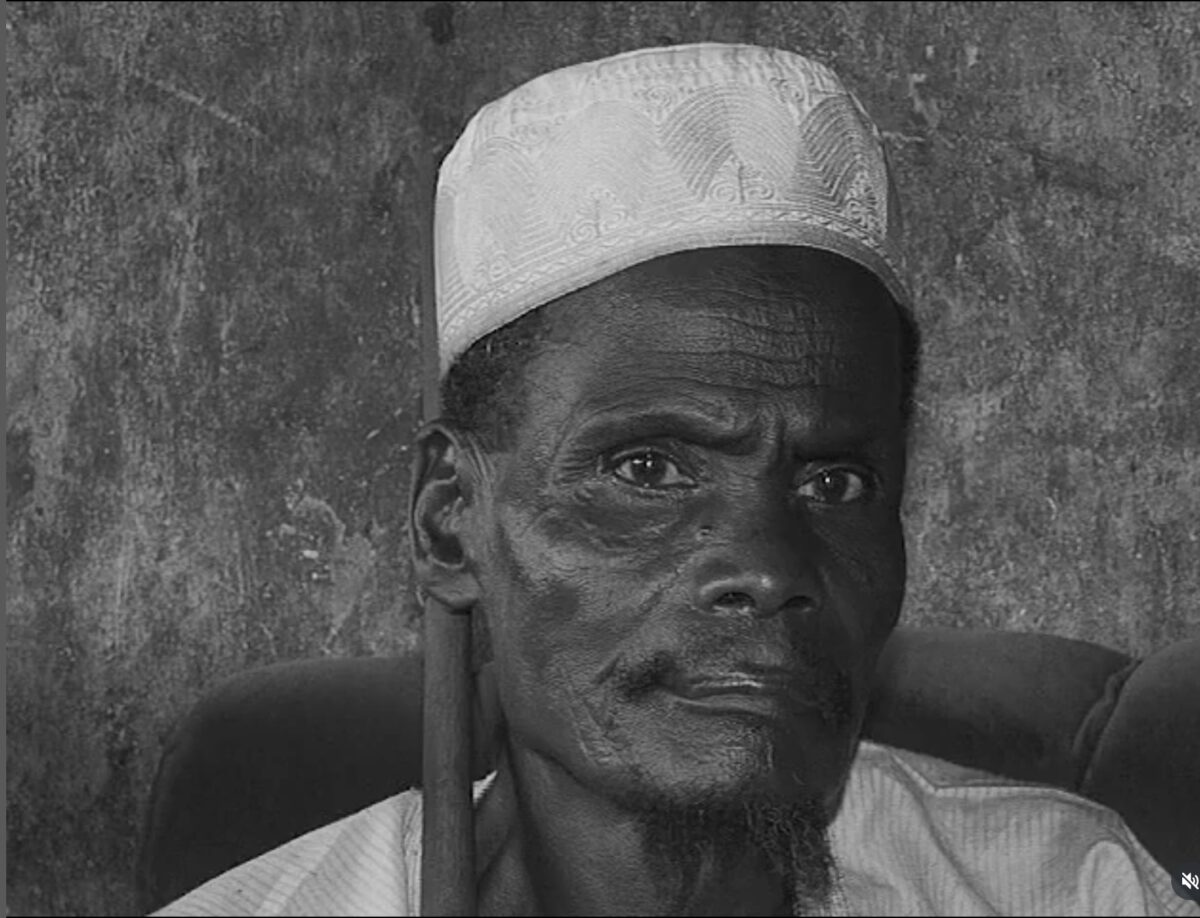
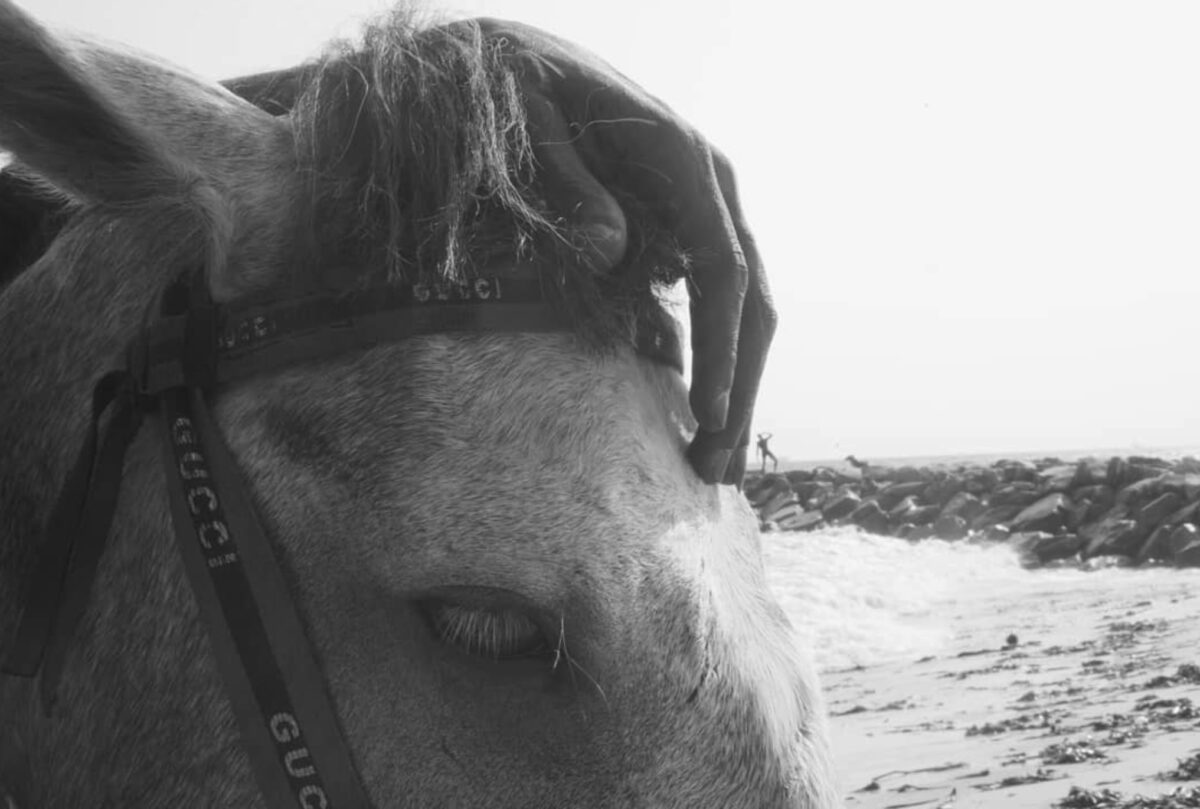
“I was utterly fascinated by the black and white images of artists like Ralph Gibson, and Rotimi Fani-Kayode as well as Sunmi Smart-Cole, Robert Frank, Robert Capa, Annie Leibovitz, and Diane Arbus.”
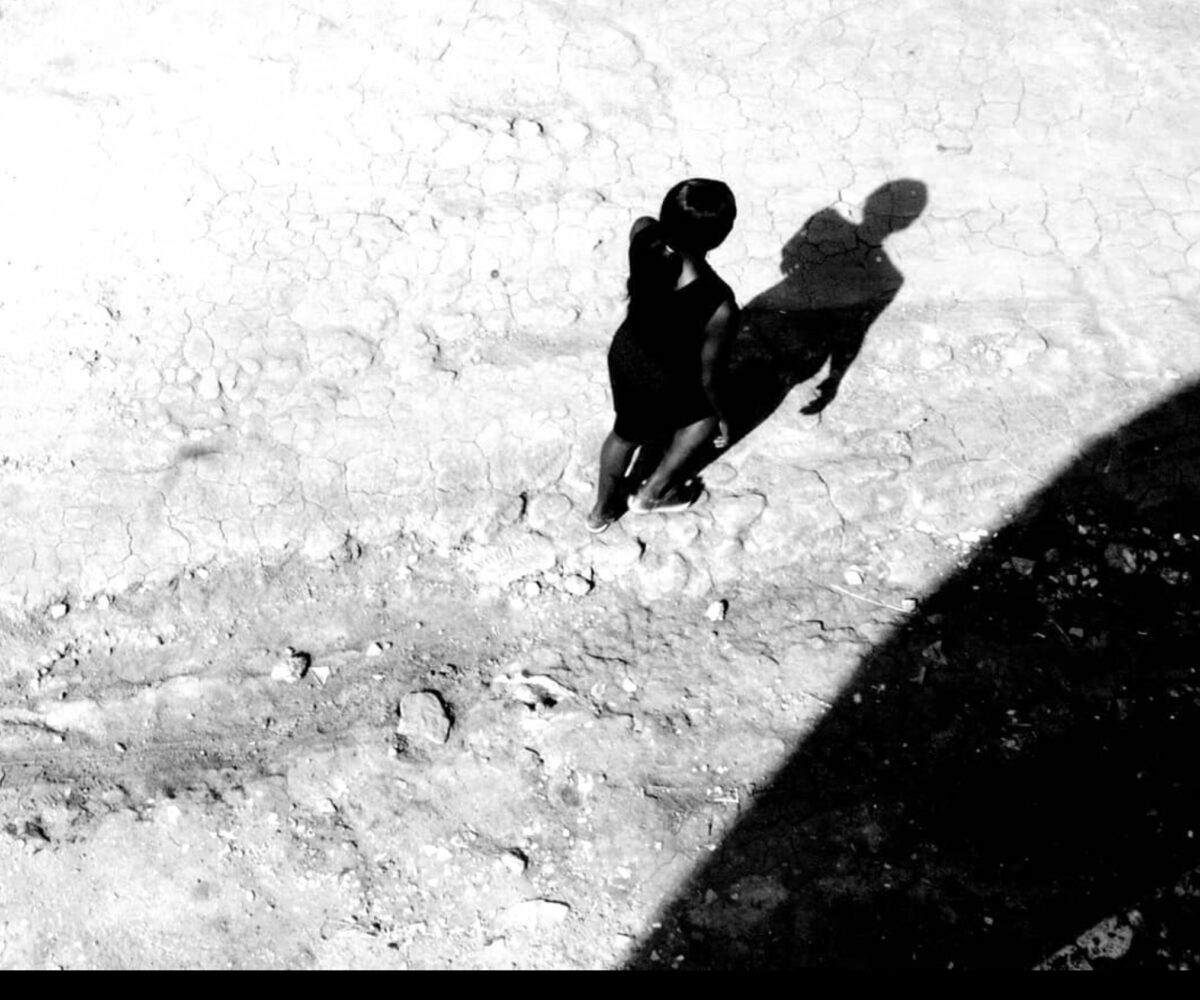
Adeola prefers black and white photography, as it captures the essence of the scene/subject in ways that, he says, are focused narrow, and succinct. He prefers color for his editorial illustrations and textile designs.
His art education began around 2011-2012 when he learned to draw from an art teacher at St. Andrew School in Lagos. “During my secondary school days, I was always fascinated with primary shapes, especially the square. All my notebooks were littered with boxes. So, I think I’ve been in love with vector drawing (images created from geometric shapes) for a long time.
“I learnt to train my eye and become more observant, preparing me for my career as a visual artist. My education in the arts is quite informal,” he says. “In hindsight, it mainly involved following my impulses over time and going with the flow.”
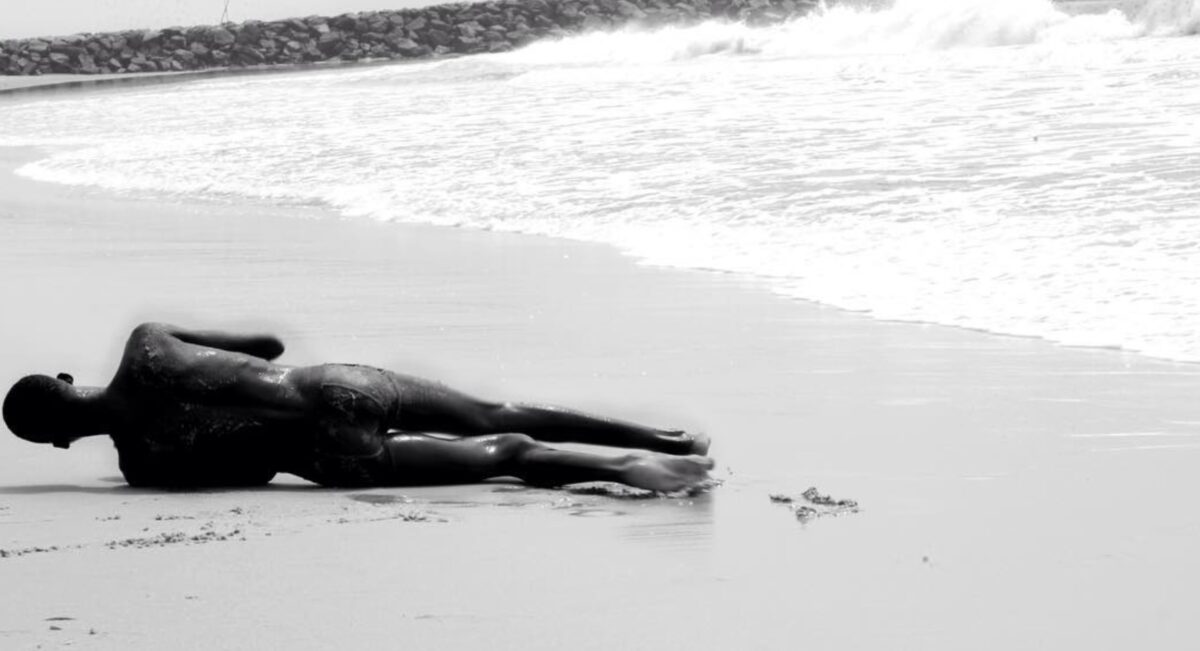
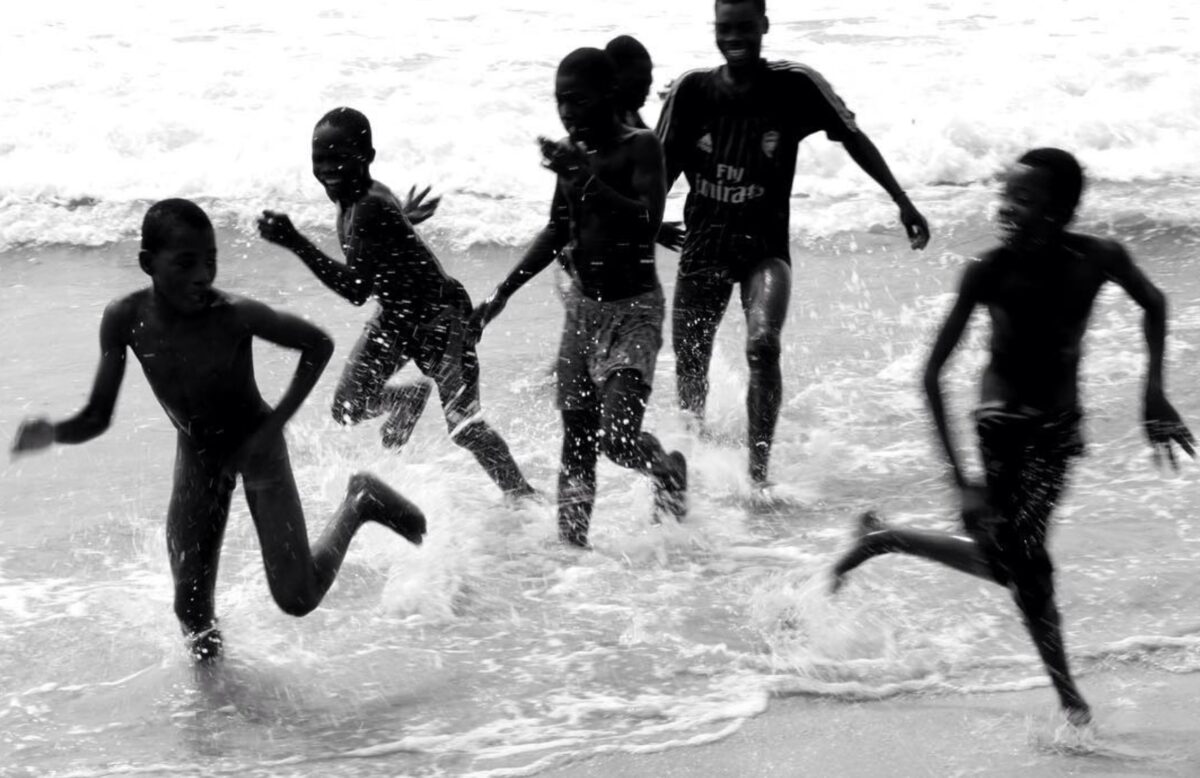
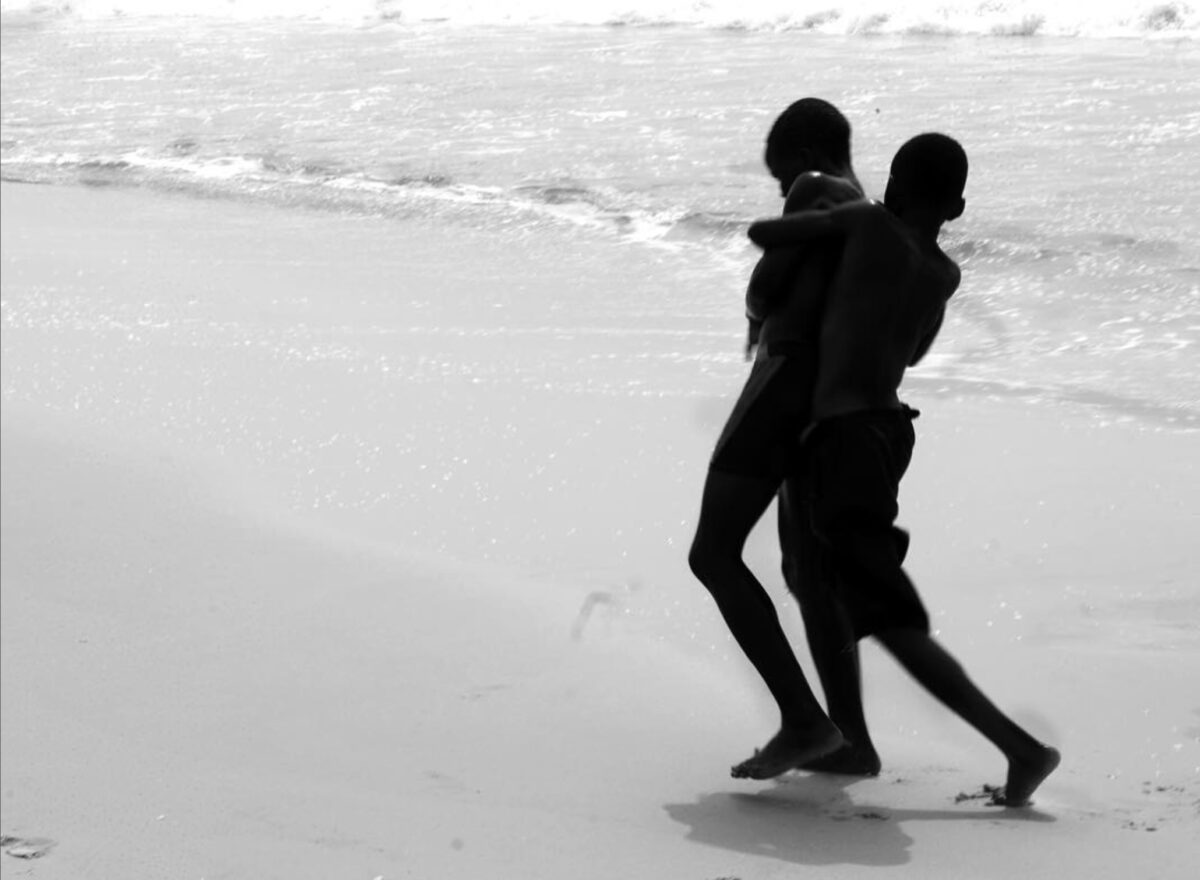
In 2018, Adeola shot his beach scenes at Elegushi beach in Lekki, Lagos where he met a group of boys playing in the surf. ”They were excited, joyous and just free as the ocean breeze when they saw me,” he remembers. “It added an extra vim to their excitement and they were even more expressive and freer than before. Often strangers avoid the camera but the boys acted like they knew me.”
Adeola says his photography series then were mostly around water bodies. “I feel drawn to water bodies, even when it rains, I’m happy and relaxed. Water bodies provide me with inspiration. I still do photography but my next evolution as an art photographer will be conceptual rather than documentary. At present, photography improves my eye.”
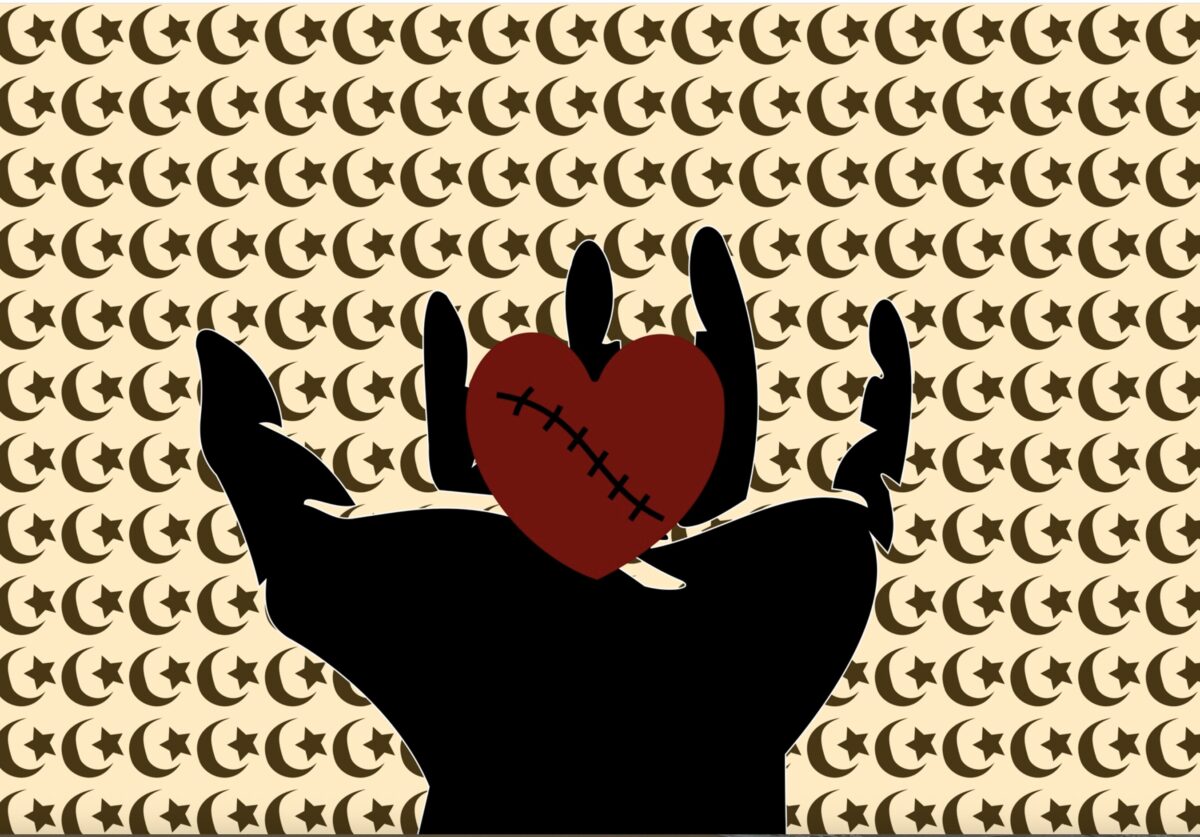
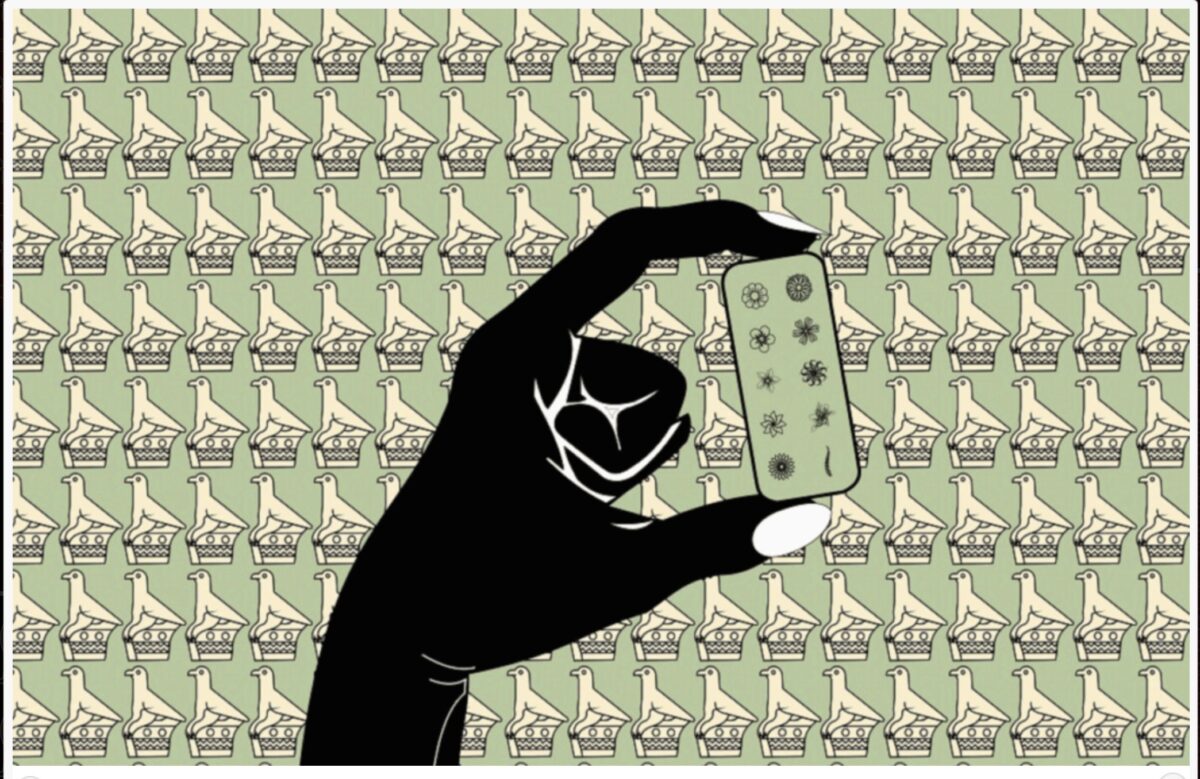
Adeola’s illustration career developed from his early work as a graphic designer in Lagos. “I was very intrigued by color and text and I wanted to be able to create my own images. I began with just vector drawing and a one-color background and I was mostly interested in commercial illustration.”
He says that he seeks to create illustrations that have vibrant backgrounds with different connotations and a foreground that captures the soul of the narrative. He notes that graphic design and communication is made primarily of image and text. ”I found my voice in literature—especially poetry and short stories,” he says. “The first step when I’m trying to create a work is to fully understand the piece I’m trying to illustrate. I want to be able to capture the heart of the story, the main thread running through the piece and the decisive moments.
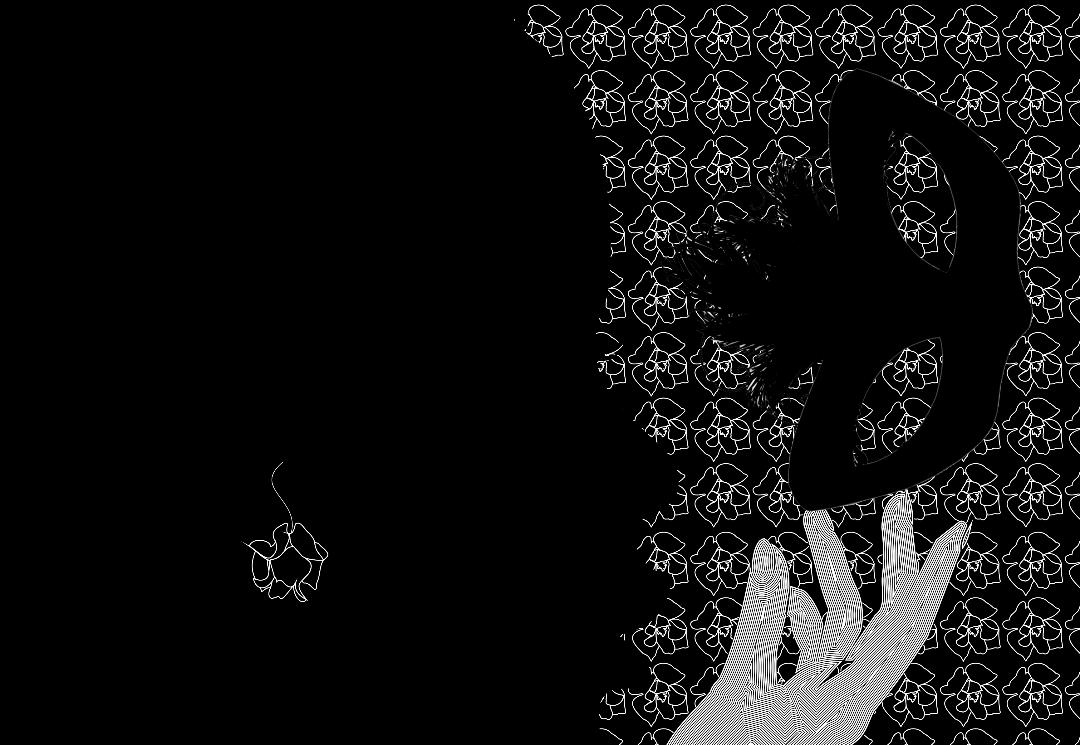
“Then finally, I begin my textile design work for the background, sometimes they are ornamental, other times they push the story forward. I begin to tinker with color, form, shape, and rhythm to further capture the world of the story or poem.”
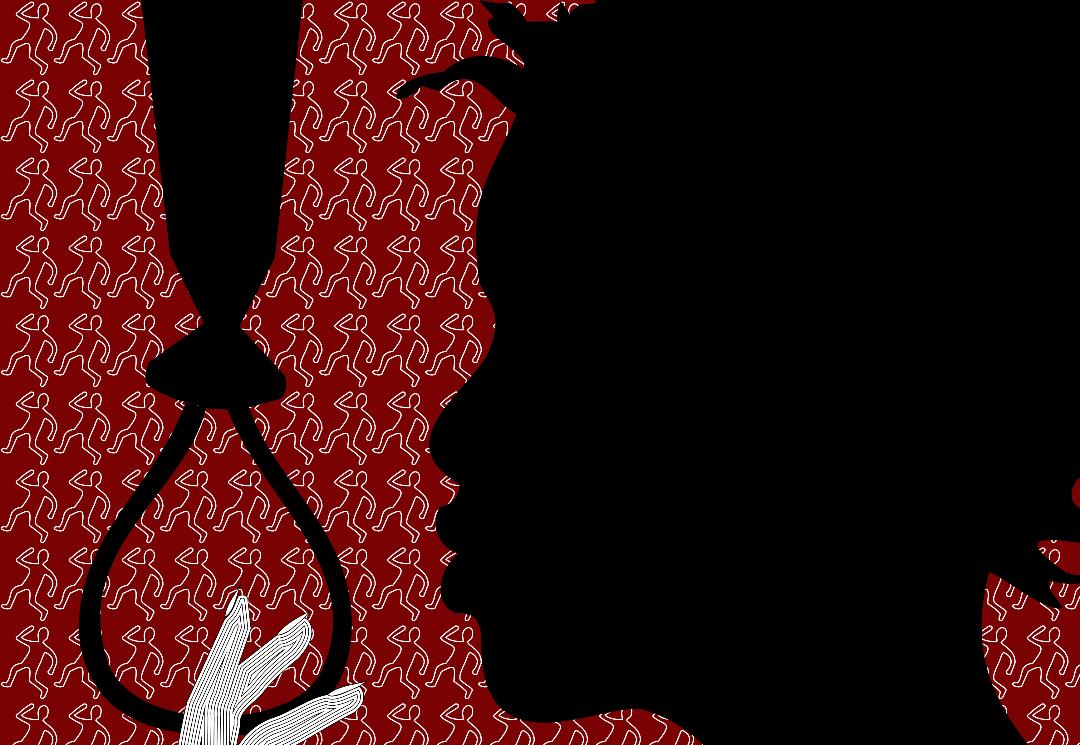
Adeola has begun to experiment with African cave art, which began in caves and is known for its flat shapes and silhouettes. “There’s a spirituality to African cave art that I adore both as a student of fine art and as a source of inspiration for my illustrations,” he says.
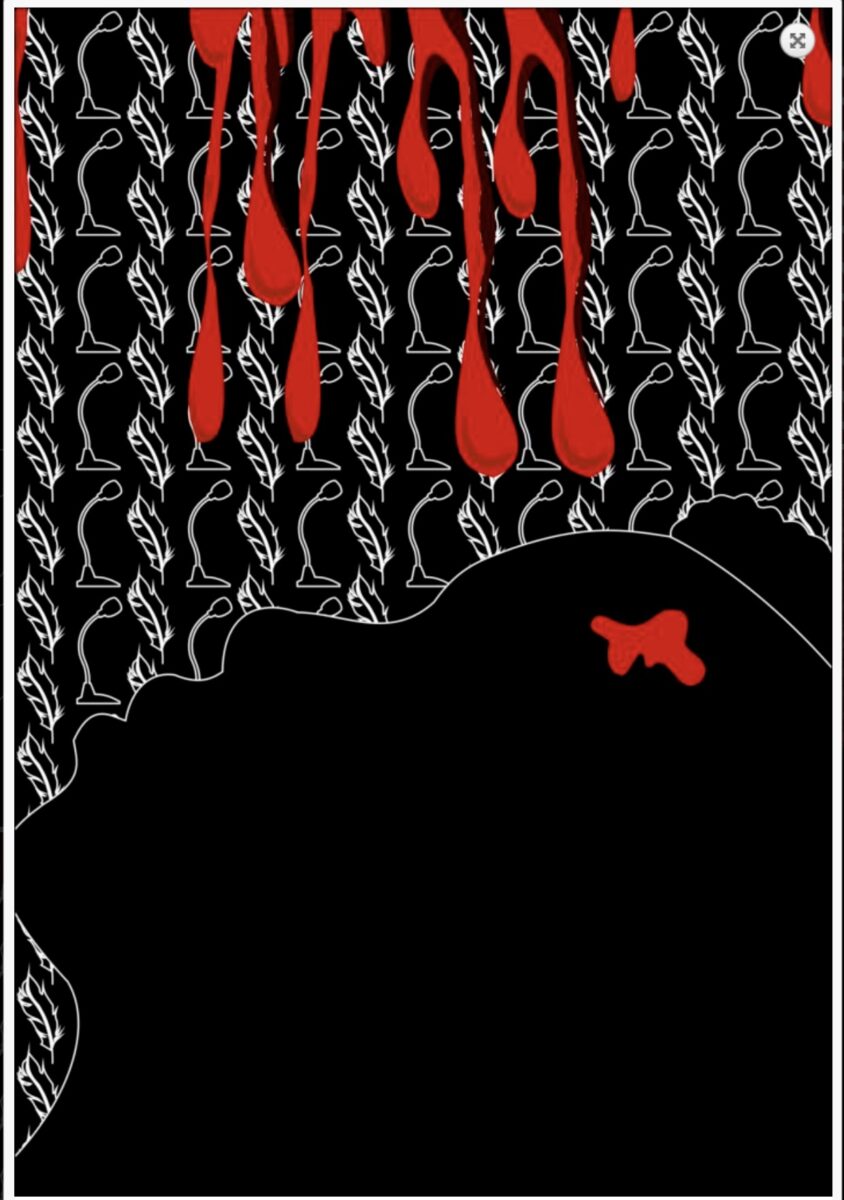
Adeola is currently leaning more towards handmade illustration, incorporating Yoruba textile design techniques. He’s experimenting with printing more intricate textile motifs and printing techniques, becoming more involved with Yoruba fabric designs like adire and batik.
Adire, he says, is made up of the words ‘adi’ which means to tie and ‘re’ which means dye; together they mean tying dye. It is a form of resist-dyeing technique common among the Egba People of Ogun State in Nigeria.
“My illustrations are digital but I’ve begun to add a new dimension to my work with my foray into Yoruba textile design. So my illustrations can be termed as hybrid.
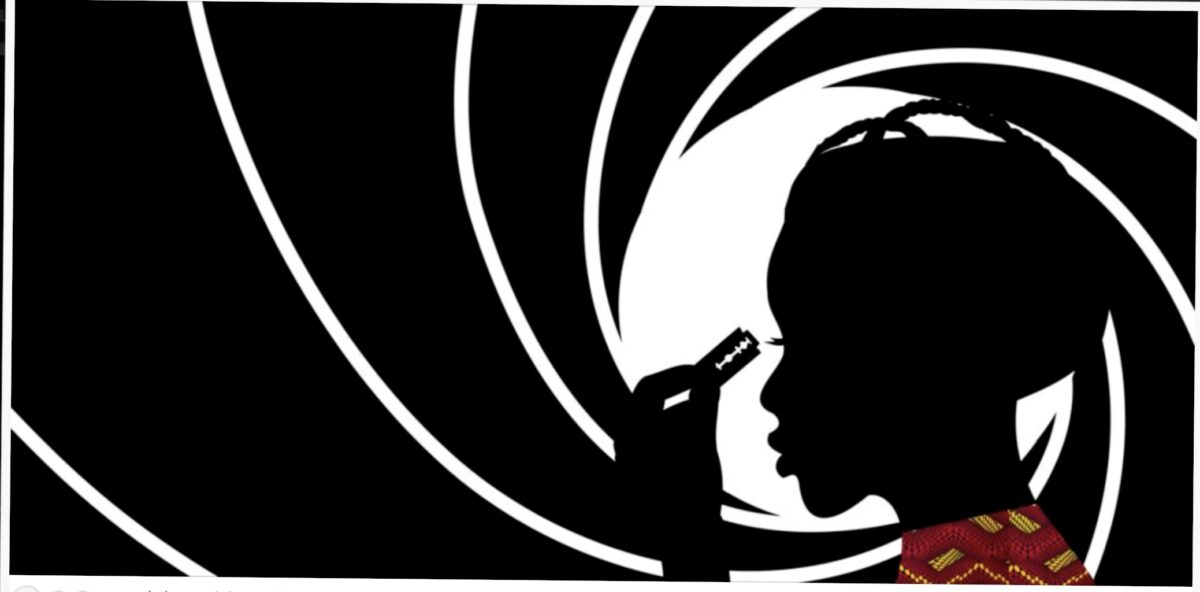
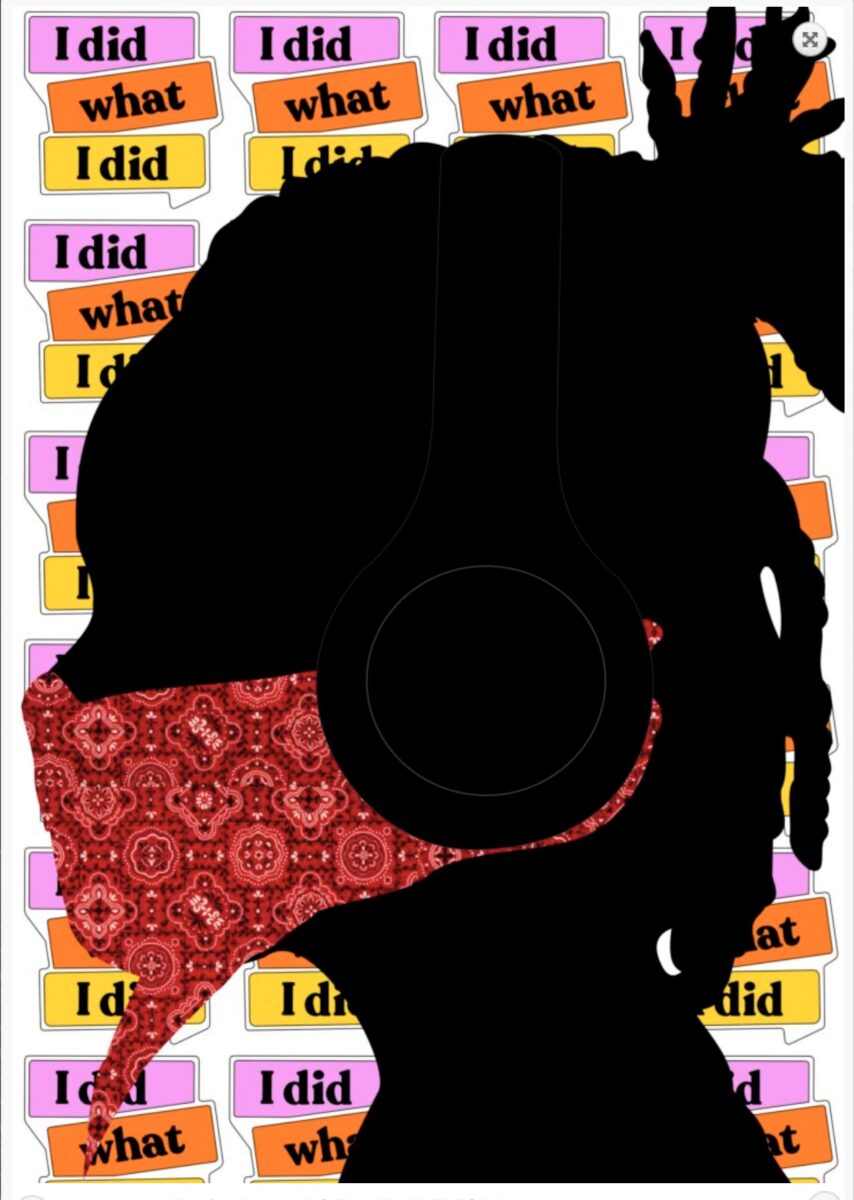
Mostly commissioned by art and literary magazines, Adeola’s says, “I tend to like illustrating work with themes that are beneficial to mankind as a whole, and a good bunch of times, these themes and illustrations can seem political. I much prefer to say that I try to express intense feelings/emotions.
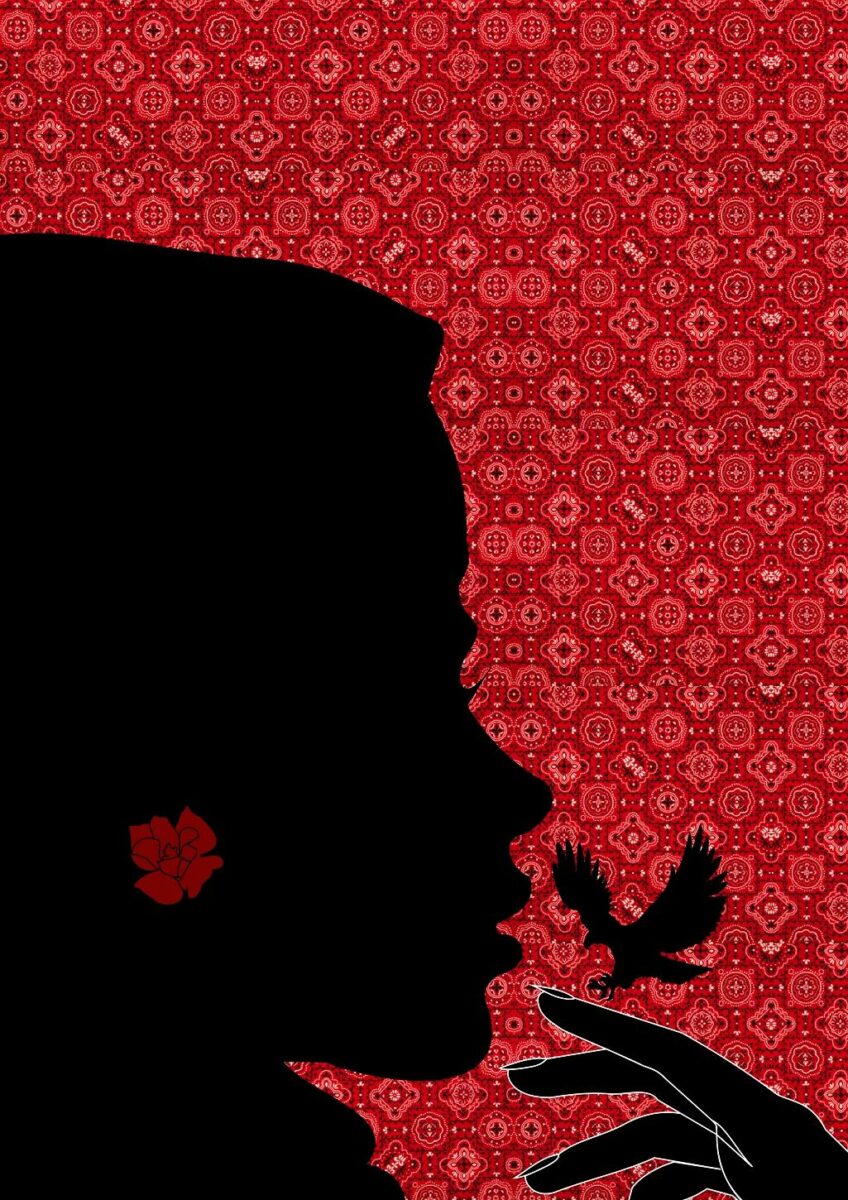
“My goal is to release more impactful work, to continually expand my illustrative style, and finally kick off my animation content studio “





Share this post with your friends.

