
He took his bike from under the porch and rode down the driveway and out onto the sidewalk. He rode around the corner and east on 47th Street past the Ford house and the other homes that all knew decent lives within. He rode around to the other side of the block, a short distance all in all, and then he was coasting up in front of Mark’s house, where Mark was already carrying bricks out to the sidewalk. Gabriel stopped and stood straddling his bike.
Come on, Mark said. Are you going to help or what?
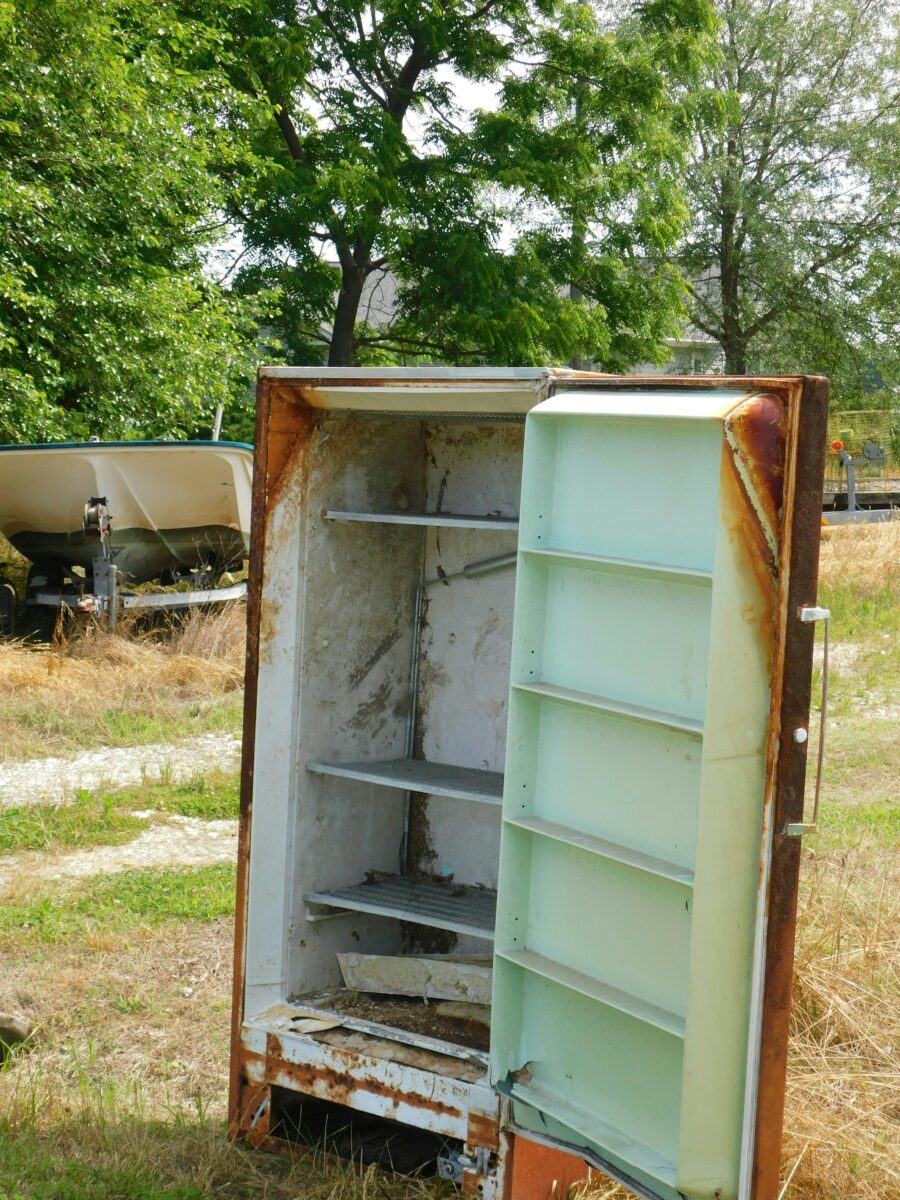
The Tunney house was distinct on the block with a grassless front yard worn flat and hard-pack smooth with dirt as fine as dust that floated up in occasional breezes. The paint on the house had faded away entirely, leaving the siding gray and weathered, blasted by wind and sun to a chance art warp of wood grain. The side yard and driveway were a dumping ground of old appliances and loose wood stacks and car parts and car carcasses and downspouts fallen from the eaves and lying where they landed. Quince trees grew in wild profusion, and willows and maples wove into each other with limbs that snagged papers and bags and balloons and whatever blew into their webbing. It was a place of long, slow and perpetual ruin, and the family moved through the neighborhood with the glaring shame and viciousness of untouchables.
Sure, Gabriel said, and he laid down his bike and followed Mark around the side of the house to the back. An enormous mound of bricks stood beside the garage. The garage itself could no longer hold a car, overflowing as it was with old chairs and appliances and boxes and planter pots and clothes and broken toys and bikes and tires. Gabriel stood for a moment in amazement, looking at the mountain of debris.
Here, you can carry them in your shirt, Mark said. You can get more that way. He pulled his shirt out and held the bottom edge with one hand as he lay bricks into its loom. Gabriel went over and pulled his shirt out and began to do the same thing. They carried the bricks to the front and put them down in a row along the sidewalk. They made two more trips and then had enough for a knee-high rise.
Come on, let’s get the ramp, Mark said. He ran and Gabriel followed. They carried the plywood ramp out and put it on the bricks and stood back. Mark stepped onto it and rocked back and forth to see if it would hold and it did, then he laughed and jumped on his bike. I’ll go first, he shouted, and he rode his bike back down the street and turned around and stood there for a moment twisting his hands on the handlebars while making engine-revving sounds. Then he rode fast up the sidewalk, his head bobbing up and down as he peddled. He hit the ramp, rose and shrieked and flew a bike-length before he came back down and skidded sideways to a halt. Yeeoww! he cried, and he turned to Gabriel and said, Now you try!
Gabriel climbed on his bike and rode back down the same stretch of sidewalk. He turned and rode back, accelerating, heading straight for the ramp. And then he hit the ramp and rose. He held there aloft for a moment flying forward neither breathing nor thinking, then came down hard on the front wheel and wobbled but maintained control. All right, Mark shouted. Gabriel smiled and turned his bike around.
They made several more jumps, and now Gabriel was getting a feel for it, how to pull back and keep the front up and come down on the back wheel in a smooth landing. Then Mark said, Let’s make it higher.
All right, Gabriel said. He would admit no fear.
Hey, Mark said, Follow me.
Gabriel followed him across the dirt yard and into the house through the front door. A television glowed in the dark living room. The windows were covered with sheets, the couch and chairs covered with dirty sheets, the walls black to the height of the dogs that lay on the floor at the feet of a girl who sat on the couch watching TV. She neither spoke nor looked at them as they passed through the room. The kitchen was another matter, with dirty dishes on the counter and piled in the sink, garbage bags overflowing on the floor. It didn’t feel like the kind of space where food belonged. Mark opened the refrigerator and took out a package of bologna and yanked out a round and offered one to Gabriel.
I’m not really hungry, Gabriel said.
They went out through the kitchen door into the backyard, and Gabriel went to the pile of bricks and began to collect another load. Mark stood in the driveway, dangling the bologna over his mouth. Then Gabriel saw an older boy standing in the back doorway. He stood with his arms crossed, leaning on the door jamb and watching Mark, watching Gabriel. Gabriel felt cool electric danger and averted his eyes and continued to gather bricks. When he had filled his shirt, he stood up and saw the older boy step forward and lift his arm and throw something that flashed quickly. Mark’s hand jerked up and the metal wrench the older boy had thrown clattered on the ground followed almost instantly by the slap of the bologna on the cement. Mark dropped to his knees and began to scream. The older boy stood on the back porch laughing. Gabriel did not move.
That was a kind of laughter Gabriel had never heard before, and as he watched the older boy his head began to buzz and he saw a wave of movie-like images of the older boy’s life rushing by as a flash of forced marching then a camp by a river, confinement in a small room, then back to the present moment with a sound like an airlock closing. Then a huge woman in a billowing yellow dress appeared. She must have been their mother, Gabriel thought, though he hadn’t met her and wasn’t even aware she was around, as she grabbed the older boy and pulled him back inside the house. Mark was still on his knees, cradling his hand and sobbing. Gabriel dropped the bricks and went over to him. Are you all right?
Mark’s face was streaked with his tears, and he rocked back and forth but didn’t answer. Gabriel stood there, not knowing what to do. Then a strange sound came out of the house, a slow, rhythmic thumping, like a washing machine off balance. Mark rose and wiped his face and went up to the back door and peered in. Still clutching his hand against his chest, he began to laugh, and it was the same as the older boy’s laugh. He looked over at Gabriel and said, Come see this.
Gabriel approached. It was all a slow dreaming. The sound of the thumping and Mark’s laughter mixed with the adrenaline shot from witnessing that violence only a moment ago and the bicycle jumps before that and all of it worked itself into a nausea boiling in Gabriel’s stomach. Evening light rolled in a sepia wave of unreality as Gabriel stepped onto the porch and stood there beside Mark as Mark backed away slightly, coaxing Gabriel to move in front of him and peer into the house. But then the brother appeared, blood trickling from a cut on his brow, one of the big black dogs panting as it stood at his feet then dropped to the kitchen floor.
Gabriel pulled away. Mark moved back into the doorway, watching and laughing. Somehow, he had retrieved his piece of bologna and was eating it.
I gotta get going, Gabriel said, and he went around to the front of the house and picked up his bike and climbed on and rode fast for home.





Share this post with your friends.

