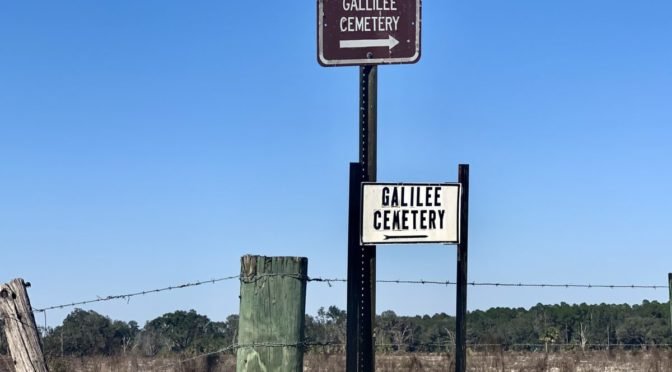
Turn at the sign–Galilee Cemetery– a flat, packed-down dirt road the weary color of clay not a person in sight just fields, blowing dirt fields dry bones under hard sun. Turn again where, on the right there’s a dark puddle big as a pond The crows standing round it will startle and scatter in flight cawing while you keep going. Ahead there is shade at last pines, cedars, oaks with moss shadows over graves in safe family clusters. They pass the day that way. Leave on the same pale road you came in on. … Continue reading Cemetery Road by Ann Webster→
Pui Ying Wong is the author of two full-length books of poetry: An Emigrant’s Winter (Glass Lyre Press, 2016) and Yellow Plum Season (New York Quarterly Books, 2010)—along with two chapbooks. She has won a Pushcart Prize. Her poems have appeared in Ploughshares, Prairie Schooner, Plume, New Letters, Zone 3, among others. She lives in Cambridge, Mass. with her husband, the poet Tim Suermondt.
Cosseting daylight tousles her hair, chucks her under the chin, pinches her cheek. Won’t let her cross the road without a firm hold—even at the corner when she looks both ways. Once night rises, shadows from headlights overlap shadows from moonlight overlap shadows from kitchen incandescence. Overlap flashlight’s narrow way. Only in light are there shadows. With the yard light’s firm hold on the drive, shadows tousle her eye, chuck foreboding. Dark waits out the routine just around the corner of the shed, behind the tree, the other side of the truck. So much distraction … Continue reading Poised by Barbara Saunier→
Genevra Levinson is an Honorable Mention in Streetlight‘s 2020 Essay/Memoir Contest It is autumn. I think of Mary Oliver’s river of loss as I watch the trees burn fragrantly and allow themselves to be naked in their distance from the sun. I wonder about this kind of graceful dying, and how we humans grapple with death and the strangeness of our own faces during the fall season—the dying season. The ghoul-masks, monsters, blood, and skeletons no longer thrill me darkly as they did when I was a child, nor fill me with dread as they … Continue reading The Trees Are a Better Mother by Genevra Levinson→
ALMOST A Steinway. A red silk dress. The audience still, anticipating the first note of Schubert’s B-Flat Sonata. Anthony Tommasini ten rows back will write the most sensitive Schubert ever in tomorrow’s New York Times. My hands hover over the keys. I begin with lyric phrases followed by the ominous trill. My little brother. Composing contrapuntal music at the age of five, playing flawless Chopin preludes presto con fuoco on his gleaming grand piano. Illustrious teachers line up to listen tweaking their moustaches in disbelief. Downstairs I bang fortissimo chopsticks on the old second hand … Continue reading Almost and The Last Supper, 2 poems by Claire Scott→
No IOU’s where were we when the planet became death remember the small dark seed that shaped a new way remember when small and weak became large and capable and that when we tell the dead we see them the tragedy and the vengeance that fells a heart falls away and yes we fear change and fall apart when death arrives and yes we want the hands that feel the feet that walk the eyes that see even here at the edge where death wakes and strange events taste the mystery here we meet pray … Continue reading No IOU’s and The Path Ahead, 2 poems by Evalyn Lee→
Measurement is ubiquitous in human endeavor throughout time and across cultures, and one could argue throughout the totality of existence. Anything cyclical contains a measurement for sure: orbits of galaxies, planets, moons, day and night until eternity. Currently we are fixated on big data, Covid deaths, our place in the world (GPS’ed), the most recent political poll, or how much cash we have or don’t have in our wallets. Not too long ago the definition of the kilogram changed. Did you notice? The physical ‘artifact’ of platinum and iridium, one of the most stable … Continue reading A Hard Thing to Measure by Fred Wilbur→
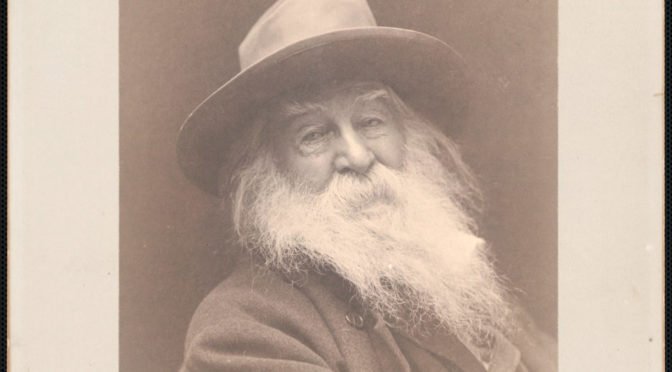
At times I almost convinced myself the Whitman photograph, signed, would be mine, instead of the Longfellow which hangs in the big room in airs chilly and wintry, night falling, as I listen for nonchalant Walt to appear. How the thought cheers me, singing still, for I called Nin’s father, “Dad,” seeing him rise up singing arumph arumph in his bass-o-roar-re-o: Whitman? Sure, he said. He was parceling things in a manner to appear partial to his son-in-law, yours truly, whose mine I learned not to shout, begetting such failures falling, even though another … Continue reading Shub’s Sestina for his Father-in-Law by Shelby Stephenson→
What’s Worthy “A man is only as good as his word,” my father used to say and I’ve tried to live up to that—even now I hate telling the smallest, inconsequential lie. In a scene from How Green Was My Valley one of the coalminer’s sons says to his coalminer father “If manners prevent us from speaking the truth, then we will be without manners” and I like to think my days of being without has been bountiful, despite some missteps my father must have committed too. On the whole, my father would have been … Continue reading What’s Worthy and Hue, 2 poems by Tim Suermondt→
which birds are out? you can count on your favorite ones, usually some finches here—-they arrive all-colored by the thicket from other people’s timbered properties & short-lived playgrounds, when it will smell like honeysuckle, you can count on that Colin Webb is a native of Baltimore, Md. His poetry has appeared or is forthcoming in White Wall Review, Apeiron Review, Cha: An Asian Literary Journal, The Northern Virginia Review, and elsewhere, and he has been a finalist for The Arch Street Prize. Follow us!
Streetlight Magazine is the non-profit home for unpublished fiction, poetry, essays, and art that inspires. Submit your work today!