
Black-faced sheep stand still in the valley along the Great Western Railway line, filling their bellies with the grass of the English countryside. Some hold onto the hillsides, their tails in the air, gathered in threes and fours. And near the train tracks, a stream runs, and shirtless young boys carry on in a waterfall. I travel through Western England, a few miles east of Bristol where outside the old village, rows of brown and grey stone homes lean against gardens of red roses. I’m heading for Portsmouth on a Sunday in June to stand before her old house and forgive her.
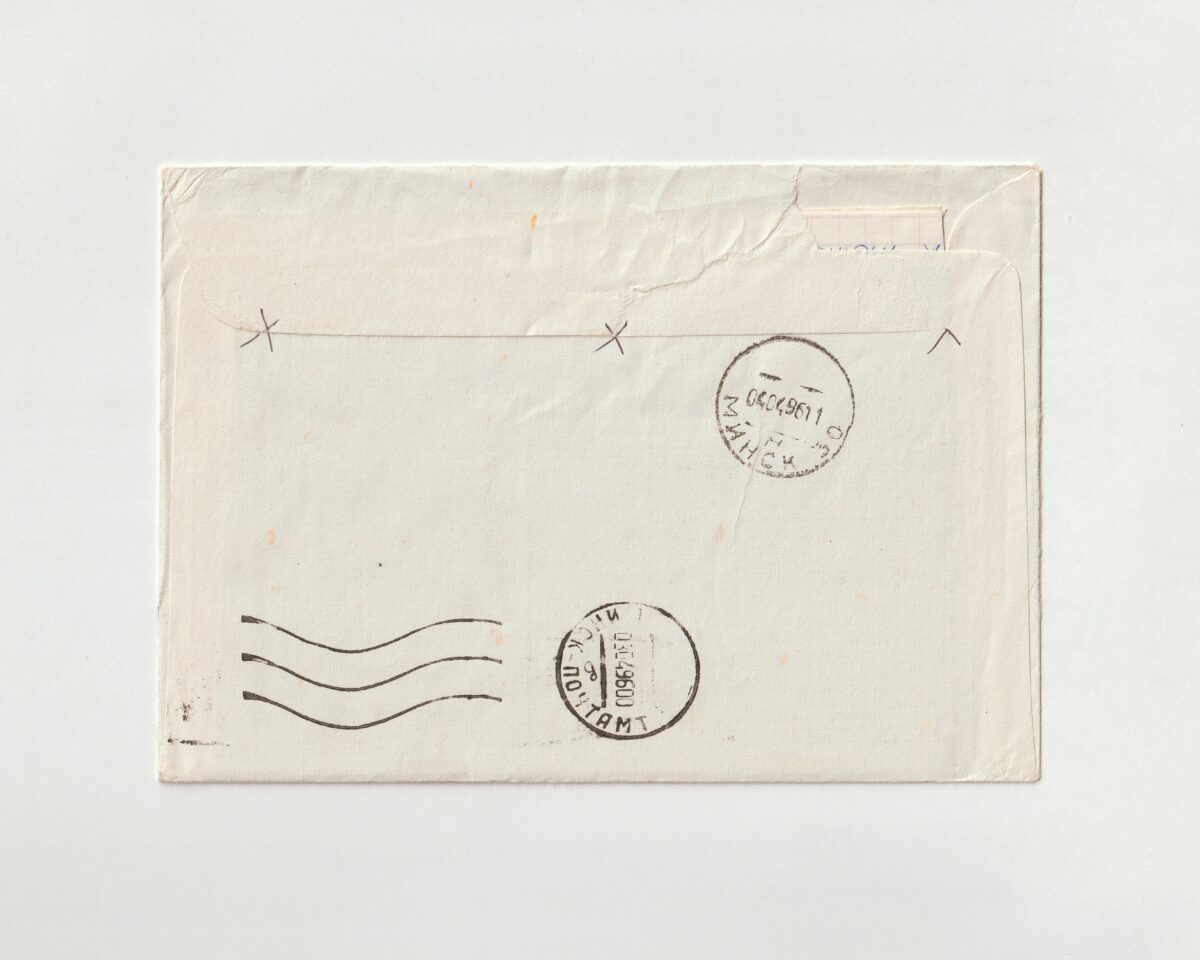
He was not my father. I know this now. My mother’s secret. It was there in the letter she had written sometime in her last years, maybe right near the end, I don’t know for sure. It was tucked away with the little blue address book she kept in her nightstand next to her husband’s wedding band. A friend found it, the friend who had helped care for her possessions and began the initial arrangements before I could come to bury her in Portsmouth. The confession was clear but hard to believe, the wild thoughts of an aging woman who may have dreamed of a different life. A curiosity at best, that’s all it was, written by someone who had been slowly losing her senses.
Many years later, my son gave me one of those ancestry kits for Christmas to help trace a long line of Irish and English. Not something I would have chosen, but it appeared interesting enough. I spat my spit, saved it, and sent it in. When the details came back, much of what I always thought was there—a bit of Irish from County Wexford and English from the south and the Isle of Wight, my mother’s side. The Welsh part, some fifty percent of my lineage according to this test, was surprising, but it was probable, given all the crossbreeds in the British Isles. Still, what was puzzling was that there was no Germanic linkage noted. My father’s surname, at least the man I thought was my father, was a German name. Becker is as German as it gets.
My mother came from Portsmouth to New York City when she was young, pretty, and a dancer. Trained at the university in Portsmouth, performing at the school and in the local troupe before she left for her dreams, as crazy as they may have been. Twenty-two years old, she was. There were a few off-Broadway shows, and some speaking parts in small plays no one came to see. She fell into a community of writers, too, always wanting to write plays. She never did, still she loved all the Bohemian types, the freethinkers, the drinkers. It filled her up.
Dreams faded, as they do, and she found herself with little work and no money, and so she took a job as a shop girl. That’s what they called them back then. She sold a man a watch. That man was Robert Becker, a lawyer, twice her age. Every day afterward, he returned to the store, to her counter at the Macy’s on Herald Square. He brought her roses. He gave her perfume. He was handsome and his clothes were smart, always in a tweed suit. And after two months, he arrived at the store and fell on his knee and asked her to marry him. They lived on the West Side. He took care of her. They had rich friends. They went to nice parties. They vacationed in the Adirondacks. But now and then in those early months, she returned to the city to visit her old friends—the artists, the writers. That’s when she met him. It’s in the letter. He was on his American tour, maybe his last. He had read at the Cherry Lane Theater to hundreds of people. But almost didn’t after he lost his notes. Someone found them. After his performance, a friend from her old days who had been at the reading and had met him on an earlier tour, introduced my mother. It was at a tavern in The Village.
Father died in a subway accident, falling to the tracks. A deep sadness enveloped my mother in the years afterward. I had moved away to my own life in San Francisco with a new wife and a baby on the way. Our distances were measured by more than miles. After his death, emotional tissues frayed, and she lost herself, as if she were searching for something misunderstood. During our long-distance telephone calls, there were periods of silence, and I had to ask if she was still there. After several years, she left her New York home to return to England, back to where she was born in Portsmouth. It had been a very long time, a forgotten time. “I need to be there,” she said. “It pulls me. It’s always been my compass,” she said. I never fully understood that, but she was already thousands of miles away from me. What were a few thousand more?
Tie the letter and the DNA together, and the truth shows itself. It’s there in my son. I see it now. His stoutness. The bulbous nose. The big sullen eyes. Like my own. Even his moodiness makes sense. Mine too. And the voice. Yes, mine is deep, but the baritone of my son’s is something altogether dynamic.
Before taking the train from Cardiff, I spent three days in Laugharne, staying two nights at Brown’s Hotel on King Street, walking distance from the boathouse and the writing shed. I walked the road along the cliff at the estuary and was offered a look inside, a holy and sacred, yet unsettling, place. All those threads unmistakably entwined and floating in the blood. Ghosts with no eyes.
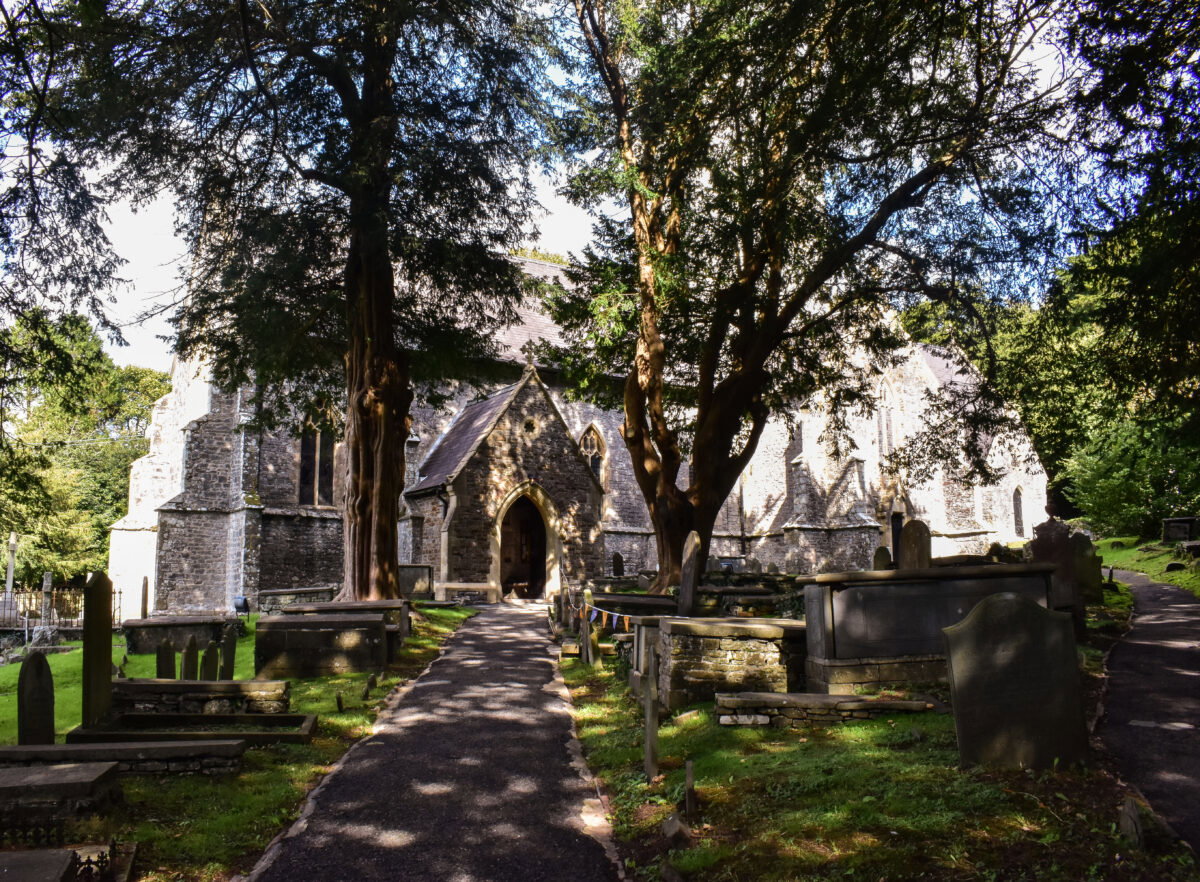
Early in the morning, before the train, I walked the cobblestone road to St. Martin’s cemetery entrance, under ancient trees, and into the fifteenth-century churchyard through a heavy iron gate. Gravestones immediately met me, stones painted in moss, rich green and thriving in the moist sea air, a mourning dove heard near the church entrance. I saw it resting in the high stones near the tall wooden door. Along the winding walk, the names and dates on the graves were before me—some carved in the Brythonic language, British Celtic, spoken before the Romans occupied the land.
At my father’s wake, my mother asked me to read a few stanzas from a poem she had loved. She had insisted they would be perfect and beautiful for the occasion. The poem was the father poem. The death poem. The rage, rage, rage poem. So hurtful to do that, I thought afterward. Hurtful now, not then. No one knew the poem was her confession.
Turning out of a curve in the church’s stone path, I saw a figure moving over a small bridge and walkway behind the trees. He came with flowing robes, white and black, his long graying hair tied in a ponytail, a full peppered beard. He carried a Bible.
“Beautiful morning,” the reverend said, smiling as if in a blessing.
“It is,” I said, returning the smile as he continued his walk to the church door. Beauty, I thought, is complicated.
The name St. Martin’s was welded in the iron of the tall gate. Through it, a hillside where newer graves lined the steep grade in neat rows. Above this, another hill, and among the dozens of stone and granite markers was a single white cross. I walked, careful not to step on the graves, and found myself before mounded ground where someone had placed seashells in the form of a cross and had left purple foxglove as a gift. I stood silent, reading the marker, lifting my eyes to the town below. He had died young, but here behind the cover of clouds and the view of Laugharne, he was as old as the hills and the sea.
I stayed there a long while. It began to rain, light and misty. After breakfast, I drove to Cardiff. Dropped the rental car and shuttled to the train station.
I’m coming into Portsmouth now, and the clouds are gathering.





Share this post with your friends.

