Melissa Sinclair is the 2nd place winner in Streetlight’s 2021 Essay/Memoir Contest “Can u go to the parler with me today if u don’t have any plans?” This text is from my friend Nighat, who is getting married today. I do not have plans; I have been wandering around Houston in the rain. My Lyft driver pulls up to an immaculate house in the farthest exurbs of the city. The stylist, Shaireen, is a brisk Pakistani mom of three. Her eyes are the color of the sea just before a storm. She spreads white … Continue reading The Wedding Guest by Melissa Sinclair→
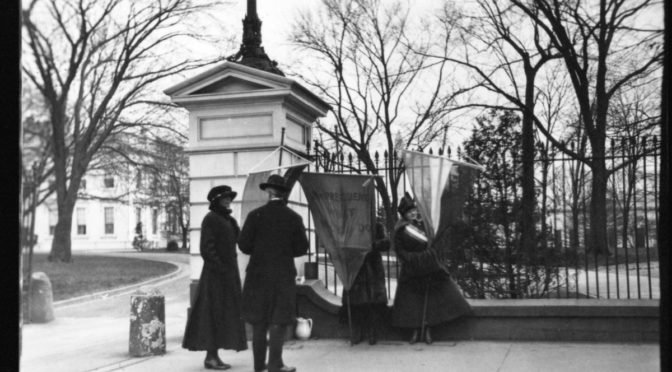
His mother’s words: Be a good boy! Whatever that meant in 1920. What did Harry T. Burn know? He was a man now: 24 Republican Tennessee Representative. He’d seen her in the kitchen, kerchief holding back her hair, the kettle’s steam whooshing to her face as she fished out mason jars loaded with peaches glossily preserved for winter desserts. At meals she served herself last. Listened, didn’t ask or say much. He saw her give food to men who came to the back door at strange times of the day. She wore a faded apron … Continue reading Passing the 19th by Laura Altshul→
It will be a year, he says. The sun behind her covers the barman and his wall of drinkery in rosey light. A ceiling fan stirs fry-oil and lemon around them, but she still feels slick with sweat on her face and arms and between her thighs. She wishes she had chosen a different dress, or had put her hair up, or that they had chosen to eat at a more comfortable distance from nature. She sips her pina-colada, nods her head, and listens to the lazy waves. He takes a gulp of rum punch. … Continue reading Seagulls by Clyde Harkrader→
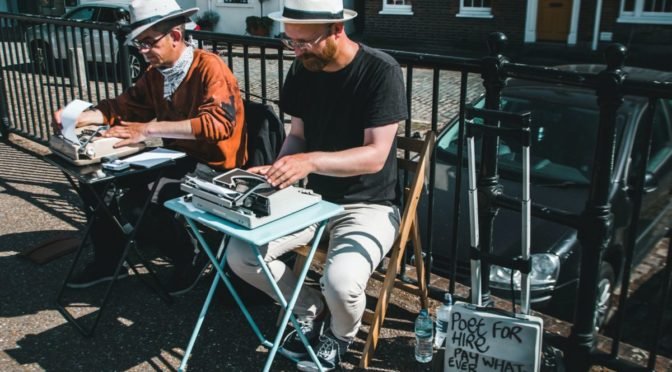
A proposed 21st Century Federal Writers’ Project introduced in the House of Representatives last month is gaining broad support from literary and writers’ organizations hard hit by the Covid pandemic. The bill, introduced by two Texas Democrats, would hire writers to chronicle the changes wrought by the pandemic, much the way the 1930s project explored the devastating impact of the Great Depression and other historical mileposts. That enormously successful program paid emerging writers to collect oral histories and tell the stories of Americans whose lives were forever changed. Some of those hired by the program … Continue reading The 21st Century Federal Writers’ Project By Deborah Kelly→
For Marvin Gordon Thank you, he said when I moved well to the side to ensure a safe enough social distance for him to pass, what my ballet teacher did in those early AIDS years by shaking his head motioning with his hands to push me away when I reached out to hug this teacher I adored, just home from the hospital, who’d assured me, all of us he didn’t have AIDS, and being naive and young… but I wasn’t all that young not to get a patronizing if you say so look from those … Continue reading From a Stranger by Linda Lerner→
The old poet who thinks he is young remembers the young poet who used to be wise. Twyford James Though I had my suspicions last fall and tried to hope it along this spring, the venerable holly tree is dead. Most of its leaves lost, yellow paint chips on the ground, the ever and green are missing from “evergreen.” And so the bark sloughs off, the punky white wood is useful to spalting fungi and insect larvae. The woodpeckers follow. A pileated visits Holly’s Diner, chisels like a true craftsman, searches earnestly for … Continue reading Poems Everworthy by Fred Wilbur→
EINSTEIN’S LAST WORDS (Einstein died on April 18, 1955, attended by a nurse who could not understand his last words, which he spoke in German.) Surely it must have been a simple thing, that sort of phrase the ordinary old would say, child-like, such as “More light” or “Bring me, please, water” or “Close the door” or “Hold my hand” or “I was wrong” or “What’s the time?” Perhaps it was a line or two of verse from Faust, or a nonsense nursery rhyme that curved around to close his universe. And if all it … Continue reading Einstein’s Last Words and Angina, 2 poems by J.R. Solonche→
Delia López plans to win her school’s “Make a Buzz!” contest. She figures she’s leading so far, at least in the fourth grade. On a warm Sunday afternoon in early February, she walks to Elk Neck State Park with the boxful of bees she made over the weekend. She’s going to activate the bees in the park and get a ranger to sign off on how many she has, so she can add that total to her contest scoresheet. Her teachers have explained how important the contest is. Without it, they said, there wouldn’t … Continue reading Monarch by Kris Faatz→
There are silhouettes of dogs cavorting on the cover, barking and begging, and a misspelled title. Was it so foolish to assume that the first-person narrator at the start of Alice Kaltman’s beguiling new novel Dawg Towne (word west press, 2021) is a canine? Given that some of my favorite stories have dog narrators—from Chekhov’s Kashtanka to Kafka’s Investigations of a Dog—and that I myself have written dog-narrated fiction (Head of A Dog in The Hong Kong Review), was that so wrong-headed? Dawg Towne begins: “You wouldn’t know me now, if you knew me then,” … Continue reading Dawg Towne: A Review of Alice Kaltman’s Novel by Nancy Ludmerer→
In your final manuscript, every scene should contain a conflict that’s essential to your narrative arc, something that simultaneously captivates the reader and catapults your story forward. Like stories, scenes also have a shape. Some work well, while others fall flat. When you spend a lot of time on something in your story, you’re saying, “Hey reader, this is super important, so pay close attention to these details.” In other words, you’re giving this part of your story some weight or importance. In an effective scene, your main character has a conflict that peaks in … Continue reading Fix Your Scene Shapes by Lisa Ellison→
Streetlight Magazine is the non-profit home for unpublished fiction, poetry, essays, and art that inspires. Submit your work today!