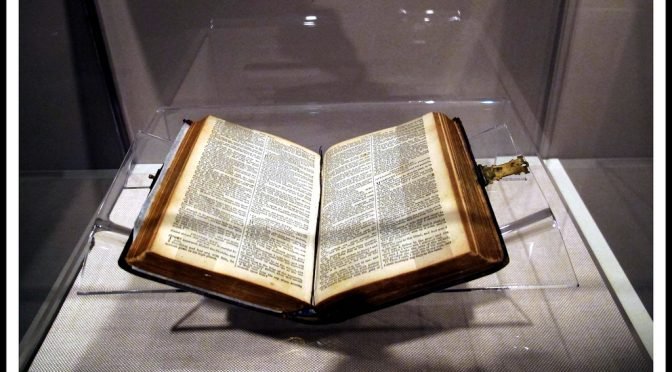
Alex Joyner is the 1st place winner of Streetlight Magazine‘s 2017 Essay/Memoir contest. Robert E. flippin’ Lee’s church pew. Is there any more compromised bench in all of Christendom? It occupies some middle ground of sacrality at St. Thomas Episcopal Church in Orange, Virginia. I scowled as I walked past it, despite the attraction it held for me as youth. What white, Virginia boy of a certain age didn’t thrill to know that here sat (God, did we call him?…yes, we did) ‘Marse’ Lee, snowy head bowed in prayer with Traveller tied to the locust … Continue reading Spirit Duplicator by Alex Joyner→
Time to break out the champagne! Streetlight Magazine’s second annual essay/memoir contest ended July first and the judging was completed yesterday. Whew! Seriously, we’ve looked at a lot of great essays. Writing something meaningful, and one hopes, memorable, in eight hundred words or less is no mean feat. I have been full of admiration—and just a smite of envy—to see how so many of our entrants managed exactly that. It’s been a rewarding project. So, let’s see. Streetlight Magazine is happy to award first prize to Alex Joyner for his essay, Spirit Duplicator, a poignant, … Continue reading And the Winners Are…→
She was a bully, a backer, a stinker, a treasure. She was a finder of fault and forte, folly and facility. She was the picture of rigor and push and impeccability, her visage stern and stately and a dead-ringer for the man on the one-dollar bill. The first time I saw her standing on stage in her blue satin suit and snow-white hair delivering a rule-laced welcome to school, I felt wings of butterflies and tips of prayers brushing my soul in a nervous wish for her retirement to sync with my grade six arrival. … Continue reading Miss Madden by Rich H. Kenney, Jr.→
I was standing in the stacks of the Sutro Library in San Francisco, following a lead on a case I was working. I was not a private detective, but I had aspirations to be one, and my sister-in-law wanted me to find a college classmate whom she had lost touch with, I guess, the minute they had graduated. And she was willing to pay me to find her friend. I offered to do it for free, but she knew that her sister and I were not doing that well, and, besides, my sister-in-law was a … Continue reading My (Almost) Fling With Private Investigation by Miles Fowler→
I understood the world around me on Promise Road. I felt at home on the edge of the rolling valley, looking out at the distant mountain range. I learned to fight creeping Charlie, pigweed and cheat grass with soil enhancement, rotational grazing and early weeding. I recognized the arrival of summer as the swallows began daubing their mud nests above my windows, swooping through the evening sky to clear the air of mosquitos. I named the bats that flew in my open doors on warm summer evenings, searching corners and hallways for moths. Over time, … Continue reading Leaving Promise Road by Amelia Zahm→
The city’s Central district is different in the early morning, just after sunlight usually appears: near empty streets, no black skirt suits, few voices. Today, damp bundles just delivered to the newspaper vendors cover the sidewalk and tobacco smoke hovers heavily in a steady monsoon drizzle. My old dimming eyesight smooths out the vendors’ features—softer noses, subtler chins. Flaws fade into blurs. Down two flights of stairs, I descend into an almost empty Central Station, bathing in one of Mozart’s perky piano melodies. A human din will soon drown out the pleasant music. Hong … Continue reading Late-August Mass Transit Railway (MTR) by James Ellis→
They are called Quakers because the spirit, which is in all beings, begins to move and demands a voice. They quake where they sit, on their plain wooden benches, until that which is in their hearts is spoken aloud to the Meeting. Very often what they have to share is a question or a confirmation of the notion of peace and they stand to speak in the hopes of a self and a world free of violence. My parents joined a Friends Meeting when I was three years old. My younger brother and sister are … Continue reading Fuzzball and the Quakers by Lassiter Williams→
In his slightly madcap, secretly serious, mystery novel, I Shot the Buddha, Colin Cotterill, on the very first page, describes three types of “cinematic plot devices” that his protagonists find annoying: coincidences, which he labels as “coming in third,” behind first (or second?) convenient amnesia, and second (or first) the sudden appearance of an identical twin. Somehow my attention got snagged on that last (but possibly first) objection, sufficiently not to notice that he slyly went on to say, “but after all this was real life.” I was ready, as it were, to debate the … Continue reading The Sudden Appearance of an Identical Twin→
When I was younger I prayed that if I had to get sick, I’d get a movie star illness—one with a color, ribbon, and celebrity spokespersons. It’s not that I wanted to be ill, but in my family broke-down-body lore was a frequent supper topic and bedtime story, complete with mysterious myalgias, fogs, and cases of The Nerves. For years, I thought I’d descended from malingerers or hypochondriacs. I moved six hundred miles away to avoid their fate, believing that, if there was in fact a problem, it was likely the water, Upstate New York’s … Continue reading The Ribbon Test by Lisa Ellison→
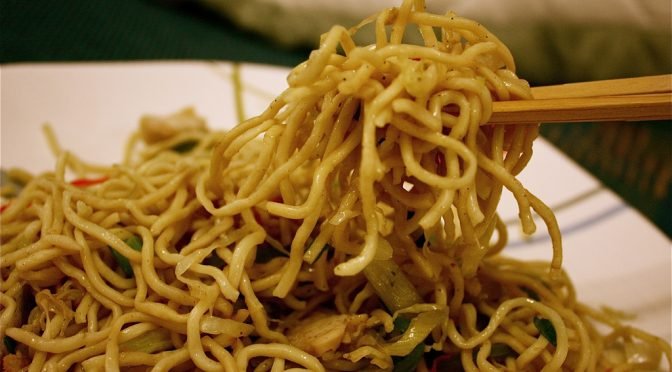
Today, as I write this, December 11, 2016, is National Noodle Ring Day. What, again? you say. So soon? But that’s how the holy days are, aren’t they, always upon us, or so it seems. I’m reminded of a wonderfully snarky thing I once saw in the New Yorker, back when the New Yorker —and maybe the whole world—used to be a lot funnier. It was one of those little squibs they then had a habit of republishing, a bit of hapless advertising copy from, I think, Goodman Noodles, that went, Vary your Lenten menu with a noodle dish a day. As if … Continue reading Noodling→
Streetlight Magazine is the non-profit home for unpublished fiction, poetry, essays, and art that inspires. Submit your work today!