A Wild Thing And A Tended One We can talk about these corduroy pillows and how I want to shoot marbles with the ball joint of your right shoulder. Last time I tried to tell you about the guy who came in the Deli, duct tape holding his shoes together, carrying this tarnished bird cage, a finch inside and how his loose laces left a winged trail across my just mopped floor as he went to sit next to regulars, who shifted their metal chairs, and how the ice machine dumped cubes into the … Continue reading A Wild Thing And A Tended One by Maari Carter→
We had just learned how to answer the phone. We liked to grab it first, before it woke our parents. That made us feel like spies and more grown-up than five. We flitted from flimsy top and bottom bunk, almost as soundless as we were sleepless. We lit like two squirrels on a telephone wire, our blonde or auburn hair banded into bushy tails. Red-checked, flame-resistant nightgowns scratched our scabbed-up, tomboy legs. Who would call us so early, the sky still dark through yellowed curtains? We knew who. Both tottering on a single metal chair … Continue reading Granny by Sharon Harrigan→
The premier poetry event of this year’s Festival of the Book in Charlottesville was “Shrines to Longing,” the March 20 reading by Charles Wright, America’s current (20th) poet laureate, and Mary Szybist, who was a student in the University of Virginia’s MFA program when Wright was on its faculty. Both poets attended the Iowa Writers Workshop. Both have a distinctly Judeo-Christian flavor to their work. The 79-year-old Wright read from his 24th book of poems, Caribou, Szybist from her prize-winning second volume, Incarnadine. Although the full house at UVA’s Culbreth Theater was clearly entranced by … Continue reading Of Darkness and Angels →
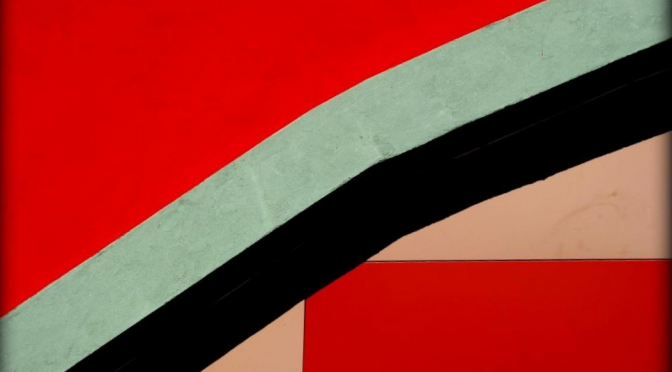
Thomas Michael Gillaspy, a state legal affairs analyst and photographer based in Sacramento California, focuses on color in urban minimalism. “Architecture interests me because of its relationship to the urban environment. I think it is our attempt to bring order to the natural world,” says Gillaspy. “Color evokes emotion for me. And in architecture, I like to find patterns, the repetition of geometries, the way we attempt to make order in the urban environment. It is exhilarating to find form and pattern in unexpected places.” Gillaspy creates order from urban overload photographing surprising subjects up … Continue reading Urban Minimalism Comes in Many Colors→
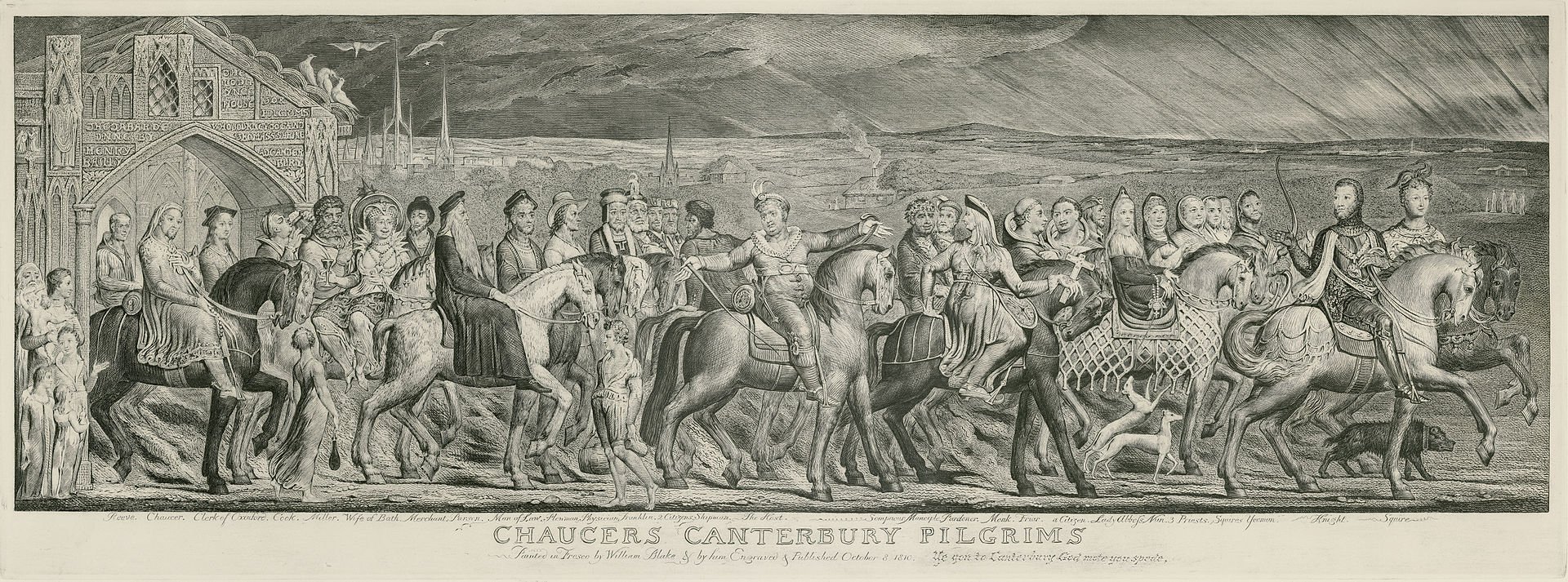
The 21st annual Virginia Festival of the Book opens in Charlottesville this coming Wednesday, March 18. I do recommend it. An amazing assortment of programs will be offered. Find the whole wonderful schedule at https://vabook.org/ I’m not touting for any particular one of them (there are so many and they are so excellent) but I do find myself thinking about what it means to go to a festival — a very old habit of the human race. It happens today that I’m thinking about Chaucer and his Canterbury Tales, because they’re such a nice frame for thinking … Continue reading Are You Going To the Fair?→
In 1995 Kay Redfield Jamison published her ground-breaking memoir, An Unquiet Mind, A Memoir of Moods and Madness. For my husband who was diagnosed with bi-polar disorder in 1987, and myself living through his manic breakdown, Redfield’s memoir was the revelatory longed-for message in a bottle of bi-polar disorder. Jamision’s personal narrative changed my perspective on manic behavior and her insights altered forever the way I understand and react to those diagnosed as bi-polar. I pick up my copy of Jamison’s An Unquiet Mind heavily underlined and re-read a passage: “People go mad in idiosyncratic ways. … Continue reading Kay Redfield Jamison Festival of the Book→
“Nothing stays long enough to know. How long since we’ve been inside anything together the way these birds are inside this tree together, shifting, making it into a shivering thing” —Mary Szybist, “Too Many Pigeons and One Dove,” Incarnadine [Graywolf Press, 2013] The cedar tree on the corner of the lot must remain. So says Margaret, 96, and refusing to let poor sight and hearing keep her from knowing. This was the deal made back then: The place where we now live, a parsonage, could be built and the land would be given … Continue reading Nothing Stays Long Enough to Know→
As I begin to write, it is Ash Wednesday, the beginning of the season of Lent for many Christians. I should explain that I am a retired minister and the rhythms of the liturgical calendar still shape many of the things I think about and the ways I think about them. So I beg the indulgence of readers who are not Christian. I mean to write, however, not merely for Christians. Though the language is, at least in part, Christian, my concerns are broader. I trust that will become clear. The beginning of Lent brings … Continue reading Intentional Uselessness→
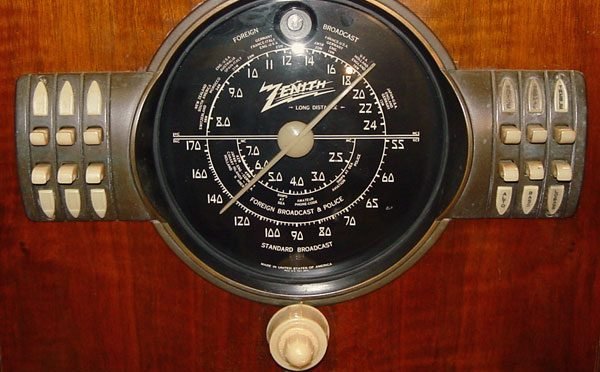
Imagine for a moment an American family collected in a cozy living room and gathered close for the evening’s entertainment. But instead of gazing expectantly at some oversized TV screen while battling the constant distraction of smart phones and mobile devices, the family hovers around the carved, wooden face of a console radio that broadcasts the latest news, stories from the War, and of course, serial radio dramas. This was exactly the sort of evening my father would have enjoyed in the 1940’s. Just recently, at a dinner party with friends, I spoke with a … Continue reading Vintage Allure: the Early American Radio Show→
Well, it’s over, the most important day of winter, Groundhog Day. And it’s still winter. How come? The groundhog, after being widely noticed, has gone back to sleep, which seems like a really good idea. Here in Central Virginia, we can’t complain too much. It hasn’t snowed yet. It doesn’t usually snow much. Unless you’ve been pining to go skiing, that’s good news. I haven’t seen any posters or bumper stickers saying “Pray for Snow,” yet this winter, but I have seen plenty in the past. I have to assume there’s a significant group in … Continue reading The Groundhog Has Come and Gone→
Streetlight Magazine is the non-profit home for unpublished fiction, poetry, essays, and art that inspires. Submit your work today!